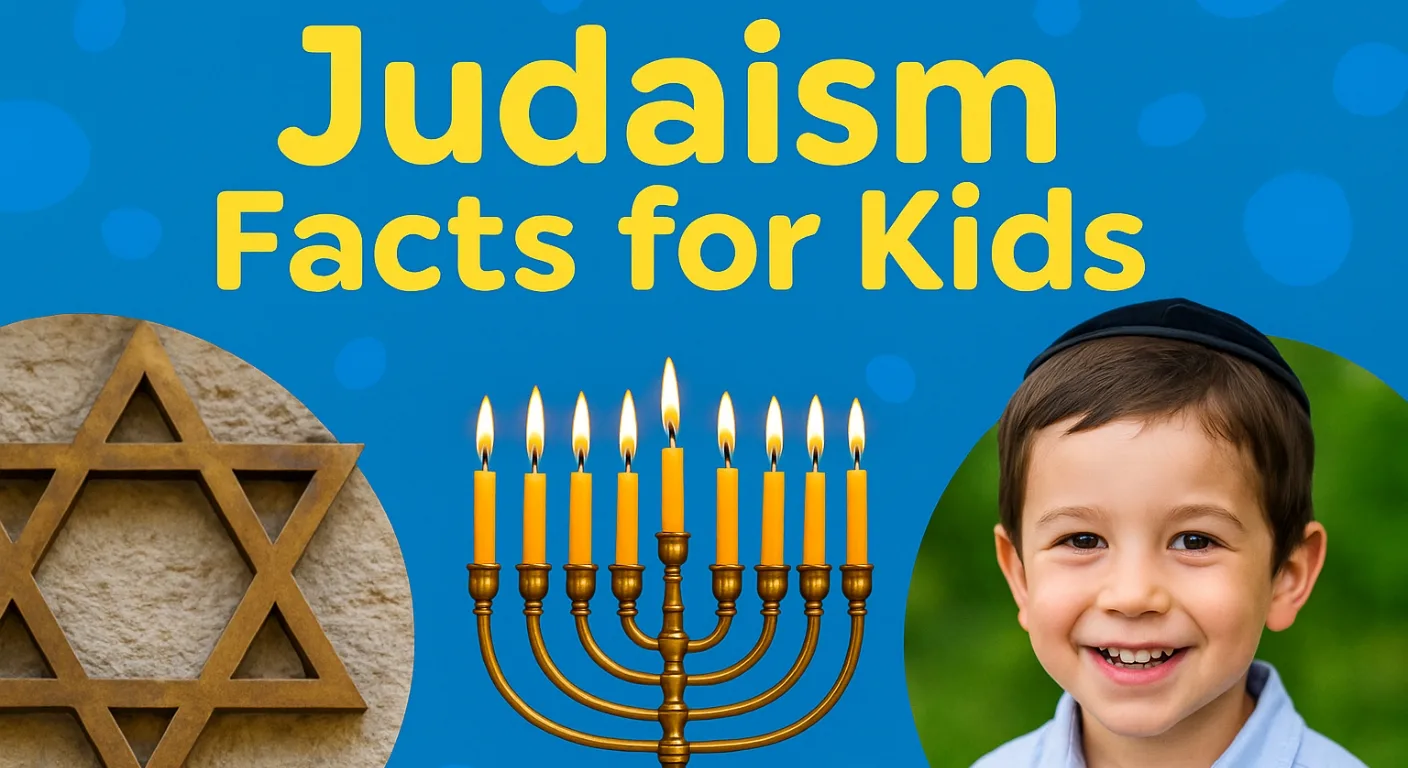
Judaism is the religion of the Jewish people. It began about 4,000 years ago in the Middle East. Jews believe in one God, who revealed himself to Abraham and Moses, and they follow the teaching of the Torah. About 14.8 million Jewish people lived in the world in 2020.
Judaism quick facts
- Judaism began about 4,000 years ago with the Hebrew people in the Middle East.
- Shabbat runs from sunset on Friday to nightfall on Saturday.
- Yom Kippur, the Day of Atonement, is the holiest day of the Jewish year.
- A boy becomes bar mitzvah at 13; under traditional law a girl becomes bat mitzvah at 12.
- There were about 14.8 million Jewish people in the world in 2020.
What is Judaism?
Judaism is the religion of the Jewish people. It began about 4,000 years ago with the Hebrew people in the Middle East.
Jews believe in one God, who they believe revealed himself to Abraham, to Moses and to the Hebrew prophets. Believing in only one God is called monotheism.
Judaism is more than a set of beliefs. It is a whole way of life for the Jewish people, including law, learning and many traditions passed down through families.
In 2020 there were about 14.8 million Jewish people in the world, according to the Pew Research Center. That is about 0.2% of the world’s population, or two people in every thousand.
Abraham and Moses
Abraham is seen as the father of the Jewish faith. He taught the central idea of Judaism, that there is one God.
Moses was chosen by God, Jews believe, to lead the Hebrew people out of slavery in Egypt. This journey is called the Exodus, and it is remembered every year at Passover.
Jews believe that God made a covenant, a special agreement, with the people of Israel. God gave them his teaching, or law, called the Torah, and asked them to follow it.
The Ten Commandments
Among the laws Jews believe God gave to Moses are the Ten Commandments. They include “Do not murder”, a command to honour your father and mother, and a command to keep the Sabbath day holy.
The first commandments are about how people should relate to God. The rest are about how people should treat one another.
The Torah
The Torah is Judaism’s most important text. In its narrowest sense, it is the first five books of the Hebrew Bible: Genesis, Exodus, Leviticus, Numbers and Deuteronomy.
In a synagogue, the Torah is written by hand on scrolls. They are kept in a special cabinet called the holy ark, or aron hakodesh.
Over the centuries, rabbis, who are teachers of Jewish law, wrote many more books explaining how the law applies to everyday life.
The Christian Old Testament contains the same Hebrew scriptures, which is why Judaism and Christianity share many stories. Read more in our Christianity facts for kids.
Hebrew and Yiddish words
- Aron hakodesh — the holy ark, the cabinet that holds the Torah scrolls
- Shul — a Yiddish word some Jews use for a synagogue
- Challah — the braided loaf often shared at Shabbat meals
- Kashruth — the Jewish food laws
- Magen David — Shield of David, the Hebrew name of the Star of David
- Rabbi — a teacher of Jewish law
The synagogue
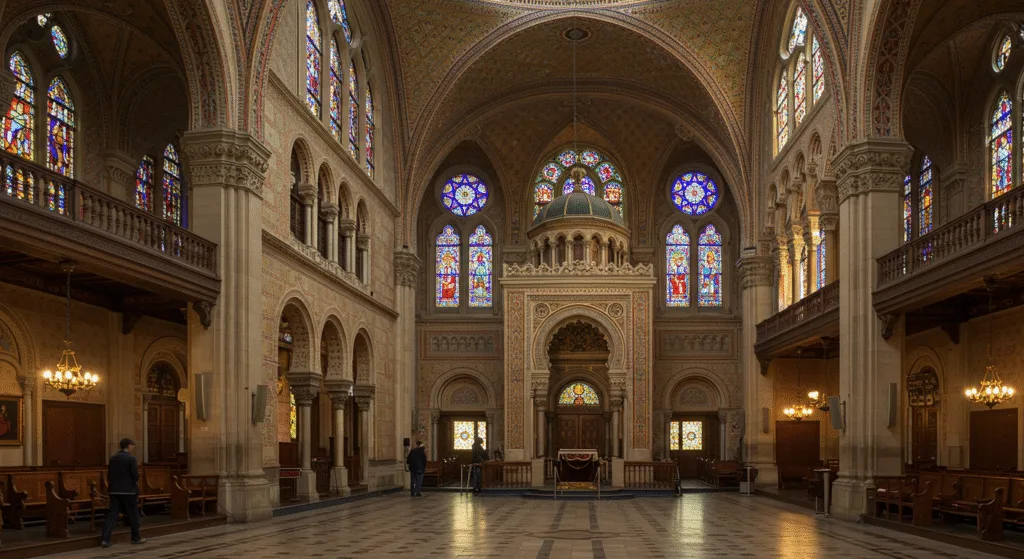
A synagogue is a Jewish community house of worship. It is used not only for prayer, but also for meetings and study.
Its three Hebrew names show this: house of prayer, house of assembly and house of study. The word synagogue comes from Greek and means a place of assembly. Some Jews call it a shul, a Yiddish word, and some call it a temple.
Synagogues are very old. The oldest dated evidence of one comes from the 3rd century BCE.
After the Romans destroyed the Second Temple in Jerusalem in 70 CE, synagogues became the centre of Jewish religious life, and they have been ever since.
Shabbat, the day of rest
Every week, Jews keep the Sabbath, or Shabbat. It is a day of holiness and rest, from sunset on Friday to nightfall on Saturday.
The timing follows the story of creation in Genesis, where each day begins with evening. The word Shabbat comes from a Hebrew word meaning to stop, or rest.
On Shabbat, many Jewish families share special meals, often with a braided loaf called challah. In the synagogue, part of the Torah is read aloud at the morning service.
Jewish holidays
The Jewish calendar has its own months, so Jewish holidays fall on different dates in the ordinary calendar from one year to the next.
| Holiday | When | What it is about |
|---|---|---|
| Rosh Hashanah | 1 Tishri (September or October) | the Jewish New Year |
| Yom Kippur | 10 Tishri (September or October) | the Day of Atonement, the holiest day |
| Passover | 15 Nisan (March or April) | freedom from slavery in Egypt |
| Hanukkah | 25 Kislev (usually December) | the rededication of the Second Temple |
Rosh Hashanah is the Jewish New Year, on the first day of the month of Tishri. It begins ten days of repentance, known as the Days of Awe or the High Holy Days.
Yom Kippur, the Day of Atonement, comes at the end of those ten days. It is the holiest and most solemn day of the Jewish year. Jews ask forgiveness for their wrongdoings, forgive others, and try to put things right with God.
Passover remembers the freeing of the Hebrews from slavery in Egypt. It lasts seven or eight days. No leavened bread is eaten, only a flat bread called matzo, a reminder of how quickly the Hebrews left Egypt. On the first night or two, families share a special meal called a seder.
Hanukkah is an eight-day festival that remembers the rededication of the Second Temple in Jerusalem in 164 BCE, after the Maccabees won it back. A candle is lit on a menorah on each day of the festival. Hanukkah means “dedication” in Hebrew.
The Jewish year in order
- 1 Tishri Rosh Hashanah, the Jewish New Year, begins the year.
- The next ten days The Days of Awe, ten days of repentance, also called the High Holy Days.
- 10 Tishri Yom Kippur, the Day of Atonement, the holiest and most solemn day of the year.
- 25 Kislev Hanukkah begins, an eight-day festival whose name means dedication in Hebrew.
- 15 Nisan Passover begins, and lasts seven or eight days.
- The first night or two of Passover Families share a special meal called a seder.
Bar and bat mitzvah
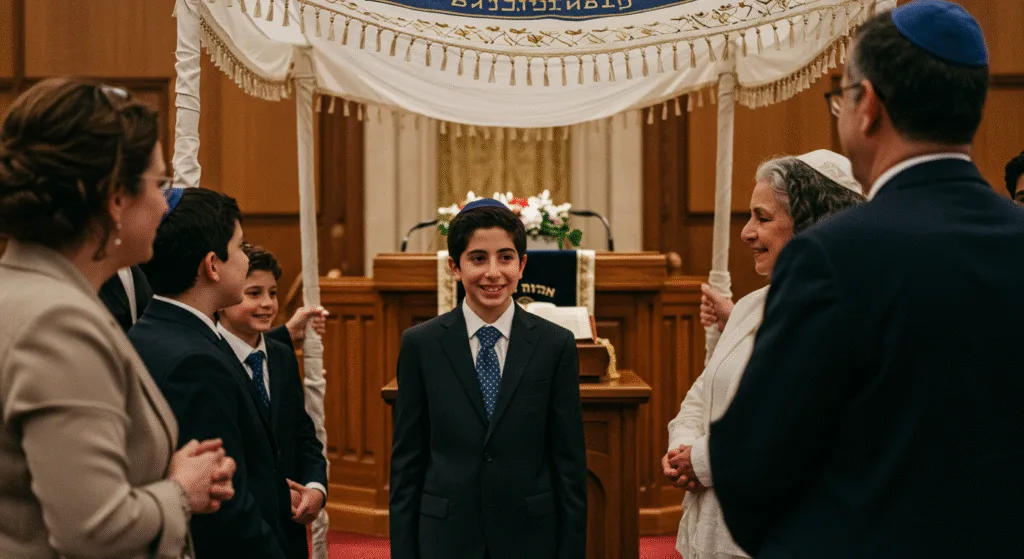
When a Jewish boy turns 13, he becomes a bar mitzvah, which means “son of the commandment”. From then on, he is responsible for keeping the commandments of Jewish life, just as an adult is.
Under traditional Jewish law, a girl becomes bat mitzvah, “daughter of the commandment”, at 12. In many congregations, especially since the 1900s, girls also mark this with a ceremony.
The ceremony usually includes the young person’s first public reading from the Torah during a synagogue service, and it is often followed by a family celebration. A boy may also begin to wear tefillin, small leather boxes worn during prayer.
The change happens automatically at that age, whether or not there is a party.
Kosher food
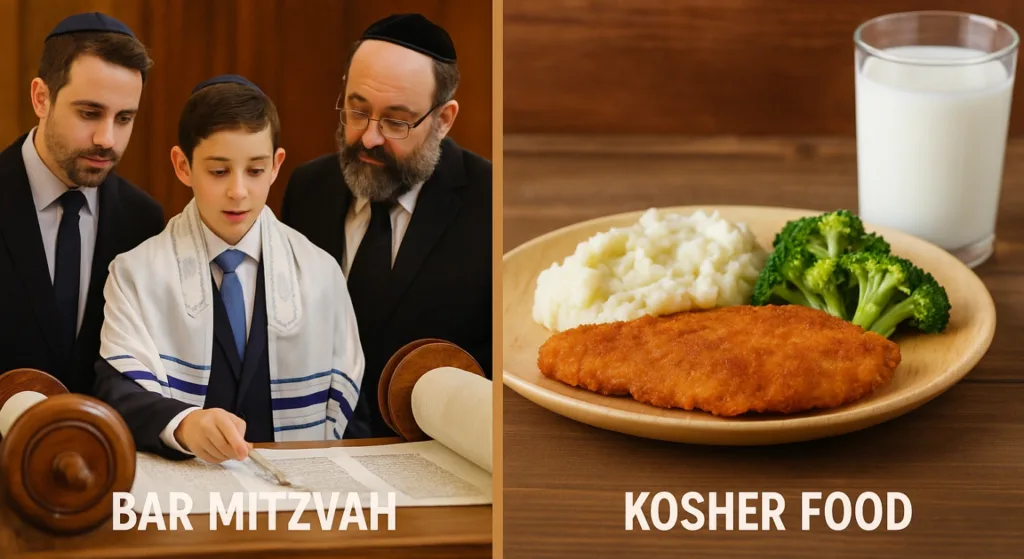
Many Jews follow food laws called kashruth. Food that is allowed is called kosher, which means fit or proper.
Under these laws, fish must have both fins and scales, so shellfish are not kosher. Mammals must chew the cud and have split hooves. Only certain birds may be eaten, and animals must be killed in a special way.
Meat and dairy foods are kept strictly apart. They are not eaten at the same meal, and separate dishes and cutlery are used for each. Fruit and vegetables have no restrictions.
Jews differ in how strictly they keep these laws. Reform Jews, for example, generally do not see them as required.
Symbols of Judaism
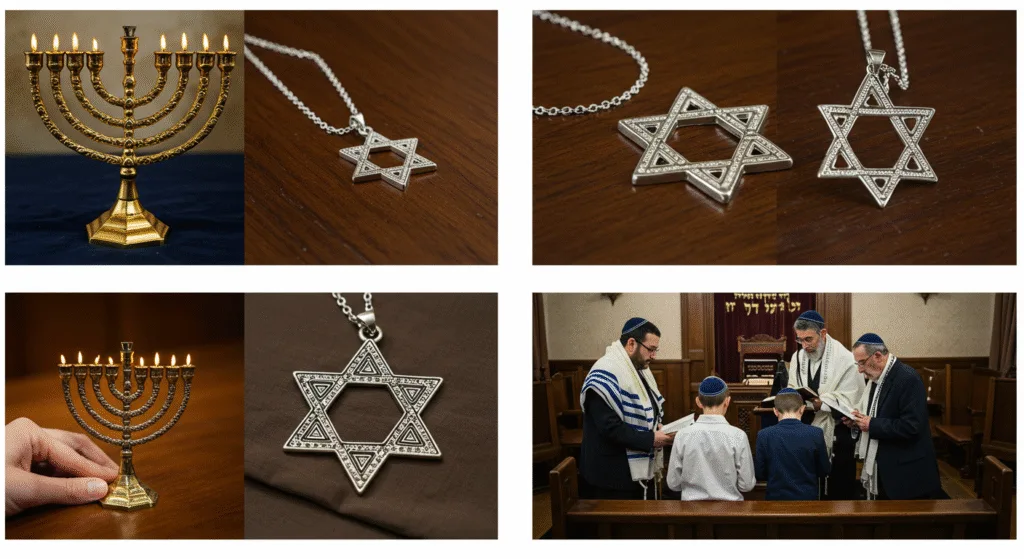
The best-known symbol of Judaism today is the Star of David, a six-pointed star made of two overlapping triangles. In Hebrew it is called the Magen David, the Shield of David.
It was not widely used in ancient times. It became more common in Jewish communities in Europe during the Middle Ages, and by the 1800s it was a widespread emblem of Judaism. Today it appears on synagogues, on Jewish gravestones and on the flag of Israel.
The menorah, the candle holder lit at Hanukkah, is another important Jewish symbol.
People and symbols
- Abraham — seen as the father of the Jewish faith
- Moses — the leader Jews believe God chose to bring the Hebrews out of Egypt
- The Exodus — the journey out of slavery in Egypt, remembered at Passover
- The covenant — the special agreement Jews believe God made with the people of Israel
- The menorah — the candle holder lit during Hanukkah
- The Star of David — the six-pointed star that appears on the flag of Israel
Where do Jewish people live?
In 2020, 45.9% of the world’s Jews lived in the Middle East and North Africa, a region that includes Israel. Another 41.2% lived in North America.
That was a change from 2010, when North America had the largest Jewish population. Smaller Jewish communities live in many other countries.
Different ways of being Jewish
Jews do not all practise their faith in the same way. There are Orthodox, Conservative and Reform Jews, among others.
They differ in how they worship and in how strictly they follow Jewish law, such as the food laws. Some Reform and Conservative Jews, for example, call their synagogue a temple.
Three things people get wrong
Judaism is not only a set of beliefs. It is a whole way of life, including law, study, family traditions and festivals.
The Jewish Sabbath is not on Sunday. Shabbat runs from sunset on Friday to nightfall on Saturday.
Hanukkah is not the most important Jewish holiday. It is one of the most popular, but Yom Kippur is the holiest day of the Jewish year.
Did you know? The oldest dated evidence of a synagogue comes from the 3rd century BCE, more than 2,200 years ago.
Judaism: true or false?
- Jews believe in one God. Believing in only one God is called monotheism.
- All Jews follow Jewish law in exactly the same way.
- Under the Jewish food laws, shellfish are not kosher.
- Meat and dairy foods may be eaten together at a kosher meal.
- A synagogue is used for study and for meetings as well as for prayer.
- A young person only becomes bar or bat mitzvah if there is a ceremony and a party.
- Jewish holidays fall on different dates in the ordinary calendar from one year to the next.
Try it
Look up the dates of Rosh Hashanah, Yom Kippur, Passover and Hanukkah this year. Then check them again for next year and see how they move in the ordinary calendar.
Knowledge check
What is the Torah?
Show answer
Judaism’s most important text, the teaching or law that Jews believe God gave to Moses; in its narrowest sense, the first five books of the Hebrew Bible.
When does Shabbat begin and end?
Show answer
It begins at sunset on Friday and ends at nightfall on Saturday.
Frequently asked questions
What is Judaism?
Judaism is the religion of the Jewish people. It began about 4,000 years ago in the Middle East, and Jews believe in one God who revealed himself to Abraham, Moses and the Hebrew prophets.
What is the Jewish holy book?
The most important Jewish text is the Torah, which in its narrowest sense is the first five books of the Hebrew Bible. In synagogues it is written by hand on scrolls kept in the holy ark.
What is a synagogue?
A synagogue is a Jewish community house of worship, used for prayer, meetings and study. The word comes from Greek and means a place of assembly.
What are the main Jewish holidays?
The main Jewish holidays include Rosh Hashanah, the New Year; Yom Kippur, the Day of Atonement; Passover, which remembers freedom from slavery in Egypt; and Hanukkah, the eight-day festival of dedication.
What is a bar mitzvah?
A bar mitzvah is when a Jewish boy turns 13 and becomes responsible for keeping the commandments. Under traditional law a girl becomes bat mitzvah at 12, and the day is often marked by reading from the Torah.
What does kosher mean?
Kosher means fit or proper. Kosher food follows Jewish food laws: fish must have fins and scales, only certain animals may be eaten, and meat and dairy foods are kept apart.
Sources
- Encyclopaedia Britannica: Judaism — Jewish belief in one God, the covenant, the Torah and Judaism as a way of life
- United Religions Initiative: Jewish beliefs — how Judaism began, Abraham, Moses, the Ten Commandments and the Torah
- Pew Research Center: how the global religious landscape changed from 2010 to 2020 — the number of Jewish people in the world and where they live
- Encyclopaedia Britannica: Passover — what Passover remembers, when it falls, matzo and the seder
- Encyclopaedia Britannica: bar and bat mitzvah — the ages, meaning and ceremony of bar and bat mitzvah
- Encyclopaedia Britannica: kashruth — the Jewish food laws and what kosher means
Judaism Final Challenge
- About how long ago did Judaism begin?
- Which is the holiest day of the Jewish year?
- What do Jews do on Yom Kippur?
- How many Jewish people were there in the world in 2020?
- In 2020, which region had the largest share of the world's Jews?
- At what age does a Jewish boy become bar mitzvah?
- What does bat mitzvah mean?
- Which five books make up the Torah in its narrowest sense?
- Which of these is one of the Ten Commandments named in the guide?
- What does kosher mean?
- Why is matzo eaten at Passover?