The Bible is the sacred scripture of Judaism and Christianity. It is not one book but a collection. The Hebrew Bible counts 24 books, and English Protestant Bibles list the same writings as 39 Old Testament books, then add the 27 books of the New Testament. It is the best-selling book in history.
Bible quick facts
- The Dead Sea Scrolls are more than 1,000 years older than the biblical manuscripts known before them.
- About 230 of the Dead Sea Scrolls are copies of books of the Hebrew Bible.
- Only 20 complete copies of the Gutenberg Bible survive.
- Guinness World Records estimates that 5 to 7 billion Bibles have been printed, most of them given away free.
- As of August 2025, Bible translation had not started in 544 of the world’s 7,396 languages.
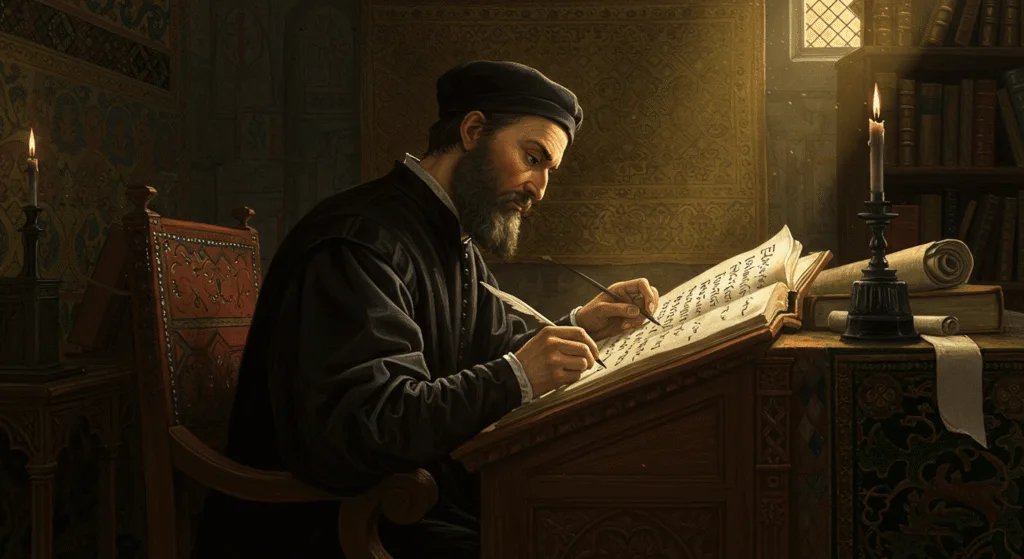
What is the Bible?
The Bible is not really one book. It is a collection of many books, written by different people over hundreds of years, and later gathered together. Jews and Christians both treat it as sacred, but they do not use exactly the same collection.
- The word Bible comes from a Greek word meaning “books”. That fits, because the Bible is a whole library bound together.
- The Bible is the sacred scripture of two religions: Judaism and Christianity.
- The Christian Bible has two main parts, the Old Testament and the New Testament.
- The Hebrew Bible, used in Judaism, contains only the books Christians call the Old Testament.
- Jews often call their Bible the Tanakh. The name is made from the first letters of its three parts: Torah (teaching), Neviim (Prophets) and Ketuvim (Writings).
- The Hebrew Bible counts 24 books. Several books were once written on a single scroll, so each scroll counted as one book.
- English Bibles list the same writings as 39 Old Testament books. They split Samuel, Kings and Chronicles in two, and count Ezra, Nehemiah and the twelve short prophets separately.
- Catholic and Orthodox Bibles have a slightly longer Old Testament. They include extra books that Protestants call the Apocrypha.
The Hebrew Bible and the Old Testament
The first part of the Bible is the older part. It tells the story of the ancient Israelites, and it holds many different kinds of writing.
- The Torah is the first five books: Genesis, Exodus, Leviticus, Numbers and Deuteronomy.
- Twelve short books of prophets, from Hosea to Malachi, were once written together on one scroll. They are called the Minor Prophets because they are short, not because they matter less.
- Five short books, Song of Songs, Ruth, Lamentations, Ecclesiastes and Esther, are called the Five Scrolls. Jewish communities read each one aloud at a particular time of year.
- The Old Testament holds laws, family stories, history, wise sayings and poetry. There is even a love poem, the Song of Songs.
- Psalms is a book of 150 poems and songs used in prayer and worship. Lamentations is a poem of mourning for the fallen city of Jerusalem.
The New Testament
The second part of the Christian Bible was written in the century after Jesus lived. It is much shorter than the Old Testament.
- The New Testament has 27 books.
- The first four books, Matthew, Mark, Luke and John, are called the Gospels. They tell the story of Jesus’s life and teaching. The story of his birth, which Christians celebrate at Christmas, comes from Matthew and Luke.
- The book of Acts carries on where Luke’s Gospel stops. It is really the second volume of the same work.
- Most of the New Testament is letters. They were written to early groups of Christians, and the apostle Paul wrote more of them than anyone else.
- Revelation, the last book, is the only book of its kind in the New Testament: a vision full of symbols about the end of the world.
Languages and translations
The Bible was not written in English. Every English Bible is a translation, and translating it has changed the history of many languages.
- The Old Testament was written mainly in Hebrew. The New Testament was written in Greek.
- More than 2,000 years ago, the Hebrew scriptures were translated into Greek. That translation let Greek speakers across the Mediterranean read them.
- Later, a Latin Bible shaped the thought and life of people in western Europe for about a thousand years.
- In the 16th century, Martin Luther translated the Bible into German, and his translation helped shape the German language itself.
- Translation is still going on today. As of 1 August 2025, work had not yet started in just 544 of the world’s 7,396 living languages.
- That waiting list has shrunk fast. In 1999 more than 5,000 languages were on it. In 2020 it was still more than 2,000.
The oldest copies
No original pages written by the Bible’s authors survive. What we have are copies, and some of them are astonishingly old.
- The Dead Sea Scrolls were found in eleven caves near a place called Qumran, close to the Dead Sea.
- The scrolls date from the 3rd century BCE to the 1st century CE, so the oldest are more than 2,200 years old.
- About 230 of the Dead Sea Scrolls are copies of books of the Hebrew Bible.
- The Dead Sea Scrolls are more than 1,000 years older than the biblical manuscripts known before they were found.
- Many of them closely match the traditional Hebrew text used today. That shows how carefully the words were copied over the centuries.
- Codex Sinaiticus, written in Greek in the middle of the 4th century, contains the earliest complete copy of the Christian New Testament. Two volumes of it are kept at the British Library in London.
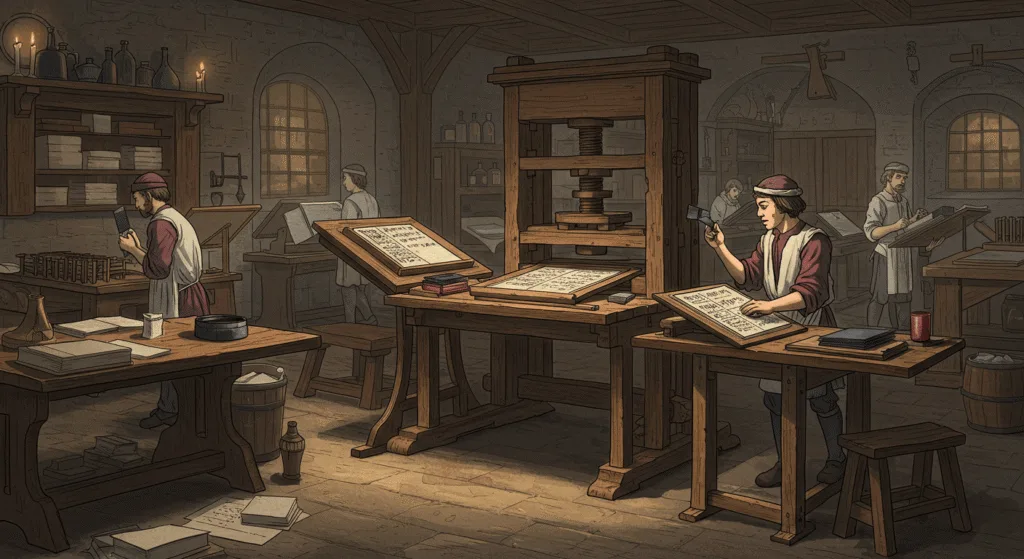
Printing and the best-selling book
Before printing, every Bible was copied out by hand. That took months, sometimes years, for a single copy.
- The Gutenberg Bible was printed between 1454 and 1456 in Germany, by Johann Gutenberg and his partner Johann Fust. It is in Latin.
- Gutenberg used individual pieces of metal type that could be arranged, printed and reused. His way of printing spread across Europe and changed how information travelled.
- More than 150 large copies of the Gutenberg Bible were printed. Only 20 complete copies survive today.
- Guinness World Records says the Bible is the best-selling book of all time, with an estimated 5 to 7 billion copies printed.
- That estimate comes from the British and Foreign Bible Society. Nobody can know the exact number.
- In fact, most Bibles were never sold at all. Since Bible societies began in the early 1800s, huge numbers have been given away for free.
Chapters and verses that break records
Bibles are divided into chapters and numbered verses, which makes them easy to look up. A few of those chapters and verses are famous for their size.
- Psalm 119 is the longest chapter in the Bible, with 176 verses.
- Psalm 117 is the shortest chapter, with just two verses.
- In many English Bibles, the shortest verse is John 11:35, which says simply: “Jesus wept.”
- Obadiah, with a single chapter of 21 verses, is the shortest book of the Old Testament.

Three things people get wrong
The Gutenberg Bible was not the first printed book. It was a landmark in Europe, but printing began much earlier in East Asia. The Diamond Sutra, a Buddhist text printed in China in the year 868, is the world’s earliest dated printed book. It is nearly 600 years older than Gutenberg’s Bible.
It was printed by a man named Wang Jie and found in 1900 in a hidden library cave at Dunhuang, on the old Silk Road in China. The scroll is about 5.3 metres long, and today it is kept at the British Library.
All Christians do not use the same Bible. Catholic and Orthodox Bibles include books that most Protestant Bibles leave out, and the Jewish Hebrew Bible is arranged differently again.
The Bible is not a single book written all at once. It is a collection of many books, in many styles, written and gathered over hundreds of years. That is why it can be counted as 24, 66 or 73 books, depending on who is counting.
Did you know? The Hebrew Bible and the English Old Testament contain the same writings, but one counts 24 books and the other 39. The difference is only in how the scrolls are split up and counted.
The Bible: true or false?
- The word Bible comes from a Greek word meaning books.
- The Bible is the sacred scripture of two religions, Judaism and Christianity.
- The Old Testament was written in Greek and the New Testament in Hebrew.
- No original pages written by the Bible's authors survive today.
- Most Bibles have been sold rather than given away.
- The Gutenberg Bible was the first printed book in the world.
- Psalm 119 is the longest chapter in the Bible.
Try it
Find a Bible at home, at school or online and look up Psalm 117 and Psalm 119. Count the verses in each. One is the shortest chapter in the Bible and the other is the longest.
Knowledge check
Why does the Hebrew Bible count 24 books while English Bibles count 39 in the Old Testament?
Show answer
They contain the same writings, but the Hebrew count follows the old scrolls. Samuel, Kings and Chronicles were each one book, and the twelve Minor Prophets shared one scroll.
Where were the Dead Sea Scrolls found?
Show answer
In eleven caves near Qumran, close to the Dead Sea.
Frequently asked questions
How many books are in the Bible?
The number depends on the tradition. The Hebrew Bible counts 24 books. Protestant Bibles have 66: 39 in the Old Testament and 27 in the New Testament. Catholic and Orthodox Bibles have more, because they include extra books in the Old Testament.
What language was the Bible written in?
The Old Testament was written mainly in Hebrew, and the New Testament was written in Greek. Every English Bible is a translation.
What is the oldest copy of the Bible?
The oldest copies of books of the Hebrew Bible are among the Dead Sea Scrolls, which date from the 3rd century BCE to the 1st century CE. The earliest complete New Testament is in Codex Sinaiticus, written in the middle of the 4th century.
Was the Gutenberg Bible the first printed book?
No. The Gutenberg Bible, printed in the 1450s, was the first major book printed in Europe with movable metal type. The world’s earliest dated printed book is the Diamond Sutra, printed in China in 868.
How many copies of the Bible have been sold?
Guinness World Records says the Bible is the best-selling book of all time, with an estimated 5 to 7 billion copies printed. Most were given away rather than sold.
What is the Tanakh?
The Tanakh is the Jewish name for the Hebrew Bible. The name comes from the first letters of its three parts: Torah (teaching), Neviim (Prophets) and Ketuvim (Writings).
Sources
- Encyclopaedia Britannica: Old Testament canon, texts and versions — the Tanakh, the 24 and 39 book counts, and the parts of the Hebrew Bible
- Leon Levy Dead Sea Scrolls Digital Library: introduction — where and when the scrolls were found, their age and the biblical scrolls
- Codex Sinaiticus Project: about the codex — the earliest complete New Testament and where it is kept
- Harry Ransom Center, University of Texas: the Gutenberg Bible — when and how it was printed, how many copies were made and how many survive
- Guinness World Records: best-selling book — the 5 to 7 billion estimate and why most copies were not sold
- Wycliffe Global Alliance: 2025 global scripture access — how many languages are still waiting for translation to begin
- Smithsonian Magazine: five things to know about the Diamond Sutra — the world’s oldest dated printed book, printed in 868
The Bible Final Challenge
- What does the name Tanakh come from?
- How many books are in the New Testament?
- What are the first four books of the New Testament called?
- Why are the Minor Prophets called minor?
- How old are the oldest Dead Sea Scrolls?
- What is Codex Sinaiticus?
- How many complete copies of the Gutenberg Bible survive?
- Which book is the shortest in the Old Testament?
- As of August 2025, in how many languages had Bible translation not yet started?
- Where was the Diamond Sutra found?