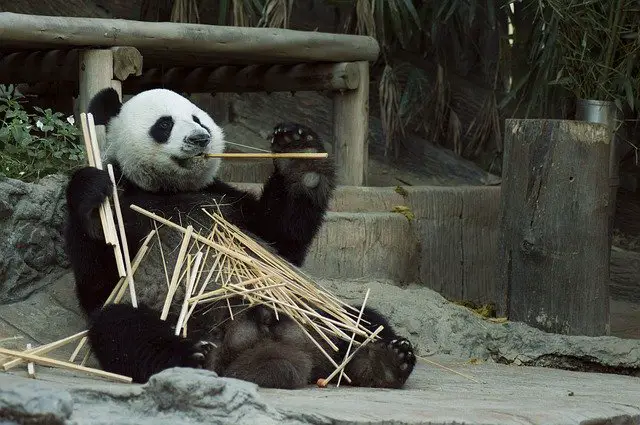
The giant panda is a black-and-white bear that lives only in the mountain forests of south-central China. Bamboo makes up about 99% of its diet, and it spends up to 16 hours a day eating. Newborn cubs weigh only 85 to 142 g. China’s survey counted 1,864 wild pandas, and they are now listed as Vulnerable.
giant pandas quick facts
- Giant pandas are true bears.
- Bamboo makes up about 99% of a panda’s diet.
- A panda’s thumb is really an enlarged wrist bone.
- A newborn panda weighs only 85 to 142 g.
- China’s survey counted 1,864 giant pandas in the wild.
What is a giant panda?
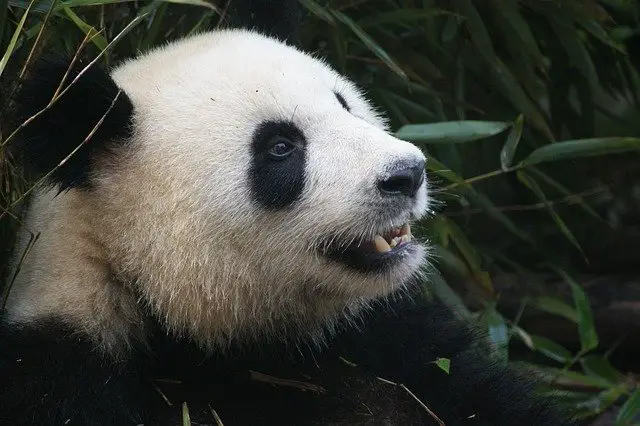
The giant panda is a black-and-white bear that lives in the mountains of China. It is one of the most famous and best-loved animals in the world.
The Smithsonian’s National Zoo and Animal Diversity Web say the giant panda is a true bear, part of the same family as the polar bear and the brown bear.
But pandas are unusual bears. Instead of hunting, they spend most of their day eating bamboo. San Diego Zoo Wildlife Alliance says the panda’s Chinese names can be translated as “large bear-cat” and “bamboo bear”.
| Giant panda at a glance | |
|---|---|
| Where | mountains of south-central China |
| Length | about 1.2 to 1.8 m (4 to 6 feet) |
| Weight | males up to about 113 kg |
| Food | bamboo, about 99% of its diet |
| Newborn cub | 85 to 142 g, about the weight of a stick of butter |
| Lifespan | about 15 to 20 years in the wild |
| Status | Vulnerable |
Is a panda really a bear?
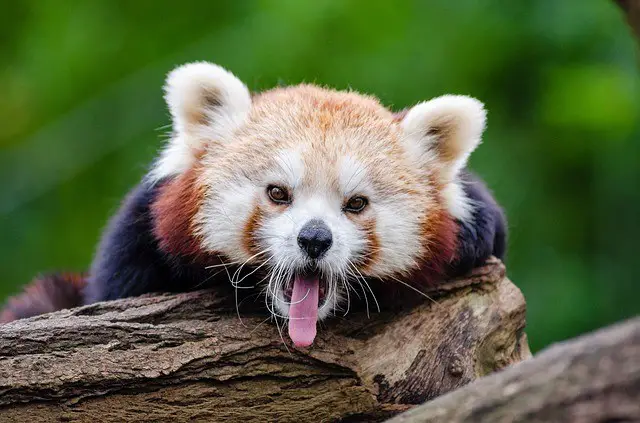
Yes. Animal Diversity Web says scientists once argued about whether giant pandas were bears or relatives of raccoons, because they share their bamboo diet with the smaller red panda.
Today, it is widely accepted that giant pandas are bears. They have a bear’s body shape, strong legs and powerful jaws, even though they mostly eat plants.
How big is a giant panda?
The National Zoo says a giant panda is about 1.2 to 1.8 m (4 to 6 feet) long, and 60 to 90 cm (2 to 3 feet) tall at the shoulder.
The National Zoo says wild males can weigh up to about 113 kg (250 pounds). Females are smaller. San Diego Zoo Wildlife Alliance gives males 86 to 125 kg and females 70 to 100 kg.
Where do giant pandas live?
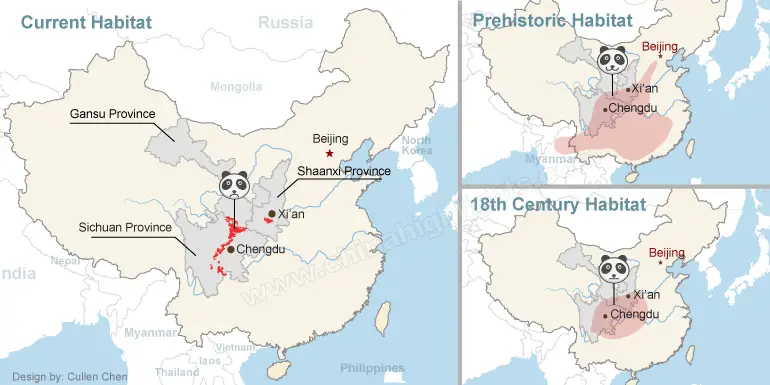
Wild giant pandas live only in China. The National Zoo says they live in the mountains of Sichuan, Shaanxi and Gansu provinces, in the south-central part of the country.
They live high up. San Diego Zoo Wildlife Alliance says pandas live about 1,200 to 3,500 m (4,000 to 11,500 feet) above sea level.

Their home is cool, misty forest, with thick bamboo growing underneath the trees, the National Zoo says. The forest is a mix of broadleaf trees and conifers.
A diet of bamboo
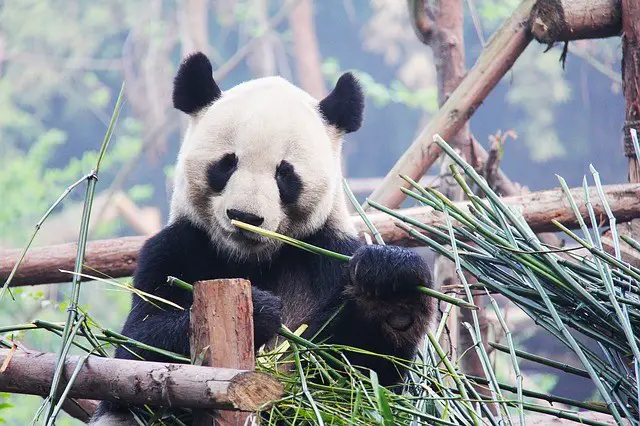
Bamboo makes up about 99% of a panda’s diet. San Diego Zoo Wildlife Alliance and Animal Diversity Web say pandas eat around 25 different kinds of bamboo.
Now and then, Animal Diversity Web says, they also eat other plants and fruit, and even small mammals, fish and insects.
Pandas spend a lot of time eating. The National Zoo says a panda spends about 10 to 16 hours a day finding and eating food, and can eat 32 to 45 kg of bamboo a day. San Diego Zoo Wildlife Alliance gives a smaller figure, about 12 to 15 kg.
Why pandas eat so much
A panda’s body is not built for eating plants. The National Zoo says its gut is built like a meat-eater’s, so much of the bamboo passes straight through.
Animal Diversity Web says pandas absorb only about 17% of the goodness in bamboo leaves and stems. That is why they have to eat such huge amounts.
Their insides are tough. Animal Diversity Web says a panda’s stomach has thick muscles, and its gut is lined with mucus that protects it from sharp bamboo splinters. San Diego Zoo Wildlife Alliance says a panda can poop 40 to 50 times a day.
The panda’s thumb
Pandas have a special trick for holding bamboo. The National Zoo, San Diego Zoo Wildlife Alliance and Animal Diversity Web say pandas have a “thumb” that is really an enlarged wrist bone covered by a fleshy pad.
It works like an extra finger, helping the panda grip bamboo stems while it eats. Pandas also have big, flat back teeth and strong jaw muscles for crushing tough bamboo.
A panda’s day
When they are not eating, pandas rest. The National Zoo says they nap for two to four hours at a time.
Unlike many bears, giant pandas do not hibernate. Animal Diversity Web says they stay active through the winter, moving to lower slopes when it is cold.
Pandas are good climbers and can swim. San Diego Zoo Wildlife Alliance says cubs climb trees to stay safe.
How pandas communicate
Pandas mostly live alone, but they keep in touch. The National Zoo says pandas chirp, honk, bleat and bark, and scientists have identified 12 different panda sounds.
They also leave scent messages on trees and rocks. San Diego Zoo Wildlife Alliance says male pandas sometimes do a handstand to put their scent mark higher up a tree, because other pandas pay more attention to higher marks.
Why black and white?
Nobody knows for sure why pandas are black and white. San Diego Zoo Wildlife Alliance says one idea is that the pattern helps pandas recognise each other and find mates. Another is that it works as camouflage in shady, snowy forests.
Panda cubs

Pandas have very few babies. The National Zoo says a female can get pregnant only once a year, in spring, and only for about two to three days.
A newborn panda is tiny. San Diego Zoo Wildlife Alliance and the National Zoo say it weighs just 85 to 142 g, about the weight of a stick of butter. The National Zoo says it is about 1/900 of its mother’s size.
Cubs are born pink with short white hair. San Diego Zoo Wildlife Alliance says their black patches start to appear at one to two weeks old.
The National Zoo says cubs open their eyes at about six to eight weeks and start walking at about three months. They drink their mother’s milk for about eight to nine months and stay with her for 1.5 to 3 years.
A female raises only about five to eight cubs in her whole life. That is one reason panda numbers grow so slowly.
How many pandas are there?
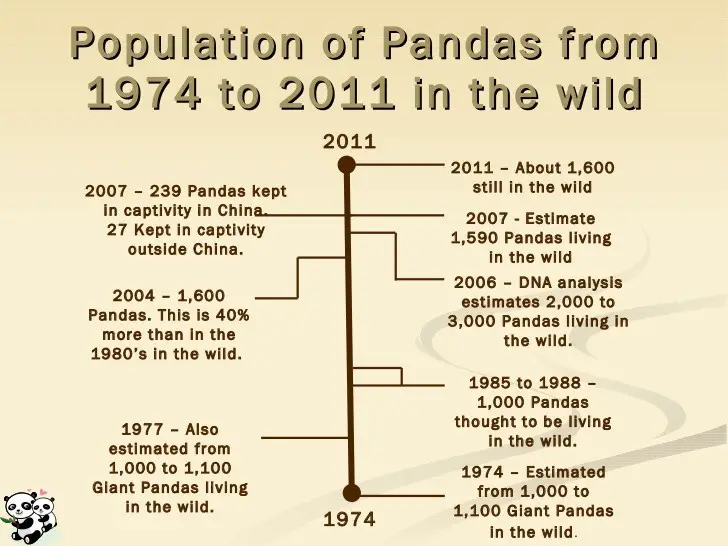
These charts show panda numbers from older surveys. Animal Diversity Web, in an account written around 2002, gave a figure of about 1,000 wild pandas.
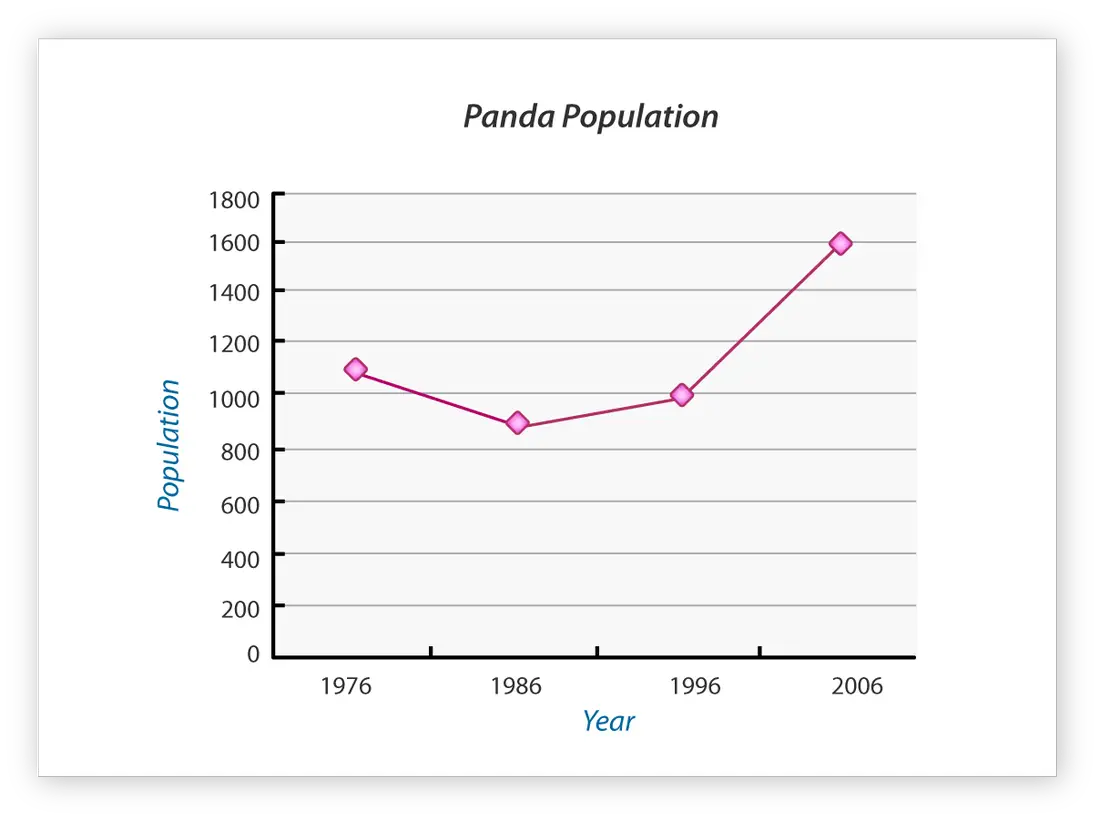
More recent news is better. In 2015, the National Zoo reported that China’s national survey had counted 1,864 giant pandas in the wild, 16.8% more than the survey before.
The National Zoo says about 600 more pandas live in zoos and breeding centres around the world. San Diego Zoo Wildlife Alliance says better care raised the survival of cubs in breeding centres from 5% to 95%.
Saving the giant panda
Giant pandas were listed as Endangered until 2016. San Diego Zoo Wildlife Alliance and the National Zoo say they are now listed as Vulnerable, because their numbers have improved.
China has set up 67 panda reserves covering about 2.3 million hectares, San Diego Zoo Wildlife Alliance says.
Pandas still face dangers. The National Zoo says the biggest threat is losing their forest home, as roads and farms split it into small, separate pieces. Low birth rates and bamboo die-offs make things harder too.
The Smithsonian has studied pandas since 1972, when two pandas, Ling-Ling and Hsing-Hsing, arrived at the National Zoo in Washington, D.C.
A pregnancy with a pause
Panda pregnancies are unusual. The National Zoo, San Diego Zoo Wildlife Alliance and Animal Diversity Web say a pregnancy can last anywhere from about three to six months.
That is because the tiny early embryo can wait for a while before it starts to grow. Scientists call this delayed implantation. The baby itself only grows for about 50 days, which is one reason newborn pandas are so small.
Pandas sometimes have twins. The National Zoo says that in the wild, usually only one of the two cubs survives.
San Diego Zoo Wildlife Alliance says that when a young panda reaches about 50 kg and 2.5 years old, it is big enough to be safe from predators. The National Zoo says pandas are ready to have cubs of their own at about four to seven years old.
Panda neighbours
Pandas spend most of their time alone, but they are not completely cut off. The National Zoo says a local community of about 7 to 15 pandas may share an area of forest, keeping in touch through calls and scent marks.
They also have a powerful bite. San Diego Zoo Wildlife Alliance and the National Zoo say pandas have the strongest bite of any bear, which helps them crunch through tough bamboo stems.
Pandas like a long rest after a big meal. In summer, the National Zoo says, a single rest can last six hours or more.
Pandas in zoos
Pandas live longer in zoos than in the wild. The National Zoo says wild pandas live about 15 to 20 years, while pandas in zoos live about 30 years, and some have reached 35.
Zoos have become much better at raising pandas. San Diego Zoo Wildlife Alliance says the number of pandas in zoos around the world reached 300 in 2010, and it has kept growing since then.
Three things people get wrong
A panda’s thumb is not a real thumb. It is an enlarged wrist bone with a fleshy pad.
Giant pandas do not hibernate. They stay active all winter.
Giant pandas are not raccoons. They are true bears.
Did you know? Male pandas sometimes do a handstand to put their scent mark higher up a tree.
Try it
Try picking up a pencil using only your fingers and the side of your hand, like a panda gripping bamboo with its wrist-bone thumb.
Knowledge check
What makes up most of a panda’s diet?
Show answer
Bamboo.
Why do pandas eat so much?
Show answer
They absorb only a small part of the goodness in bamboo.
Frequently asked questions
Where do giant pandas live?
Wild giant pandas live only in China, in the mountain forests of Sichuan, Shaanxi and Gansu provinces, about 1,200 to 3,500 m up.
What do giant pandas eat?
Bamboo makes up about 99% of their diet. They eat about 25 kinds of bamboo, and sometimes other plants, fruit, small animals and fish.
Is a giant panda a bear?
Yes. Scientists once argued about it, but today giant pandas are accepted as true bears, related to polar bears and brown bears.
How big is a baby panda?
A newborn panda weighs just 85 to 142 g, about the weight of a stick of butter. It is born pink with short white hair.
How many giant pandas are left?
China’s national survey, reported in 2015, counted 1,864 giant pandas in the wild. About 600 more live in zoos and breeding centres.
Are giant pandas still endangered?
Giant pandas were listed as Endangered until 2016. Their numbers improved, and they are now listed as Vulnerable.
Sources
- Smithsonian’s National Zoo: giant panda — size, range, bamboo, the pseudo-thumb, sounds, breeding, cubs, lifespan, numbers and threats
- Smithsonian’s National Zoo: giant panda update, March 2015 — China’s survey count of 1,864 wild pandas
- San Diego Zoo Wildlife Alliance: giant panda — Chinese names, elevation, bamboo, cubs, scent handstands, colours, status and reserves
- Animal Diversity Web, University of Michigan: giant panda — classification, bamboo digestion, gut, no hibernation and climbing