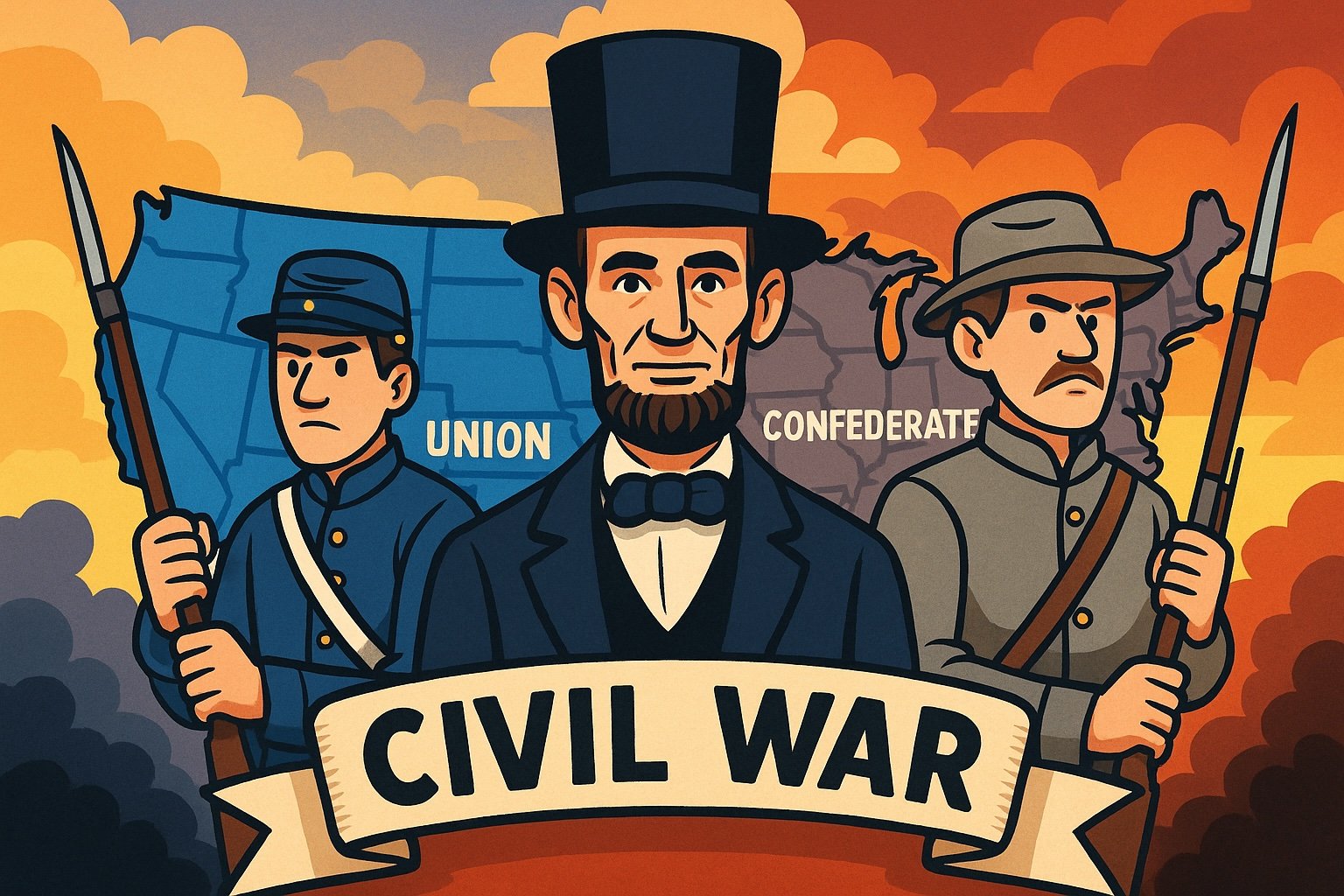
The American Civil War (1861 to 1865) was fought between the Union and 11 Southern states that formed the Confederacy. Its main cause was slavery. It began at Fort Sumter on 12 April 1861 and ended when Lee surrendered to Grant on 9 April 1865. About 620,000 soldiers, or more, died.
the American Civil War quick facts
- The Civil War lasted from 1861 to 1865.
- Eleven Southern states left the Union to form the Confederacy.
- The main cause of the war was slavery.
- Gettysburg was the bloodiest battle, with about 51,000 casualties.
- Disease killed about twice as many soldiers as battle did.
What was the Civil War?
The American Civil War was a four-year war, from 1861 to 1865, between the United States and 11 Southern states that left the Union. Britannica says those states formed the Confederate States of America.
A civil war is a war fought between people of the same country. In this one, Americans fought Americans, and sometimes brothers fought on opposite sides.
The war ended with a victory for the Union, and it led to the end of slavery in the United States.
| The Civil War at a glance | |
|---|---|
| When | 12 April 1861 to 9 April 1865 |
| Sides | the Union (North) and the Confederacy (South) |
| Presidents | Abraham Lincoln (Union) and Jefferson Davis (Confederacy) |
| States that left the Union | 11 |
| Soldiers who died | about 620,000; newer estimates 752,000 to 851,000 |
| Bloodiest battle | Gettysburg, about 51,000 casualties |
| Bloodiest single day | Antietam |
Why did the Civil War happen?
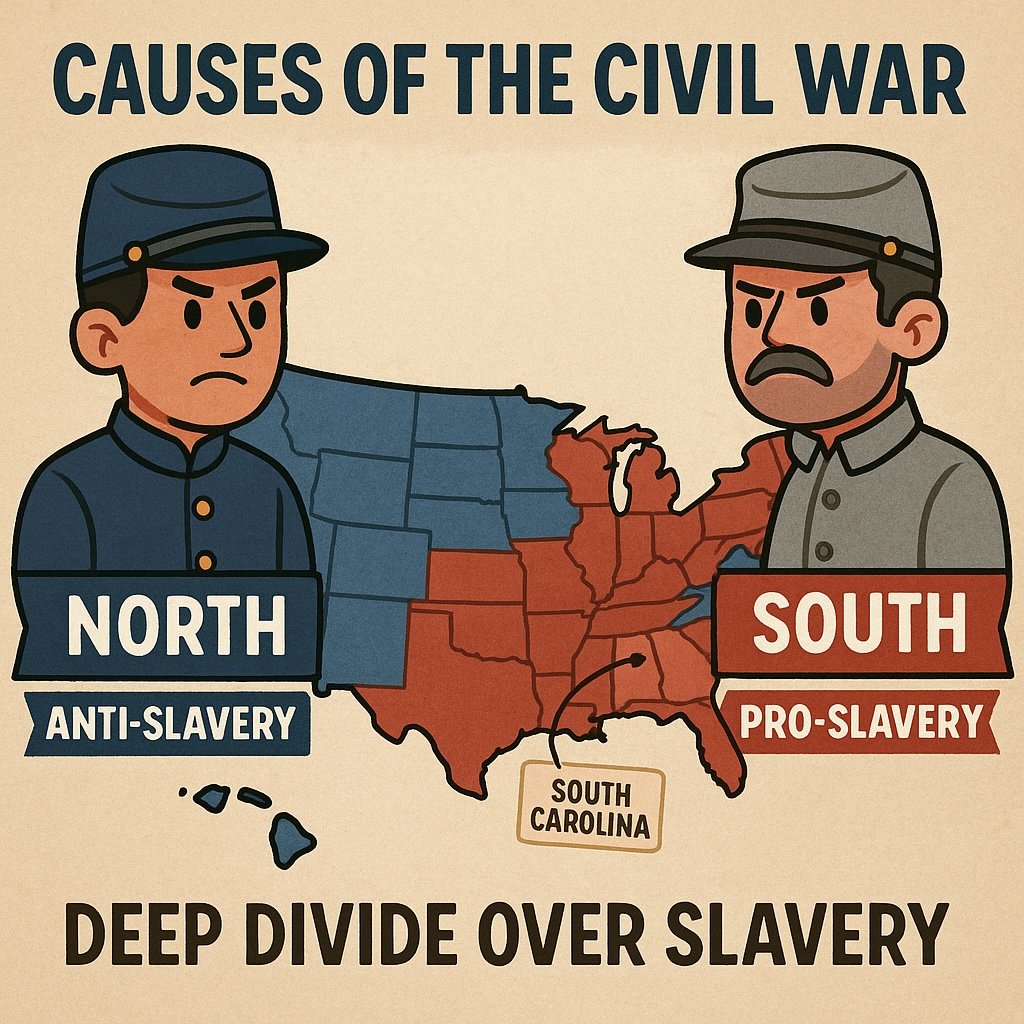
The main cause of the Civil War was slavery. Britannica says the war was the result of a long struggle between those who supported slavery and those who opposed it, going back to the founding of the United States.
In the South, much of the economy depended on large farms called plantations, which grew crops such as cotton. They relied on the forced labour of enslaved Black people.
The North had farms too, but its economy was also growing through factories, railways, banks and trade. Britannica says that by 1860, 84% of the money invested in manufacturing was in the free states, where slavery was not allowed.
The American Battlefield Trust says the free states and the slave states had deep differences. Neither side would give way. They argued about new land in the west. Could the national government stop slavery spreading there?
In 1860, Abraham Lincoln, who opposed the spread of slavery, was elected president. Britannica says his election led 11 Southern states to secede, or leave the Union.
What was slavery?
Slavery meant that people were owned by other people, as if they were property. Enslaved people were forced to work without pay, and they had no freedom to choose where they lived or who they worked for.
Enslaved families could be split up and sold to different owners. Children could be taken from their parents. By 1860, about four million people were enslaved in the United States.
Many enslaved people resisted, and some escaped to freedom in the North. People who wanted to end slavery were called abolitionists.
Who fought? Union and Confederacy
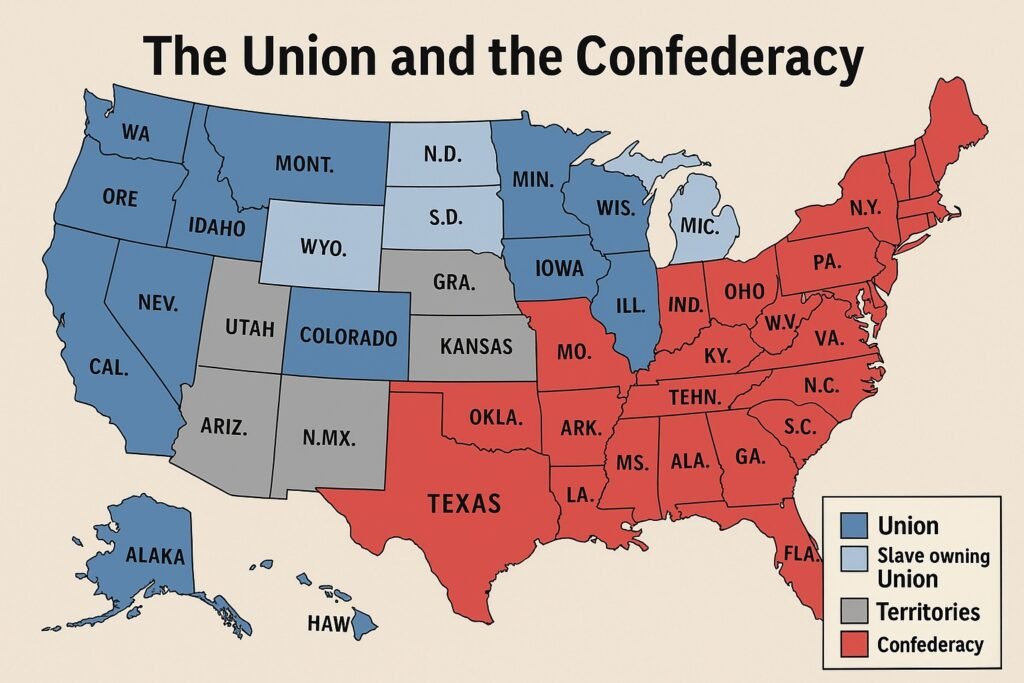
The Union: the US National Park Service lists the Union states as including Maine, New York, Pennsylvania, Ohio, Illinois, Michigan, California and Oregon, among others. Abraham Lincoln was their president.
The Confederacy: the 11 Confederate states were Texas, Arkansas, Louisiana, Tennessee, Mississippi, Alabama, Georgia, Florida, South Carolina, North Carolina and Virginia. Jefferson Davis was their president.
Border states: Maryland, Delaware, West Virginia, Kentucky and Missouri stayed in the Union, even though slavery was allowed in some of them.
Britannica says South Carolina was the first state to secede, in December 1860, and North Carolina was the last.
The Union had far more people and factories. The National Park Service and the American Battlefield Trust both say the Union army outnumbered the Confederate army by about two to one.
Important people in the Civil War
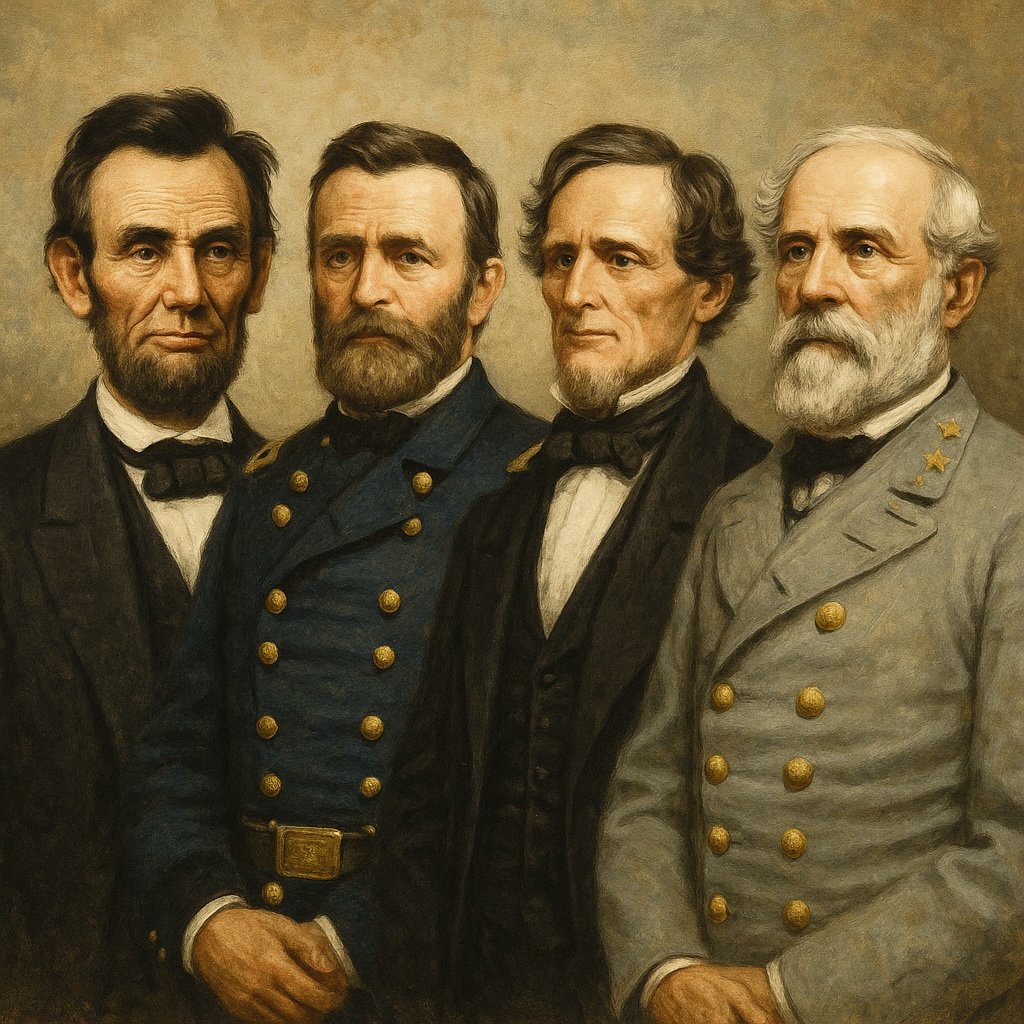
Abraham Lincoln: the 16th president of the United States, who led the Union through the war.
Jefferson Davis: the president of the Confederate States.
Ulysses S. Grant: the most successful Union general, who later became president.
Robert E. Lee: the leading general of the Confederate army.
Major battles
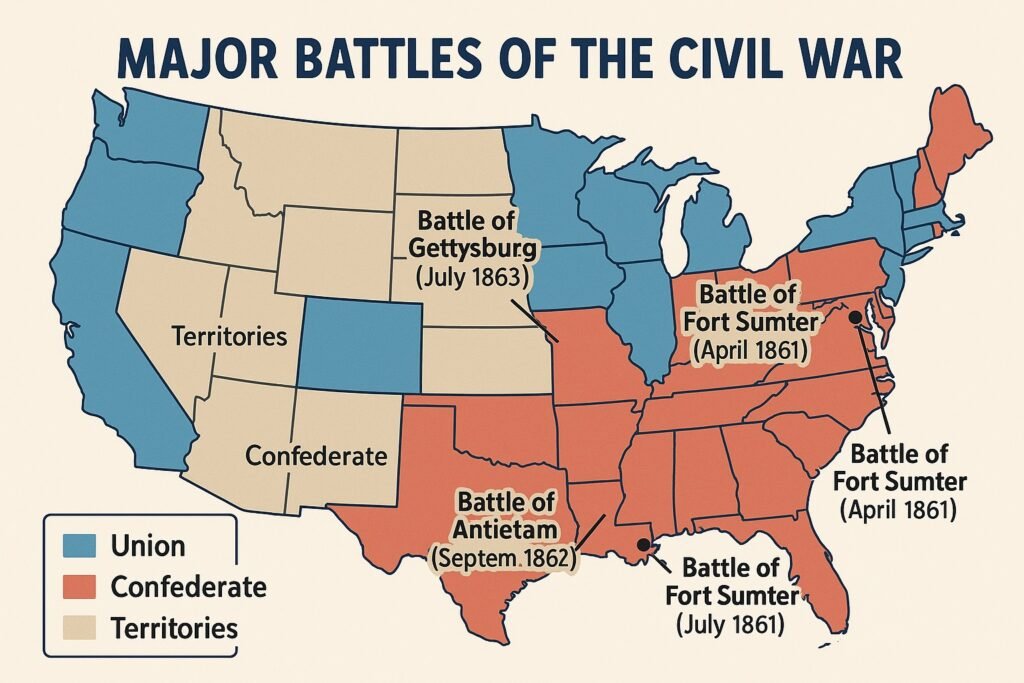
Fort Sumter, 1861: the American Battlefield Trust says the war began on 12 April 1861, when Confederate forces fired on Union soldiers at Fort Sumter in South Carolina.
Antietam, 1862: the National Park Service says Antietam had more casualties than any other single day of battle in the war, about 22,700.
Gettysburg, 1863: the bloodiest battle of the war. Britannica says it caused about 51,000 casualties, including about 7,000 deaths.
Chickamauga, Chancellorsville and Spotsylvania: other huge battles, each with around 30,000 casualties or more.
A casualty is any soldier who is killed, wounded, captured or missing, so casualty numbers are bigger than the number of deaths.
Freedom and the Emancipation Proclamation
On 1 January 1863, President Lincoln issued the Emancipation Proclamation. It declared that enslaved people in the Confederate states were free.
It also allowed Black men to join the Union army and navy. The American Battlefield Trust says about 180,000 African American men served in the US Army and 18,000 in the Navy, and nearly 40,000 of them died.
After the war, in 1865, the 13th Amendment to the US Constitution ended slavery everywhere in the United States.
Life during the Civil War
Life as a soldier was hard. The American Battlefield Trust says Union soldiers were paid $13 a month, and Confederate soldiers $11.
Soldiers ate hard, dry biscuits called hardtack, with coffee, salt pork and cornmeal. In their spare time they wrote letters, played games, smoked and prayed.
The average Union soldier was about 26 years old, but some were much younger. Many boys lied about their age to join.
Disease was the deadliest enemy. The National Park Service says about 224,580 Union soldiers died from disease, twice as many as the 110,100 killed in battle. On the Confederate side, about 164,000 died from disease and 94,000 in battle.
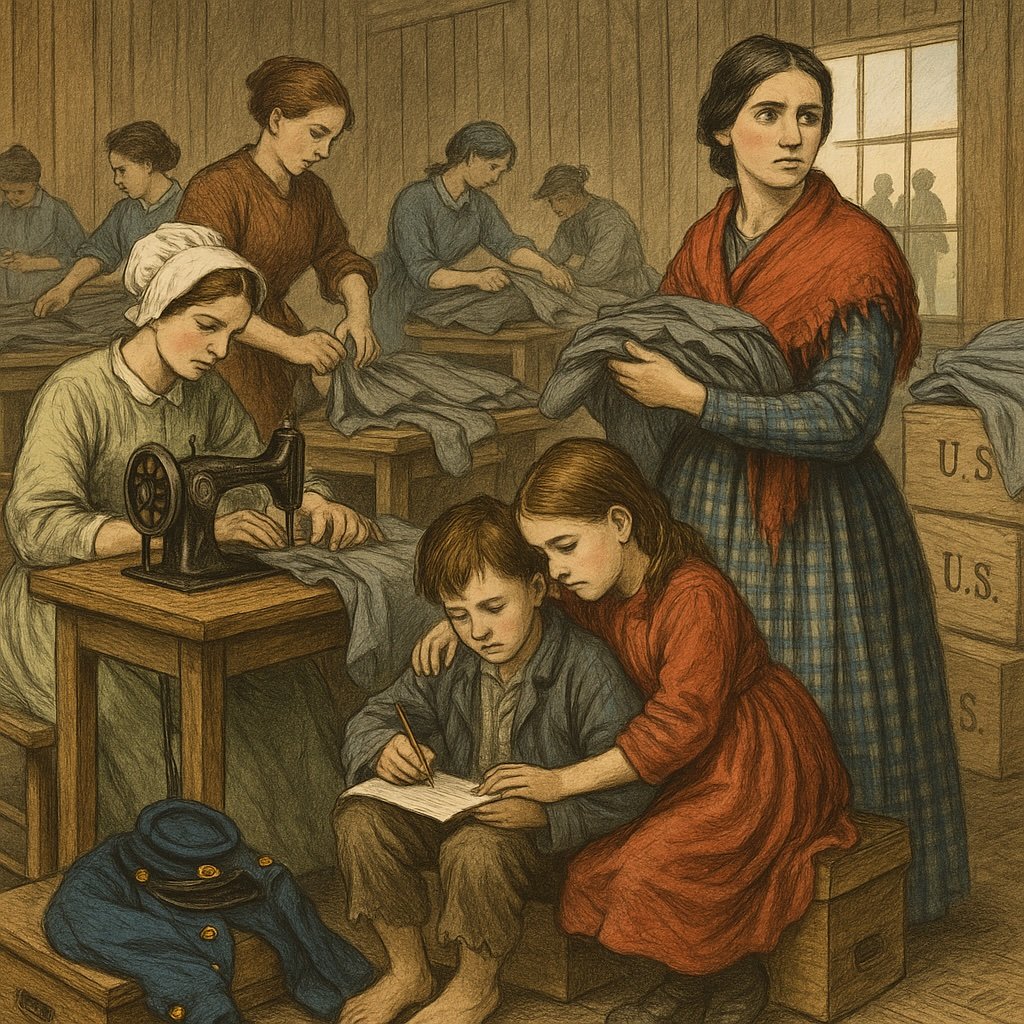
At home, women ran farms, businesses and households, and many worked as nurses. In the South, people faced shortages of food and supplies as the war went on.
Blue and grey
Union soldiers usually wore blue uniforms, so they were sometimes called the Blues. Confederate soldiers often wore grey, so they were called the Greys.
Most soldiers carried rifles that fired one shot at a time and had to be reloaded by hand. Cannons fired heavy iron balls and shells across the battlefield.
Young people in the war
Some of the soldiers were very young. Boys as young as 12 served as drummers, beating out signals that told soldiers what to do in the noise of battle.
At home, children helped on farms and in shops, and many lost fathers, brothers and uncles in the fighting.
Women in the war
Women played a big part in the war. Thousands worked as nurses, caring for wounded and sick soldiers in hospitals and camps.
Clara Barton nursed soldiers near the battlefields and later founded the American Red Cross. Harriet Tubman, who had escaped slavery herself, worked as a scout and spy for the Union army.
Letters home
Soldiers were often far from home for years. Writing letters was one of the few ways they could stay in touch with their families.
Many of these letters still survive. They tell us what soldiers ate, how they felt and what they saw, and they help historians understand the war.
How the war ended
By 1865, the Confederacy was running out of soldiers and supplies. On 9 April 1865, General Lee surrendered his army to General Grant at Appomattox Court House in Virginia.
Britannica says the last Confederate troops surrendered at Galveston, Texas, on 2 June 1865.
Just days after Lee’s surrender, President Lincoln was shot and killed in Washington, DC. The country mourned the leader who had guided it through the war.
The cost of the war
The Civil War was the deadliest war in American history. The American Battlefield Trust says about 620,000 soldiers died.
Newer research gives an even higher number. Britannica says between 752,000 and 851,000 soldiers may have died, about 2% of everyone living in the United States in 1860.
Civil War facts for kids
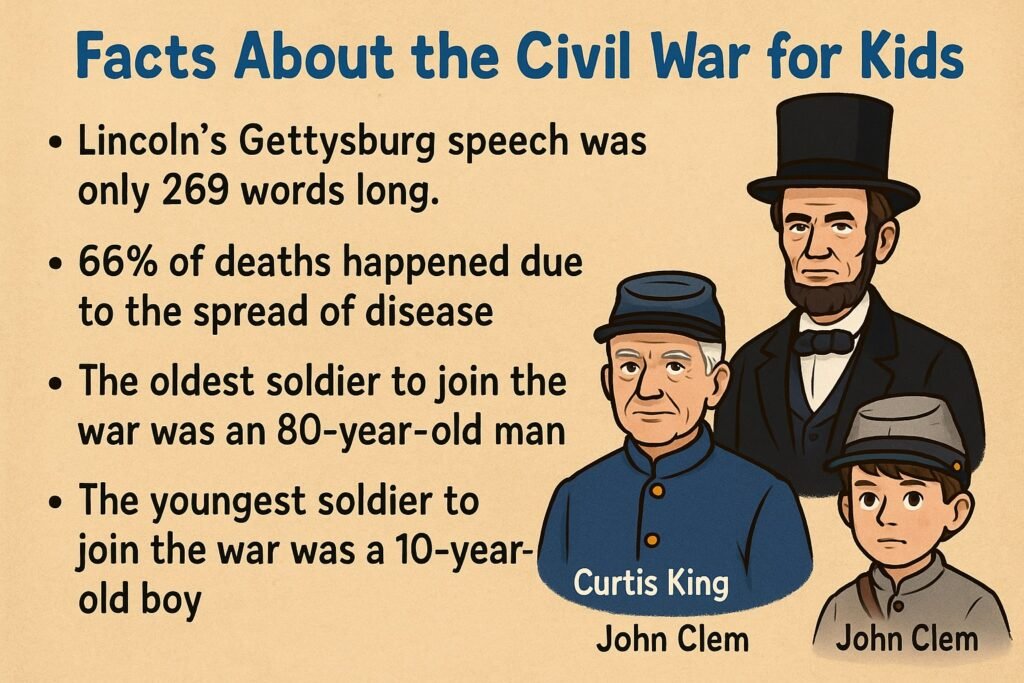
Two to one: the Union army outnumbered the Confederate army by about two to one.
Deadliest day: the Battle of Antietam, in 1862, was the bloodiest single day of the war.
A new holiday: after the war, people decorated soldiers’ graves with flowers. This became Memorial Day.
Why the Civil War matters
The Civil War kept the United States together as one country, and it ended slavery.
Today, many battlefields are protected as national parks. The National Park Service looks after them, so visitors can walk the ground and learn what happened there.
After the war, the country entered a period called Reconstruction, when it tried to rebuild the South and decide the rights of the four million people who had been freed. The struggle for equal rights went on for many years afterwards.
Three things people get wrong
The war was not about something other than slavery. Slavery, and whether it could spread, was the main cause.
Not every state that stayed in the Union was free. Some border states allowed slavery.
Most soldiers did not die in battle. Disease killed about twice as many.
Did you know? Union soldiers were paid $13 a month, and Confederate soldiers $11.
Try it
Make a timeline from 1860 to 1865. Add Lincoln’s election, Fort Sumter, Antietam, the Emancipation Proclamation, Gettysburg and Appomattox.
Knowledge check
What was the main cause of the Civil War?
Show answer
Slavery, and whether it could spread to new territories.
Where did Lee surrender to Grant?
Show answer
Appomattox Court House, Virginia.
Frequently asked questions
What was the Civil War about?
The Civil War was mainly about slavery. The North and South disagreed over whether slavery could spread into new western territories.
When did the Civil War start and end?
The war began on 12 April 1861 at Fort Sumter and effectively ended on 9 April 1865, when Robert E. Lee surrendered at Appomattox Court House.
Who won the Civil War?
The Union won. The war kept the United States together as one country, and slavery was ended by the 13th Amendment in 1865.
How many people died in the Civil War?
About 620,000 soldiers died, according to the American Battlefield Trust. Newer estimates suggest between 752,000 and 851,000.
What was the bloodiest battle of the Civil War?
Gettysburg, in 1863, was the bloodiest battle, with about 51,000 casualties. Antietam, in 1862, was the bloodiest single day.
Who were the leaders in the Civil War?
Abraham Lincoln led the Union and Jefferson Davis led the Confederacy. Ulysses S. Grant and Robert E. Lee were the leading generals.
Sources
- US National Park Service: Civil War facts — Union, Confederate and border states, army sizes, casualties, disease deaths and the bloodiest battles
- American Battlefield Trust: Civil War facts — causes, Fort Sumter, Appomattox, deaths, African American soldiers, pay, food and daily life
- Encyclopaedia Britannica: American Civil War — the struggle over slavery, secession, the economies of North and South, leaders, deaths and the end of the war