Red panda quick facts
- The red panda was described in 1825, 48 years before the giant panda. It is the original panda.
- A red panda can digest only about 24% of the bamboo it eats.
- It eats 20 to 30% of its own body weight in bamboo every day.
- Almost half of a red panda’s length is its tail.
- Its false thumb is really an enlarged wrist bone.
What is a red panda?
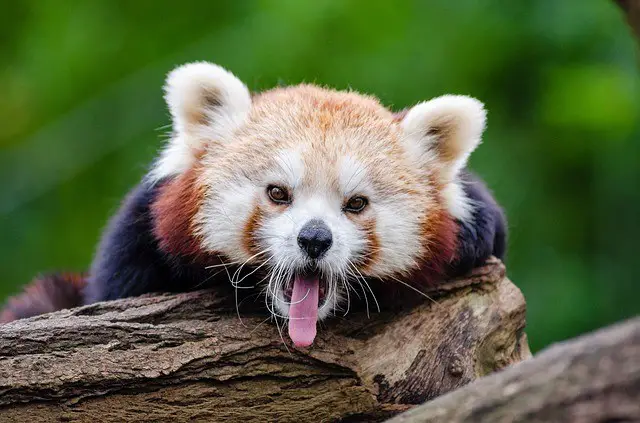
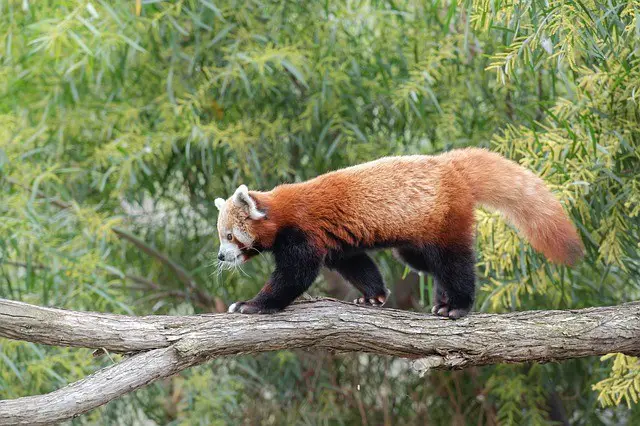
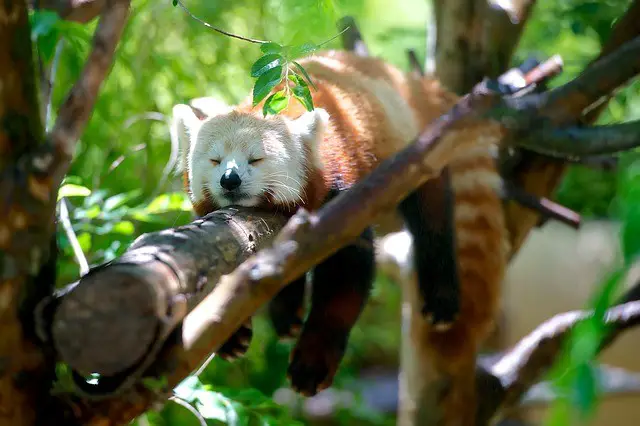
A red panda is a small mammal about the size of a pet cat, with thick reddish fur, a white-marked face and a long, bushy, striped tail. It spends much of its life in trees.
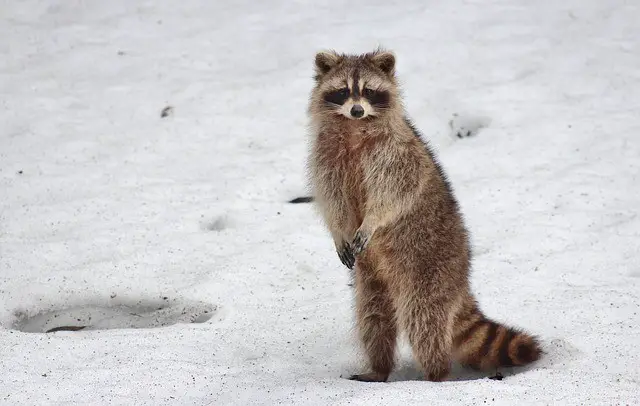
It is not a bear, and it is not a raccoon. DNA studies show that red pandas belong to a family all of their own, which split off from the rest of the meat-eating mammals a very long time ago. The red panda is the only living member of that family.
Its scientific name is Ailurus fulgens. Ailurus means “cat”, and fulgens means “fire-coloured” or “shining”. So its name means something like shining, fire-coloured cat.
| Red panda at a glance | |
|---|---|
| Scientific name | Ailurus fulgens |
| Weight | 3.6 to 7.7 kg (8 to 17 lb) |
| Body length | 56 to 62.5 cm (22 to 24.6 in) |
| Tail length | 37 to 47 cm (14.6 to 18.6 in) |
| Main food | bamboo, about 95% of its diet |
| Cubs | usually 2, born in late spring or early summer |
| Lifespan | 8 to 10 years in the wild, up to 15 in zoos |
| Status | Endangered |
The original panda
Here is a fact that surprises almost everyone. The red panda was the first animal to be called a panda.
A French zoologist, Frédéric Cuvier, described the red panda in 1825. That was 48 years before scientists described the black-and-white bear we now call the giant panda. So if anything, the giant panda was named after the red panda, not the other way round.
The two pandas do share something important, though. They both live on bamboo, and they both have the same clever trick for holding it.
Where red pandas live
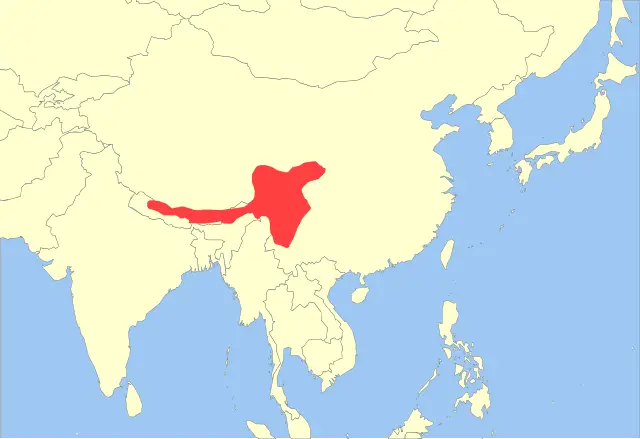
Red pandas live in the Eastern Himalayas and the mountains nearby. Their range stretches through Nepal, India, Bhutan, Tibet and northern Myanmar, and into the Sichuan and Yunnan provinces of China.
They live high up, in cool mountain forests where bamboo grows thickly under the trees. This bamboo forest ecosystem gives them food, shelter and safe branches to rest on.
A bamboo diet
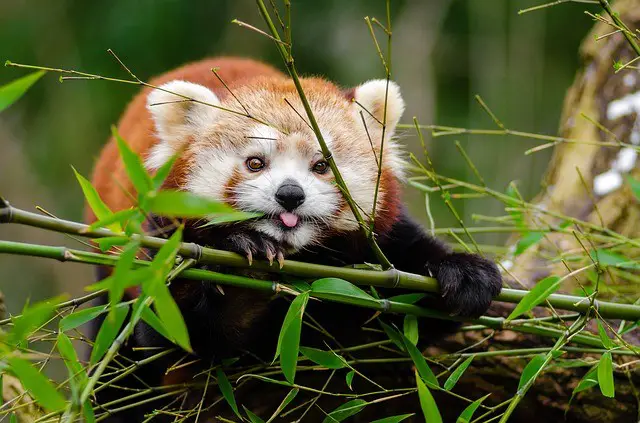
About 95% of what a red panda eats is bamboo. It picks the most nutritious leaf tips and, when it can find them, tender new shoots.
There is a problem with bamboo, though. It is tough and hard to digest, and a red panda can digest only about 24% of the bamboo it eats. The rest passes straight through.
So a red panda has to eat a lot. Each day it eats 20 to 30% of its own body weight, about 1 to 2 kg of bamboo leaves and shoots. That is like a child eating a pile of food as heavy as a large bag of potatoes, every day.
All that eating takes time. A red panda may spend about half of its waking hours looking for bamboo and munching it.
The false thumb
To hold bamboo steady, a red panda uses what scientists call a false thumb, or pseudo-thumb. It is not a real thumb. It is an enlarged wrist bone that sticks out like a sixth finger.
The red panda uses it to grip bamboo stems while it eats, and to hold onto tree branches. Giant pandas have the very same kind of false thumb, even though the two animals are not close relatives.
That enormous tail
Almost half of a red panda’s total length is its tail. It helps the red panda balance as it walks along narrow branches.
It is also a blanket. When it gets really cold, a red panda can go into a deep, slow sleep called torpor. It curls up and wraps its fluffy tail around its body to keep in the warmth.
A red panda’s day
Red pandas are most active at dawn and dusk. Animals like this are called crepuscular. In the hottest part of the day, they usually sleep, often high in a tree.
They mostly live alone, and they spend a lot of time in the branches. On the ground they move with a slow, rolling walk.
Red panda cubs
A mother red panda usually has two cubs, though there can be anything from one to four. They are born in late spring or early summer, between May and July.
Before they arrive, the mother makes a den in a hollow tree, a stump or a crack in the rocks. She lines it with twigs, leaves, grass, moss and small branches to keep her cubs snug.
In the wild, red pandas usually live 8 to 10 years. In zoos they can live up to 15, and the oldest on record reached 23.
One kind of red panda, or two?
For a long time, scientists said there was one kind of red panda, split into two subspecies. Now many think they are really two separate species.
The Chinese red panda lives in south-western China and tends to have a redder face. The Himalayan red panda lives in Nepal, India and Bhutan and tends to have a whiter face. A river is thought to have split the two groups about 250,000 years ago.
The idea is not new. Scientists first suggested it in the 1920s. But new genetic evidence has made it much more convincing, and experts are still weighing it up.
Why red pandas are endangered
Red pandas are listed as Endangered. Estimates suggest their numbers have fallen by as much as 40% in recent decades. San Diego Zoo puts the total at around 10,000 adults.
The main threats are the loss and damage of their forest homes, disturbance by people, and poaching. Because red pandas depend on bamboo and on high mountain forests, losing even part of a forest can leave them without enough food.
Zoos, wildlife charities and local communities are working to protect the forests where red pandas live, and to count the red pandas that are left.
The Forest Guardians
In Nepal, some of the people protecting red pandas live right beside them. A charity called the Red Panda Network pays local people to watch over the forests. They are called Forest Guardians.
There are 156 Forest Guardians, and 20 of them are women. They work in six districts of Nepal: Panchthar, Ilam, Taplejung, Dolpa, Kalikot and Bhojpur. Most were hired in 2014, and more have joined since.
Their work is varied. They check on the health of the forest and go on patrols to stop poachers, people who hunt animals when it is against the law. They set up camera traps, which are hidden cameras that take a picture when an animal walks past. These are very useful for a shy animal that spends much of its time high in the trees. Each photo records the time and place, so over months the pictures build up a picture of where red pandas go and when they are awake.
They also collect red panda droppings. That might sound strange, but droppings carry tiny traces of DNA, and scientists can study it to learn about red pandas without ever catching one. Some Forest Guardians have even helped with a study that fitted red pandas with GPS satellite collars, to follow where they go.
Forest Guardians run workshops too, and talk to their neighbours about why the forest matters. Local people know the forest better than anyone, and they are there all year round.
The money they earn also supports their families. That way, protecting red pandas becomes a way to make a living, not something that gets in its way.
Three things people get wrong
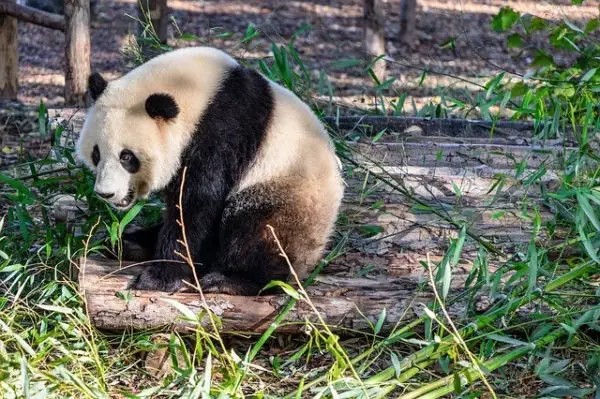
Red pandas are not baby giant pandas. They are a completely different animal, in a family of their own. They just share a love of bamboo and a false thumb.
Red pandas are not a kind of raccoon. They look a little like raccoons, with their ringed tails, but DNA shows they belong to their own family.
The red panda was not named after the giant panda. It was described first, in 1825, so it is the original panda.
Did you know? In very cold weather a red panda can drop into a deep, slow sleep called torpor, wrapped up in its own fluffy tail like a blanket.
Try it
Measure 47 cm with a ruler or tape measure. That is how long a big red panda’s tail can be, almost as long as the rest of its body.
Knowledge check
Which panda was named first, the red panda or the giant panda?
Show answer
The red panda. It was described in 1825, 48 years before the giant panda.
What is a red panda’s false thumb?
Show answer
An enlarged wrist bone that works like an extra finger, helping it grip bamboo and branches.
Frequently asked questions
What do red pandas eat?
Red pandas eat mostly bamboo, about 95% of their diet. They choose the most nutritious leaf tips and new shoots, and eat 20 to 30% of their body weight each day because they can digest only about a quarter of it.
Where do red pandas live?
Red pandas live in cool, high mountain forests with bamboo in the Eastern Himalayas and south-western China, in Nepal, India, Bhutan, Tibet, northern Myanmar and China.
Are red pandas related to giant pandas?
Red pandas are not closely related to giant pandas. They belong to a family of their own, though both eat bamboo and both have a false thumb made from a wrist bone.
Why is it called a red panda?
The red panda was the first animal called a panda, described in 1825. Its scientific name, Ailurus fulgens, means something like shining, fire-coloured cat.
How many red pandas are left?
Red pandas are Endangered. San Diego Zoo estimates there are around 10,000 adults left, and numbers have fallen by as much as 40% in recent decades.
How long do red pandas live?
Red pandas usually live 8 to 10 years in the wild and up to 15 years in zoos. The oldest on record reached 23.
Sources
- Smithsonian’s National Zoo: red panda — size, range, habitat, bamboo diet, false thumb, cubs, lifespan, status and threats
- San Diego Zoo Wildlife Alliance: red panda — the 1825 description, digestion, feeding time, dens and the population estimate
- Red Panda Network: red panda facts — range countries, name meaning, torpor, tail and lifespan
- Red Panda Network: two species or one? — how the Chinese and Himalayan red pandas differ
- Red Panda Network: Forest Guardians — how many Forest Guardians there are, where they work and what they do