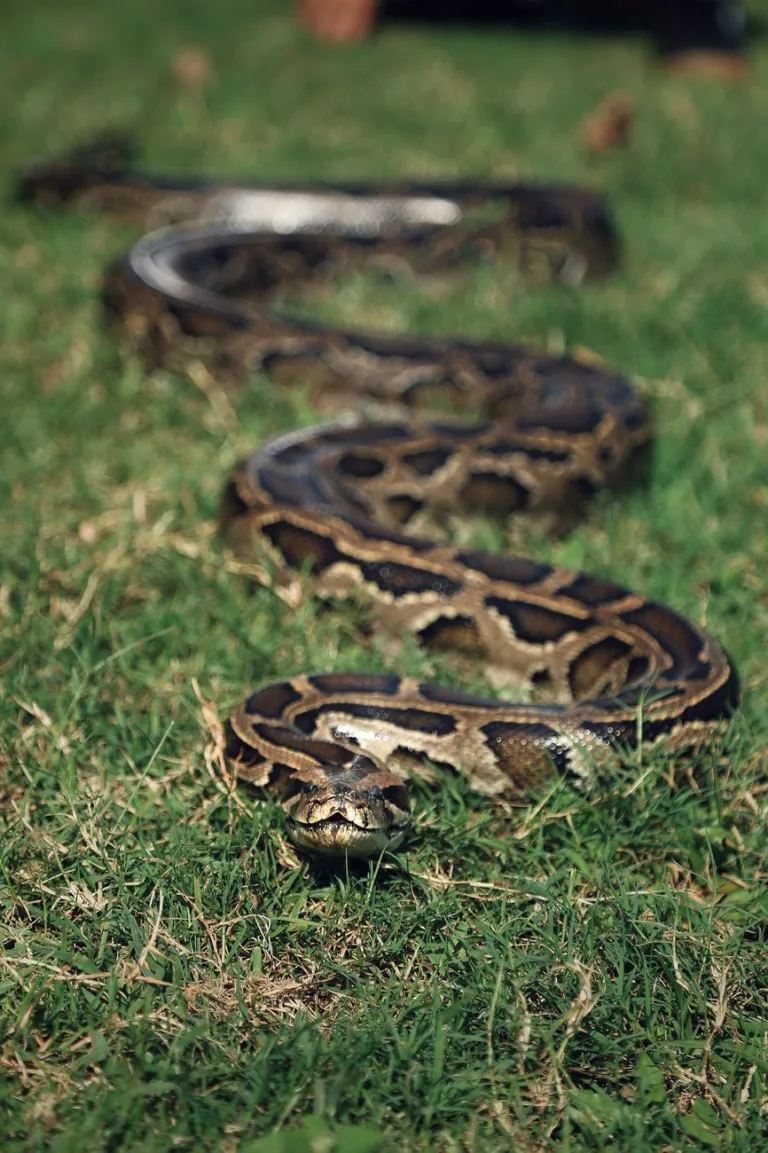
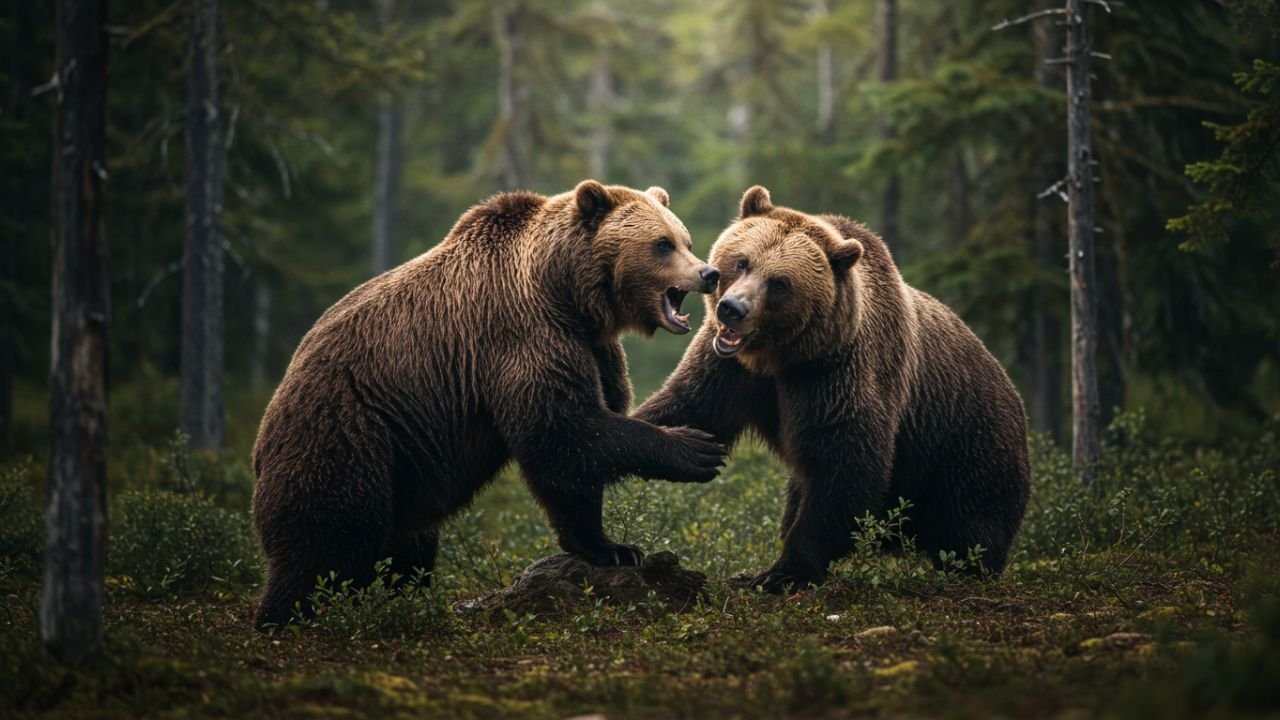
The Kamchatka brown bear (Russia) and the Kodiak bear (Alaska) are both brown bears, the same species. Both grow huge on salmon. Kodiak males weigh about 272 to 635 kg and stand over 3 m tall on their hind legs. Reliable weights for Kamchatka bears are harder to find, so nobody knows for sure which is bigger. They never meet: the Bering Sea separates them.
Kamchatka brown bears and Kodiak bears quick facts
- Kamchatka and Kodiak bears are both brown bears.
- About 3,500 Kodiak bears live on the Kodiak Archipelago.
- A big male Kodiak bear can weigh up to about 680 kg.
- About 64% of a Kodiak bear’s diet is salmon.
- At least a fifth of all wild Pacific salmon spawn in Kamchatka.
Kamchatka brown bear vs Kodiak bear

The Kamchatka brown bear and the Kodiak bear are two of the biggest bears on Earth. One lives in Russia and the other in Alaska, but they have a lot in common.
In fact, they are the same kind of animal. Animal Diversity Web says both are brown bears, a single species that lives across Europe, Asia and western North America. They are simply two groups that live far apart.
This guide compares where they live, how big they get, what they eat and how they raise their cubs. It also explains why the two will never meet in the wild.
| Kamchatka brown bear | Kodiak bear | |
|---|---|---|
| Where | Kamchatka Peninsula, Russia | Kodiak Archipelago, Alaska |
| Species | brown bear | brown bear (its own subspecies) |
| Main food | salmon and plants | salmon (about 64%) and plants |
| Cubs | usually 3 | usually 2 or 3 |
| Numbers | one of the largest bear populations on Earth | about 3,500 |
| Winter | sleeps in a den | sleeps in a den up to 8 months |
All brown bears
Brown bears are one of the most widespread bears in the world. The International Association for Bear Research and Management says about 200,000 brown bears live on Earth.
Russia has the most: an estimated 40,000 to 100,000. Alaska has about 31,700. Brown bears are listed as Least Concern worldwide, although some small, isolated groups are at risk.
The grizzly bear of North America is a brown bear too. Kodiak and Kamchatka bears are simply the giants of the family. Find out how grizzlies are doing in our guide to whether grizzly bears are endangered.
Why coastal bears are so big
The biggest brown bears live near the coast, where there is plenty of fish. Animal Diversity Web says coastal Alaskan males weigh about 389 kg on average, while bears living far inland in the Yukon weigh only about 140 kg.
Salmon make the biggest difference to their size. The International Association for Bear Research and Management says brown bears that feed on salmon are about 50% larger than those that live mostly on fruit. The biggest coastal brown bears can be as large as polar bears.
The Kamchatka brown bear

Kamchatka is a huge peninsula in Russia’s Far East. National Geographic says it is bigger than California, but has fewer than 320 km (200 miles) of paved road. Much of it is wild land, full of volcanoes, rivers and forests.
National Geographic calls Kamchatka’s bears the largest bear population on Earth. It also says they are arguably the largest subspecies, although this has not been measured the way Kodiak bears have been.
Scientists have counted bears from the air. The International Association for Bear Research and Management says surveys in southern Kamchatka in the 1990s counted 1,051 bears in 83 hours of flying. They found up to 1.7 bears for every 10 square km in the best areas.
A salmon feast

Kamchatka is one of the best places for salmon in the world. National Geographic says at least a fifth of all wild Pacific salmon spawn there. In one year, more than 7 million salmon swam up a single river, the Kol.
Kurile Lake, in southern Kamchatka, has the largest run of sockeye salmon in Asia. A fisheries journal says the salmon draw brown bears from all around, creating some of the highest bear densities on Earth.
PBS says Kamchatka bears eat mostly plants in spring. Then, in summer and autumn, they feast on salmon to build up fat for winter.
Kamchatka bears face some dangers. The bear research association says the main threat has been poaching. National Geographic says illegal fishing takes huge amounts of salmon, leaving less food for bears.
The Kodiak bear

The Kodiak bear lives only on the Kodiak Archipelago in Alaska, a group of islands that includes Kodiak Island. The US Fish and Wildlife Service says it is its own subspecies of brown bear.
Kodiak bears have been cut off on their islands since the end of the last ice age, about 12,000 years ago. Because of this, the US Fish and Wildlife Service says, they have the lowest genetic variety of any brown bear group measured in North America.
The Alaska Department of Fish and Game says about 3,500 Kodiak bears live on the islands. You can read more on its Kodiak bear fact sheet and its Kodiak bear management plan.
How big is a Kodiak bear?
Kodiak bears are enormous animals, among the largest bears on Earth. The Alaska Department of Fish and Game says a big male can stand more than 3 m (10 feet) tall on its hind legs, and about 1.5 m (5 feet) tall at the shoulder on all fours.
The US Fish and Wildlife Service says males weigh about 272 to 635 kg (600 to 1,400 pounds). The Alaska Department of Fish and Game says the biggest can reach 680 kg (1,500 pounds). Females are much smaller, about 136 to 318 kg.
Their claws can be up to 15 cm (6 inches) long, the US Fish and Wildlife Service says.
Which bear is bigger? Kodiak bears have been measured carefully for many years. Reliable published weights for Kamchatka bears are much harder to find, so nobody can say for sure which group is bigger on average.
What Kodiak bears eat
The US Fish and Wildlife Service says about 64% of a Kodiak bear’s diet is salmon, and about 26% is plants. They also eat berries.
Brown bears have an amazing sense of smell. Animal Diversity Web says they can follow the scent of a dead animal from more than 3 km (2 miles) away. Their hearing is about as good as ours, but their eyesight is fairly weak.
Winter sleep
Both kinds of bear spend the winter asleep in dens. The Alaska Department of Fish and Game says Kodiak bears start going into their dens in late October, and some stay inside for up to eight months.
Bears live off their fat all winter. The US Fish and Wildlife Service says a Kodiak bear can lose 20 to 40% of its body weight while it sleeps. PBS says a Kamchatka bear can lose up to 30%.
Cubs
Brown bear cubs are born in the den in the middle of winter. The Alaska Department of Fish and Game says Kodiak cubs are born in January or February, weighing less than 0.5 kg (1 pound).
By the time they leave the den in spring, they weigh about 7 to 9 kg (15 to 20 pounds). Kodiak mothers usually have two or three cubs, and most cubs stay with their mother for about three years.
PBS says Kamchatka mothers usually have three cubs, and two usually survive. Their cubs also stay with their mother for up to three years.
Life is risky for young bears. The Alaska Department of Fish and Game says more than a quarter of Kodiak cubs die before they leave their mother. The oldest wild Kodiak bears on record were a 34-year-old female and a 27-year-old male.
Bears and people
Big bears can be dangerous, but attacks are rare. The Alaska Department of Fish and Game says only one person has been killed by a Kodiak bear in the last 75 years.
Kodiak bears are protected. President Franklin D. Roosevelt created the Kodiak National Wildlife Refuge in 1941 to protect the bears’ feeding and breeding areas, the US Fish and Wildlife Service says. Learn more about their home state in our Alaska facts.
Could they ever meet?

People sometimes wonder which bear would win in a fight. But the two will never meet in the wild.
Kodiak bears have been on their islands in Alaska for about 12,000 years. Kamchatka is in Russia, on the other side of the Bering Sea. A wide stretch of open ocean separates the two groups.
And brown bears usually avoid fights when they can. Even at crowded salmon rivers, bears mostly keep their distance from each other. For scientists, the interesting question is not who would win, but how two groups of the same species grew so big on salmon, so far apart.
For a deeper look at brown bears, the American Society of Mammalogists has published a scientific account of the species.
Fast, strong and clever
Brown bears may look slow and heavy, but they can move surprisingly fast. The Alaska Department of Fish and Game says brown bears in Alaska can run in short bursts at up to 64 km/h (40 mph), faster than any person can sprint.
Kodiak bears also have enormous heads. The US Fish and Wildlife Service says the world-record Kodiak bear skull measured about 78 cm (30.75 inches), adding its length and width together.
Some places have lots of bears. The US Fish and Wildlife Service says the area around Karluk Lake, on Kodiak Island, has one of the densest bear populations in the world, because its rivers are full of salmon every summer.
Three things people get wrong
Kodiak and Kamchatka bears are not different species. Both of them belong to the brown bear species.
These bears do not fight each other. They live on different continents.
Nobody knows for sure which is bigger. Kamchatka bears have not been measured as carefully.
Did you know? Brown bears that eat salmon are about 50% bigger than brown bears that live mostly on fruit.
Try it
Find Kodiak Island and the Kamchatka Peninsula on a world map. Which sea lies between them?
Knowledge check
What species are Kamchatka and Kodiak bears?
Show answer
Both are brown bears.
Why do these bears grow so big?
Show answer
They eat lots of fatty salmon.
Frequently asked questions
Is a Kodiak bear bigger than a Kamchatka bear?
Nobody knows for sure. Kodiak bears have been carefully measured, with males up to about 680 kg, but reliable weights for Kamchatka bears are harder to find.
Are Kodiak and Kamchatka bears the same species?
Yes. Both are brown bears. The Kodiak bear is its own subspecies, cut off on its islands for about 12,000 years.
Where do Kamchatka brown bears live?
They live on the Kamchatka Peninsula in Russia’s Far East, a wild land bigger than California, full of salmon rivers.
What do these bears eat?
Both eat lots of salmon, plus plants and berries. About 64% of a Kodiak bear’s diet is salmon.
Could a Kodiak bear fight a Kamchatka bear?
No. They live on different continents, separated by the Bering Sea, and brown bears usually avoid fights.
How many Kodiak bears are there?
The Alaska Department of Fish and Game says about 3,500 Kodiak bears live on the Kodiak Archipelago.
Sources
- Alaska Department of Fish and Game: Kodiak brown bear fact sheet — numbers, size, cubs, denning, lifespan and safety
- US Fish and Wildlife Service: Kodiak brown bear — subspecies, weight, claws, diet, genetics and winter weight loss; its refuge pages were also used
- Animal Diversity Web, University of Michigan: brown bear — one species, coastal and inland sizes and senses
- International Association for Bear Research and Management: brown bear — world numbers, salmon-fed bears and status; its Kamchatka survey paper was also used
- National Geographic: where the salmon rule — Kamchatka, its salmon runs and illegal fishing
- PBS Living Edens: Kamchatka — Kamchatka bears’ seasons, cubs and winter weight loss