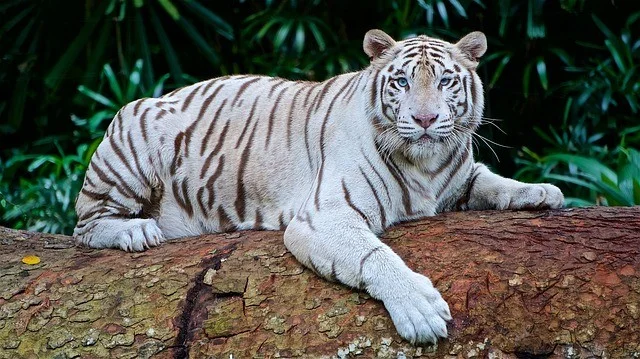
What do white tigers eat?
| Setting | Foods | Why |
|---|---|---|
| Accredited zoo | Balanced meat diet prepared for large carnivores | Provides controlled energy, protein, vitamins and minerals |
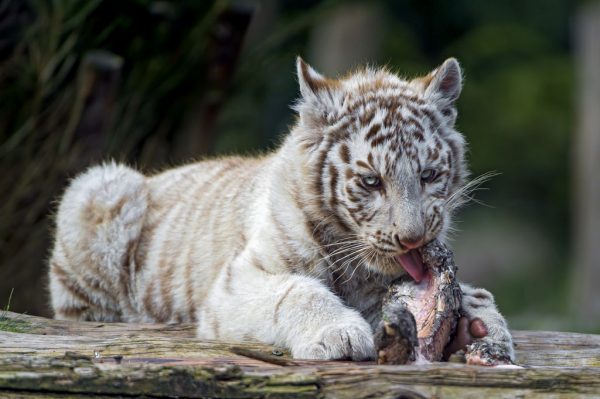
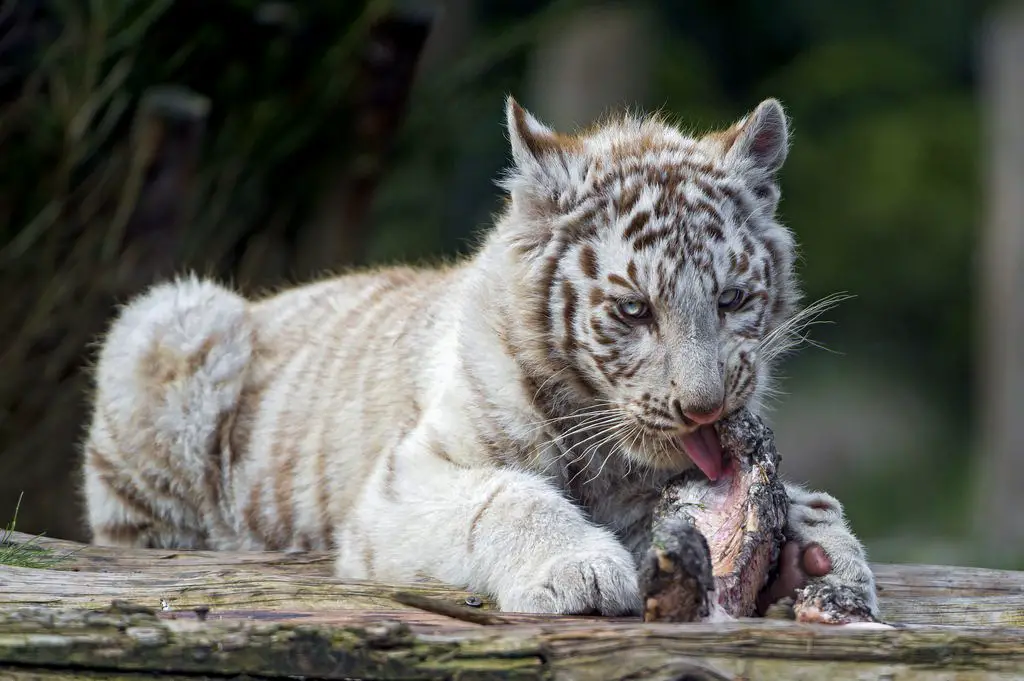
| Zoo enrichment | Bones or whole-prey items under professional supervision | Encourages chewing and natural feeding behaviour |
| Wild tiger habitat | Large hoofed mammals such as deer and wild boar | Tigers are ambush predators adapted to eating meat |
| Occasional wild prey | Smaller animals when available | Prey changes by habitat, season and opportunity |
White tiger facts that prevent confusion
- A white tiger is not an albino and is not a separate tiger species.
- Its pale coat results from inherited pigment variation; coat colour does not create a special diet.
- Most white tigers people see today are in human care, where trained staff design and monitor their diets.
- A zoo diet should never be copied for a household animal or attempted without wildlife professionals.
Diet in professionally managed zoos
Zoo nutritionists plan diets around an individual tiger’s age, body condition, activity and health. The Smithsonian’s National Zoo reports feeding tigers ground beef along with enrichment items such as bones and rabbits.
Amounts and ingredients vary between institutions and individuals. A long list copied from one facility is not a universal white-tiger menu.
What a wild white tiger would eat
A white Bengal tiger has the hunting anatomy and nutritional needs of other Bengal tigers. Tigers stalk and ambush prey, commonly targeting large hoofed mammals such as deer and wild boar where those animals occur.
Coat colour could affect camouflage, but it does not change the digestive system from carnivore to another feeding type.
Why white tigers are controversial
The white coat is produced by inherited pigment variation. Breeding repeatedly for a rare appearance can increase inbreeding and associated health problems.
Modern conservation programmes focus on genetically healthy tiger populations and protecting wild habitats, rather than producing animals for coat colour alone.
Picture guide
Continue the learning path
Did you know? A tiger’s stripe pattern is unique to the individual, and white tigers still have visible stripes.
Try it
Explain why coat colour changes appearance but does not create a new species or a different type of digestive system.
Knowledge check
Why is a white tiger’s diet similar to the diet of an orange tiger?
Show answer
White tigers are colour variants of tigers, so they share the same carnivorous anatomy and nutritional needs.
Sources
These government, museum, zoo and scientific resources support the key facts and uncertainty statements in this guide.
- Smithsonian’s National Zoo: Tiger — Describes tiger prey, hunting and the Zoo’s managed tiger diet.
- Smithsonian Institution Archives: White tigers — Explains the recessive colour trait and conservation concerns around breeding.
- Smithsonian’s National Zoo: Amur tiger — Distinguishes tiger subspecies from the inherited white-coat trait.