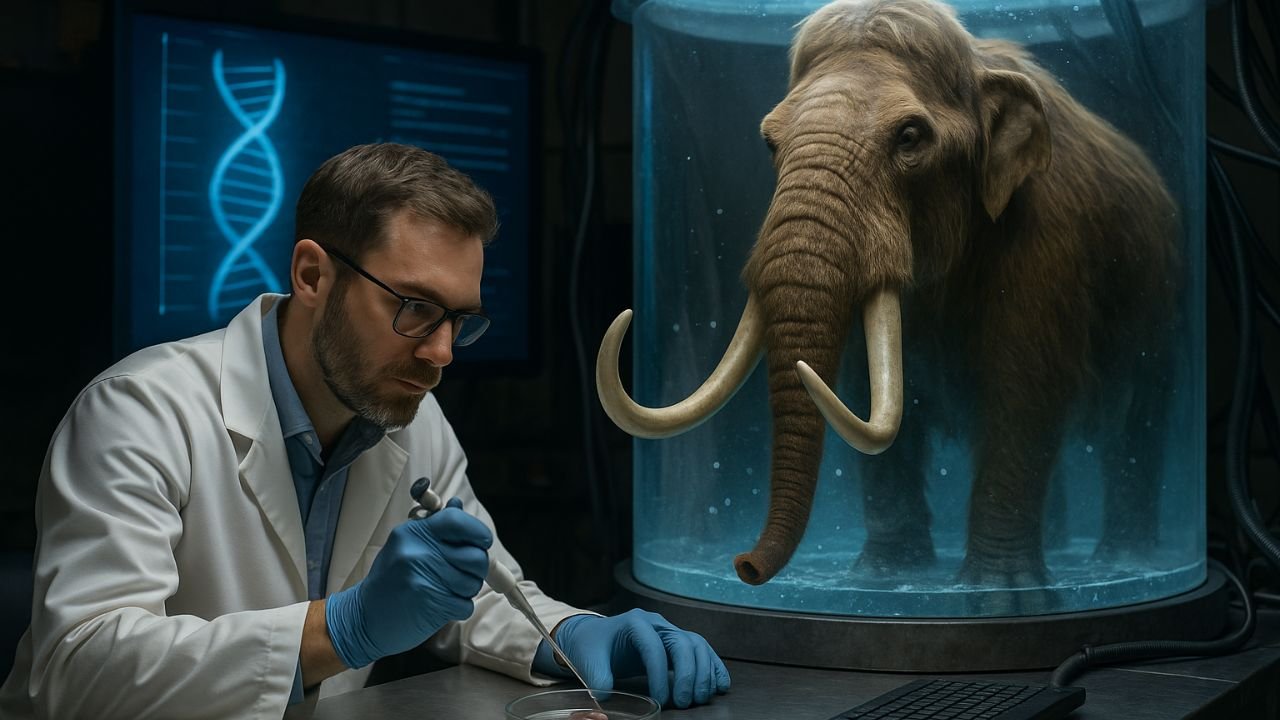
Not yet. A US company, Colossal Biosciences, says it is editing the DNA of Asian elephant cells to give them woolly mammoth traits. In August 2026 it said it expects the first calf in the early 2030s, later than it first promised. Many independent scientists say the result would be an elephant with some mammoth features, not a true mammoth.
bringing back the woolly mammoth quick facts
- No woolly mammoth has been brought back.
- Colossal Biosciences now expects a calf in the early 2030s.
- The last mammoths lived on Wrangel Island about 4,000 years ago.
- Mammoths cannot be cloned because no living cells survive.
- An Asian elephant pregnancy lasts about 22 months.
The short answer
Not yet, and maybe not in the way you imagine. A company in the United States called Colossal Biosciences says it is working to create elephants with woolly mammoth features. It plans to do this by changing the DNA of Asian elephants.
In August 2026, the company’s boss told TIME magazine that he now expects the first calf in the early 2030s. That is later than the company promised before.
Many scientists who do not work for Colossal doubt that the animal would truly be a mammoth. In this guide, we look at what woolly mammoths were, what the company says, and why people disagree.
| Question | Answer |
|---|---|
| Has a mammoth been brought back? | No |
| Who is trying? | Colossal Biosciences, a US company |
| How? | by editing the DNA of Asian elephant cells |
| When does it say? | the early 2030s (its August 2026 claim) |
| Would it be a real mammoth? | critics say it would be an elephant with some mammoth traits |
What was a woolly mammoth?
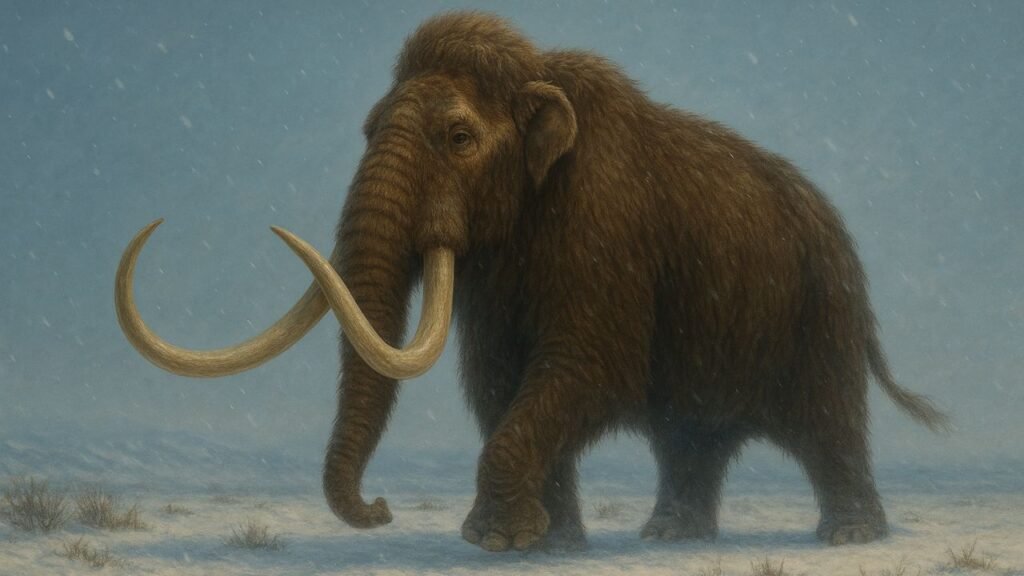
Woolly mammoths were close relatives of today’s elephants. Science News Explores says their closest living relative is the Asian elephant.
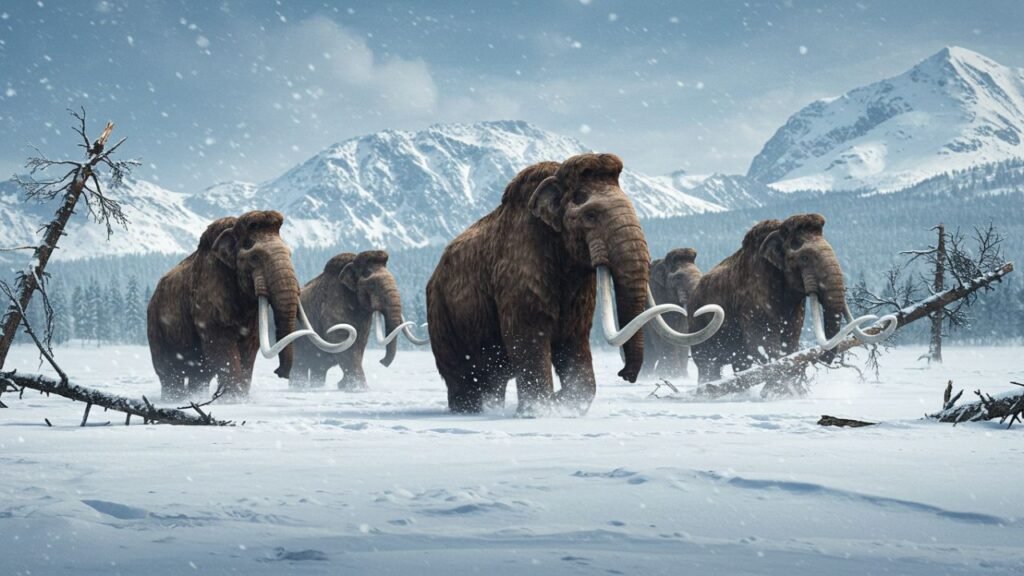
They were built for the cold. National Geographic Kids says a woolly mammoth stood about 4 m (13 feet) tall, with tusks that could grow up to 4.5 m (15 feet) long.
Mammoths had a thick coat with two layers. The shaggy outer hair could be about 50 cm (20 inches) long. Their ears were much smaller than a modern elephant’s, which helped them lose less body heat. A fatty hump on their back stored energy for times when food was hard to find.
They ate grasses and shrubs, and used their tusks to dig through snow to reach plants. National Geographic Kids says mothers and calves lived in herds of about 15, and young males left the herd at around 10 years old.
Woolly mammoths lived on the cold, treeless tundra of Europe, Asia and North America.
When did mammoths die out?
National Geographic Kids says woolly mammoths roamed the Earth from about 300,000 years ago until about 10,000 years ago on the mainland.
That was around the end of the Ice Age, which Science News Explores says ended 11,700 years ago. Find out more in our guide to how long the Ice Age lasted.
Scientists are still not sure why mammoths disappeared. National Geographic Kids says the main ideas are hunting by humans, a warming climate, or a mix of both.
The last mammoths
Not all mammoths vanished at the end of the Ice Age. A small group survived on Wrangel Island, in the Arctic Ocean off the coast of Siberia.
About 10,000 years ago, rising seas flooded the land around it and cut the mammoths off. Scientists at the Centre for Palaeogenetics in Stockholm say the island group started from no more than eight mammoths. It grew to between 200 and 300 animals and survived for about 6,000 years.
The Wrangel Island mammoths died out about 4,000 years ago.
In 2024, the scientists compared the DNA of 21 mammoths. The island mammoths were inbred, which means they were closely related to each other, and they had weaker genes for fighting disease. But the team says that was not enough to wipe them out. They think a sudden event finished them off, although the study does not say what it was.
Reading mammoth DNA
DNA is the set of instructions inside living cells that tells a body how to grow. Scientists can sometimes read DNA from very old remains.
In 2021, a team read DNA from three mammoth teeth that had been frozen in the ground in Siberia. The University of California, Santa Cruz says the teeth were about 700,000, 1.1 million and 1.2 million years old. At the time, it was the oldest DNA ever read.
The DNA showed that genes for thick hair, fat storage and coping with cold were already there in a mammoth that lived a million years ago.
Why not just clone a mammoth?
You might think scientists could simply clone a mammoth from a frozen body. But Science News Explores says no mammoth remains contain whole, living cells. Ancient DNA is broken into many small pieces, so cloning is not possible.
That is why the plan is different. Instead of rebuilding a mammoth from scratch, Colossal wants to change the DNA of an elephant to make it more like a mammoth.
What Colossal says it will do
Colossal’s plan has several steps. Science News Explores says the company wants to edit mammoth-like genes into Asian elephant cells, use those cells to make embryos, and have elephant mothers carry the babies.
That takes a long time. An Asian elephant is pregnant for about 22 months, nearly two years.
The company’s timeline has changed. In March 2025, it said it was on track for the first mammoth-like calves by 2028. In March 2026, it told the radio station KNKX that a birth was about two years away.
Then, in August 2026, its chief executive, Ben Lamm, told TIME the calf is now expected in the early 2030s. Colossal also told TIME it now thinks about 150 genes must be changed, up from its first estimate of about 60, and that the number is still rising.
KNKX reported in March 2026 that the company had about 260 scientists and had raised more than $600 million.
The woolly mouse
In March 2025, Colossal announced a “woolly mouse”. Science News Explores says the company made eight changes to seven genes in mice. The mice grew long, wavy, golden hair, up to three times longer than normal.
Colossal presented this as a step towards the mammoth. But the research was shared as a preprint, which means it had not yet been checked by other scientists before it was published.
In 2025, Colossal also said it had created “dire wolves”, three animals named Romulus, Remus and Khaleesi, KNKX reports. Meet today’s wolves in our gray wolf facts.
Why some people want mammoths back
Supporters give several reasons. KNKX and Science News Explores say the gene-editing tools could help save animals that are endangered today.
Colossal argues that big grazing animals could help bring back the grassland of the Arctic tundra and slow the thawing of frozen ground, called permafrost. This idea is not yet proven. Learn how animals and plants depend on each other in our ecosystem facts.
Some supporters also say that because humans helped cause extinctions, humans have a responsibility to try to undo them, KNKX reports.
Why others are worried
Many scientists have serious doubts. Tori Herridge of the University of Sheffield told Science News Explores that a mammoth is more than an elephant with a furry coat, and that nobody knows all the genes that made a mammoth a mammoth.
Jacquelyn Gill of the University of Maine asks whether today’s Arctic could even support mammoths. She also asks who would teach the first calves how to live like mammoths, since there would be no mammoth mothers.
Others worry about the elephants. Science News Explores points out that Asian elephants are endangered, so using them as mothers raises questions about their welfare.
Critics quoted by KNKX say the money could be spent protecting animals that are still alive. They also warn that releasing a new kind of animal could affect nature in ways nobody expects, and Jeanne Loring of Scripps Research warned it could be cruel to the animals themselves.
Would it really be a mammoth?
This is the biggest question. Science News Explores says the animal would be a gene-edited Asian elephant with some mammoth traits, not a true mammoth.
Colossal’s chief science officer, Beth Shapiro, has said it will count as a mammoth because it will look and act like one and do the same job in nature. Nic Rawlence of the University of Otago disagrees. He argues that a look-alike is not the real thing, so extinction is still forever.
Some scientists think birds might be easier to bring back than mammoths, because birds lay eggs and no long pregnancy is needed. Read about a famous lost bird in our guide to why the dodo went extinct.
Three things people get wrong
Scientists cannot clone a mammoth from frozen remains. No whole, living cells survive.
Not all mammoths died out at the end of the Ice Age. Some survived on Wrangel Island until about 4,000 years ago.
A “brought back” mammoth would not be a true mammoth. It would be an elephant with some mammoth genes.
Did you know? A small group of woolly mammoths survived on Wrangel Island until about 4,000 years ago, long after the Ice Age ended.
Try it
Hold a class debate: should scientists try to bring back the woolly mammoth? Use one reason from each side of this guide.
Knowledge check
Why can’t scientists clone a mammoth?
Show answer
No whole, living mammoth cells survive.
Which animal’s DNA does Colossal plan to edit?
Show answer
The Asian elephant’s.
Frequently asked questions
Has the woolly mammoth been brought back?
No. Colossal Biosciences says it is working on it, and in August 2026 it said it expects the first calf in the early 2030s.
How would scientists bring back a mammoth?
The plan is to edit mammoth-like genes into Asian elephant cells, make embryos and have elephant mothers carry the calves.
When did woolly mammoths die out?
Most died out around 10,000 years ago, but a small group on Wrangel Island survived until about 4,000 years ago.
Why can’t mammoths be cloned?
No mammoth remains contain whole, living cells, and ancient DNA is broken into small pieces.
What is the woolly mouse?
A mouse Colossal made in 2025 by changing seven genes, giving it long, wavy, golden hair.
Would a new mammoth be a real mammoth?
Many scientists say no. It would be a gene-edited Asian elephant with some mammoth traits.
Sources
- National Geographic Kids: woolly mammoth — size, tusks, coat, ears, hump, diet, herds, range, time span and extinction theories
- ScienceDaily, reporting the Centre for Palaeogenetics study in Cell (June 2024) — the Wrangel Island mammoths and how they died out
- University of California, Santa Cruz: million-year-old mammoth DNA — the oldest mammoth DNA and its cold-adaptation genes
- Science News Explores: the woolly mouse — why cloning is impossible, Colossal’s plan and claims, the woolly mouse and scientists’ views
- KNKX Public Radio (March 2026): Colossal Biosciences breeds controversy — the company’s size and claims, dire wolves and arguments for and against
- TIME (24 August 2026): Colossal’s revised mammoth timeline — the early 2030s timeline and the number of genes