Penguin quick facts
- In October 2024 the African penguin became the first penguin ever listed as Critically Endangered.
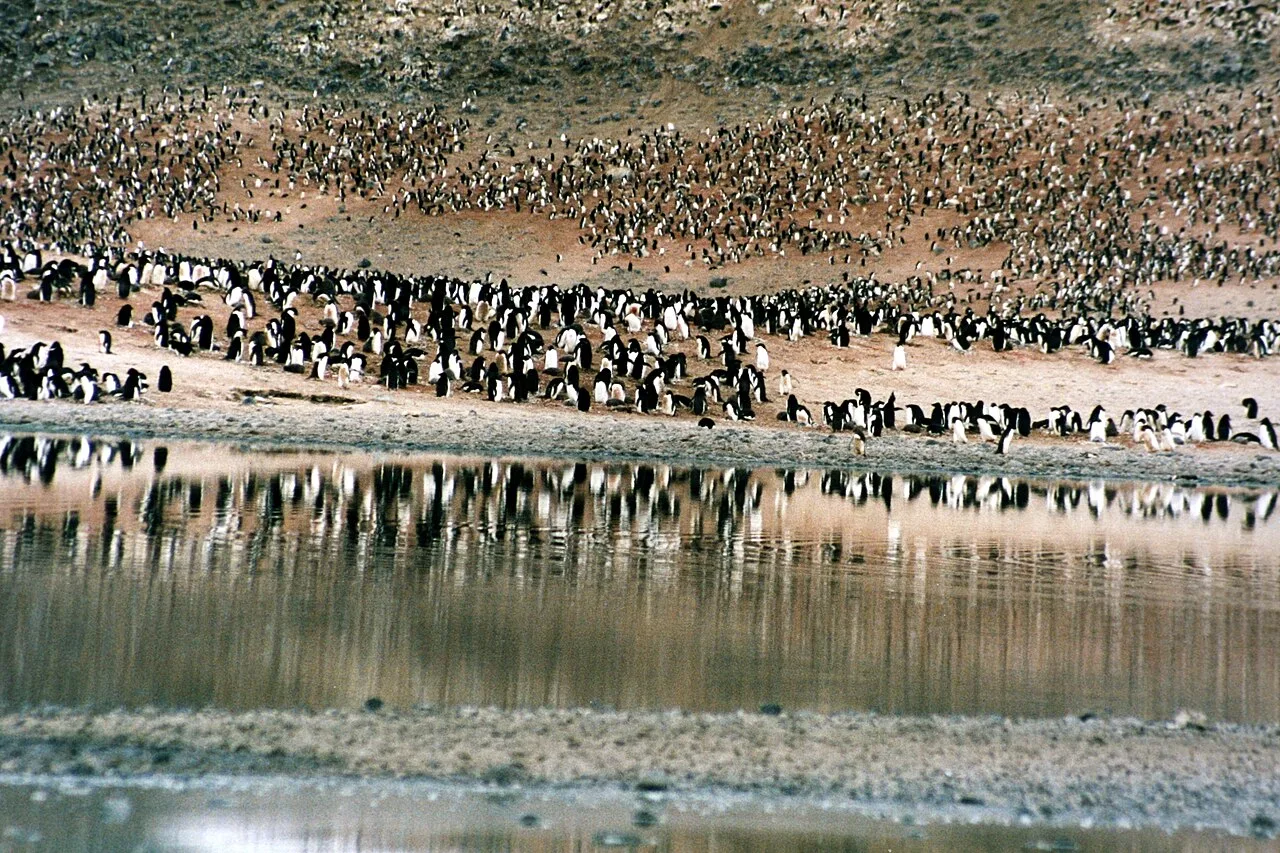
- Adélie penguins steal pebbles from their neighbours’ nests to build their own.
- Little penguins have a clear third eyelid that works like a pair of swimming goggles.
- In April 2026 the emperor penguin, the biggest penguin alive, was moved up to Endangered.
- A giant fossil penguin called Kumimanu weighed about 154 kg, more than three times as much as an emperor.
Most people picture a penguin as a black-and-white bird standing on ice. That is only part of the story. This guide covers every kind of penguin, from the big emperor of Antarctica to a small blue penguin that waddles ashore at dusk in Australia. It also says plainly where scientists still disagree.
What is a penguin?
A penguin is a seabird that cannot fly. It has feathers and a beak, and it lays eggs, just like a robin or a pigeon. The Australian Antarctic Division, which runs Australia’s research in Antarctica, describes penguins as flightless birds that are highly adapted for life in the sea.
The big difference is in the wings. A penguin’s wings work as flippers. They cannot lift the bird into the air, but they are excellent for swimming and deep diving.
Penguins are not the only birds that have given up flying. The kiwi bird of New Zealand cannot fly either, and neither can the ostrich, the biggest bird in the world. Kiwis and ostriches stay on land. Penguins took to the sea instead.
A penguin spends much of its life in the water. Little penguins, for example, spend about 80% of their lives in the ocean, which is roughly four days out of every five. They come ashore to breed, to raise their chicks, to look after their burrows and to grow new feathers.
How penguins evolved from flying birds
Penguins are very old. The earliest known penguins swam in warm seas over what is now New Zealand about 62 million years ago. That was only a few million years after the dinosaurs died out.
The oldest penguin fossil belongs to Mannering’s penguin. NZ Birds Online says it comes from rocks 61.6 to 60.5 million years old beside the Waipara River in New Zealand. It had already lost the power of flight.
So penguins came from birds that could fly. They gave it up very early and swapped wings for flippers.
Some early penguins were giants. A penguin called Kumimanu, described in 2023, weighed about 154 kg (340 pounds), according to the University of Cambridge. That is more than three times the weight of a large emperor penguin. It lived between 59.5 and 55.5 million years ago, and its flipper bones still looked a little like a flying bird’s wing bones.
It was not the only giant. A 2017 study in Nature Communications says two other ancient penguins were an estimated 1.4 to 2 metres long. Giant size evolved more than once, soon after penguins stopped flying.
So the emperor is the biggest penguin alive today. It is not the biggest penguin that ever lived.
How many types of penguins are there?
Most scientists count 18 species of penguin. A species is one kind of animal whose members can breed with each other. The Australian Antarctic Division uses 18. So do Phillip Island Nature Parks in Australia and SANCCOB, a seabird rescue centre in South Africa.
Not everyone agrees, though. The Charles Darwin Foundation, a science centre in the Galápagos Islands, wrote in 2025 that 17 species have been recorded. Some penguins look so alike that experts argue about whether they are one species or two. The Australian Antarctic Division, for example, lists the northern and southern rockhopper penguins as separate species. For a school project, it is fair to write that most experts count 18, while a few lists give a slightly different number.
Here are all 18, with where each one breeds and its status on the IUCN Red List. The Red List is the world’s list of how close each kind of animal is to dying out. Where the newest status anyone could check dates from 2018, the year is shown. For two species, the sources disagree, so this guide says so rather than guessing.
| Penguin | Where it breeds | Red List status |
|---|---|---|
| Emperor | Antarctica, on sea ice | Endangered (since April 2026) |
| King | Islands near Antarctica, such as South Georgia and the Falklands | Least Concern |
| Adélie | All round the coast of Antarctica | Least Concern (2018) |
| Chinstrap | The Antarctic Peninsula and nearby islands | Least Concern (2018) |
| Gentoo | The Antarctic Peninsula and islands near Antarctica | Least Concern |
| Macaroni | Islands near Antarctica | Vulnerable |
| Royal | Macquarie Island only | Near Threatened |
| Southern rockhopper | The Falklands, southern South America and islands near Antarctica | Vulnerable |
| Northern rockhopper | Tristan da Cunha, Gough, Amsterdam and St Paul islands | Endangered |
| Fiordland | South-west New Zealand | Sources disagree |
| Snares | The Snares Islands, New Zealand | Vulnerable (2018) |
| Erect-crested | The Antipodes and Bounty Islands, New Zealand | Endangered (2018) |
| Yellow-eyed | South-east New Zealand and nearby islands | Endangered (2018) |
| Little | New Zealand and southern Australia | Least Concern (2018) |
| African | South Africa and Namibia | Critically Endangered (since October 2024) |
| Humboldt | Peru and Chile | Vulnerable |
| Magellanic | Argentina, Chile and the Falklands | Sources disagree |
| Galápagos | The Galápagos Islands | Endangered |
These statuses will keep changing. The IUCN’s penguin experts plan to check most species again during 2026. Some scientists also split a few penguins into extra species, which is why a handful of lists give a slightly different total.
Penguin names can be confusing, too. The little penguin has three common names: little penguin, little blue penguin and fairy penguin. All three mean the same bird.
Where in the world penguins live
Almost all penguins live in the Southern Hemisphere, the half of the Earth south of the equator. The equator is the imaginary line around the middle of the planet.
The biggest crowds of penguins are on the coasts of Antarctica and on the islands around it. Yet only 5 of the 18 species live in Antarctica. Another 4 live on sub-Antarctic islands, the cold, windy islands in the ocean that surrounds Antarctica.
That leaves 9 species, half of all penguins, living further north. Their homes include the coasts of southern Africa, southern Australia, New Zealand and the Galápagos Islands. Some of those places get very hot.
African penguins live on the rocky south-western coast of Africa, from Namibia to the city of Port Elizabeth in South Africa, and on many islands nearby. Summer days there can be scorching. An African penguin has a patch of bare skin above each eye. The hotter the bird gets, the more blood flows to these patches, where the air cools it down.
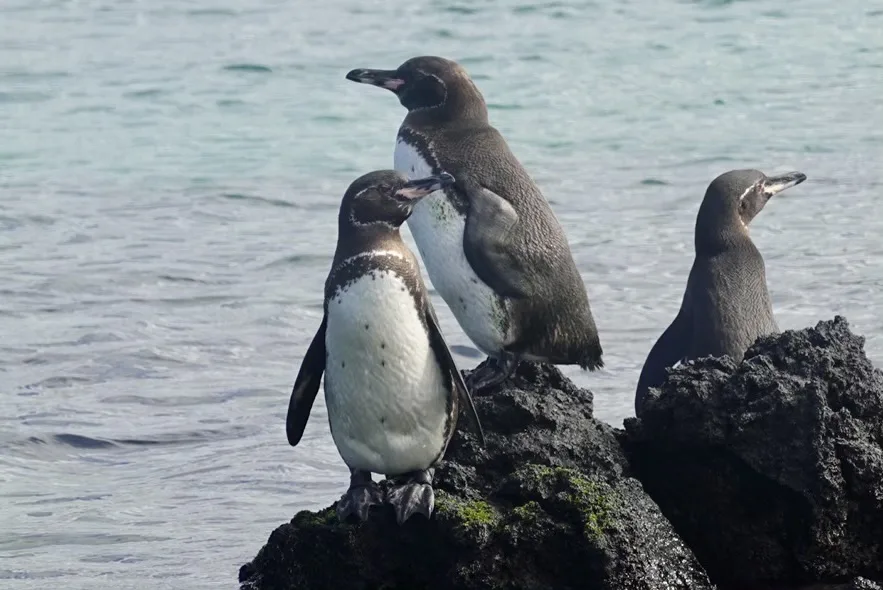
The Galápagos penguin goes furthest north of all. It lives on the Galápagos Islands, which belong to Ecuador and sit on the equator in the Pacific Ocean. It is the most northerly penguin of all.
How can a penguin survive so close to the equator? The answer is cold water. An ocean current called the Humboldt Current flows up from Antarctica and keeps the sea around the islands cool.
From the emperor to the little penguin
The biggest penguin is the emperor penguin of Antarctica. It is the largest of all 18 species, and the king penguin comes second. Emperors breed in the worst weather on Earth, and our emperor guide explains how they survive it.
The smallest is the little penguin. It is only slightly bigger than a bowling pin and weighs just under 1 kg (about 2 pounds). That is about the same as a bag of sugar. The Galápagos penguin is the second smallest.
| Penguin | Size | Where it lives | Special feature |
|---|---|---|---|
| Emperor penguin | the largest penguin | Antarctica | has dived 565 metres (1,854 feet) deep |
| Adélie penguin | about 70 cm (28 inches) tall; 3–6 kg | all round the coast of Antarctica | builds its nest from pebbles |
| African penguin | 61–69 cm (24–27 inches) tall; 2–5 kg | coasts of Namibia and South Africa | attracts a mate with a call like a donkey’s bray |
| Galápagos penguin | the second smallest penguin | the Galápagos Islands, on the equator | the most northerly penguin |
| Little penguin | just under 1 kg; a little bigger than a bowling pin | southern Australia and New Zealand | the only penguin with blue and white feathers |
An Adélie penguin stands about 70 cm (28 inches) tall, roughly as high as a kitchen table. An African penguin is a little shorter, at 61 to 69 cm. Both weigh a few kilograms, about as much as a pet cat.
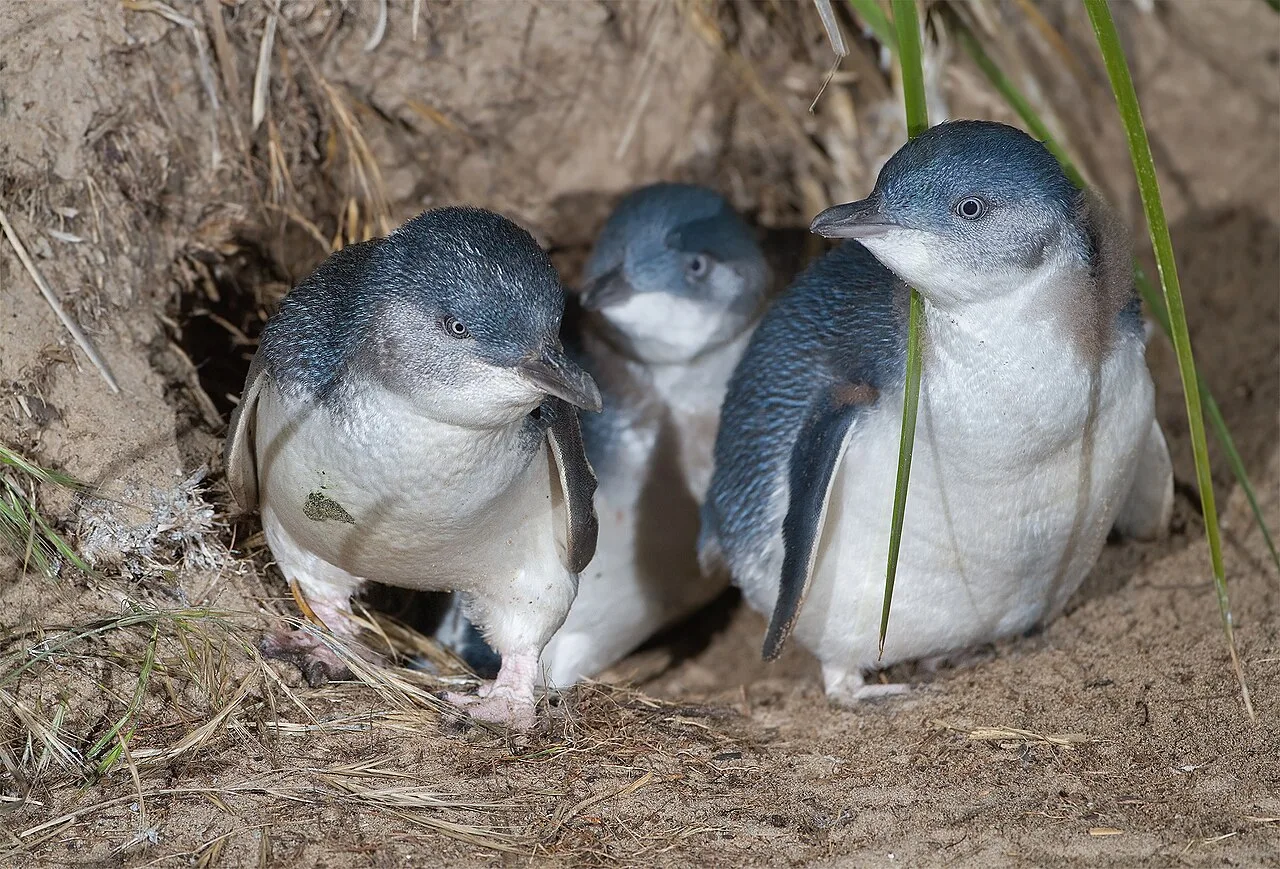
The little penguin is the only penguin that breeds on the shores of Australia. It is found along the coasts of southern Australia and New Zealand.
Flying underwater
Watch a penguin swim and you can see why people say it flies underwater. It pushes itself along with its flippers, the way other birds use their wings in the air.
A penguin’s shape helps as well. The Australian Antarctic Division says it makes penguins extremely agile underwater. Agile means they can twist and turn quickly.
Some penguins are fast. The gentoo is the fastest of all: NZ Birds Online gives speeds of up to 36 km/h (22 mph). African penguins can reach 24 km/h (15 mph) when they are hunting. The average person swims at less than a third of that. Adélie penguins cruise more slowly, at 4 to 8 km/h (2.5 to 5 mph).
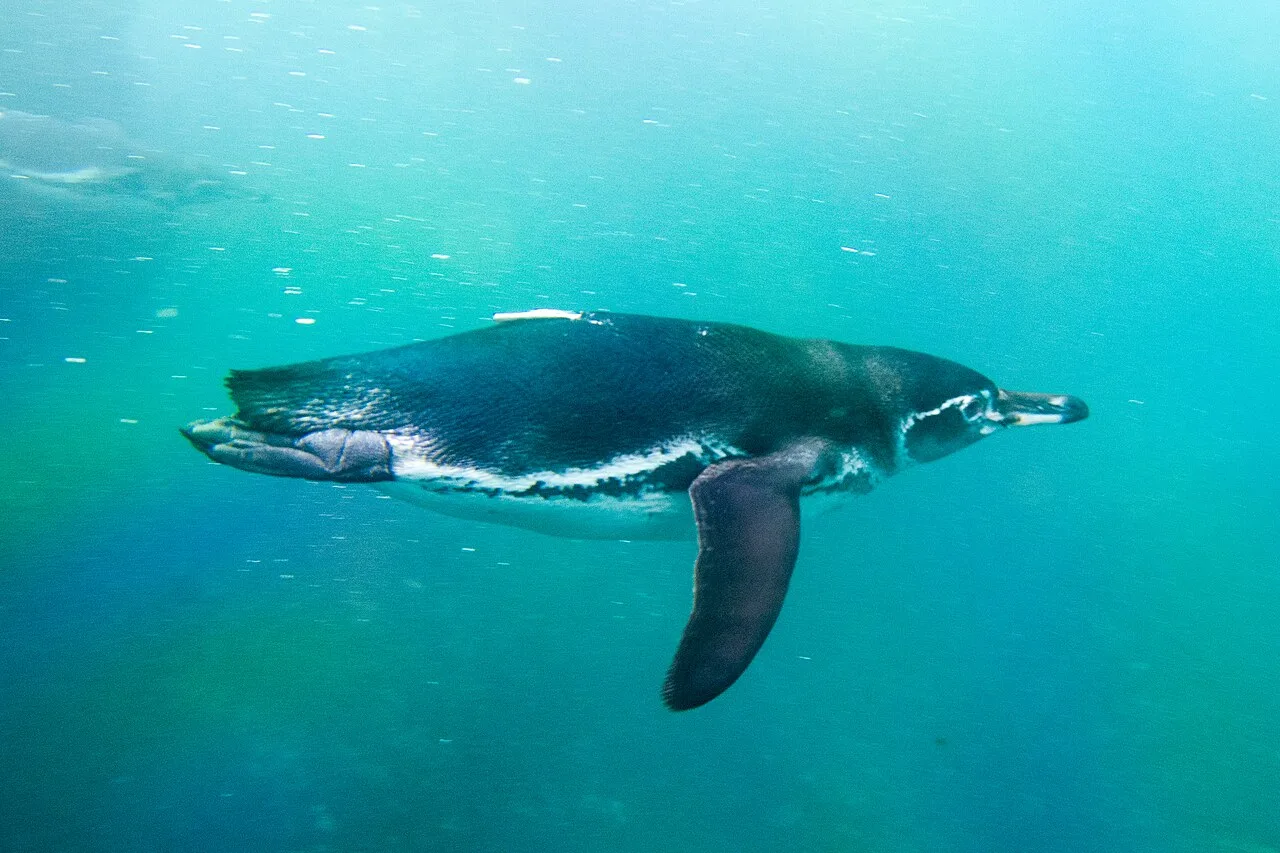
Penguins are expert divers, too. How deep they go depends on the species:
- Emperor penguins dive deepest. The Australian Antarctic Division says the deepest dive on record was 565 metres (1,854 feet), deeper than five football pitches laid end to end.
- Adélie penguins can reach 175 metres (575 feet), though they usually feed in the top 70 metres.
- African penguins can dive more than 120 metres (400 feet) and hold their breath for more than two minutes.
- Little penguins usually dive 10 to 30 metres deep. The deepest little penguin dive ever recorded was 72 metres (236 feet).
- Galápagos penguins hunt near the coast, diving 8 to 12 metres (26 to 39 feet).
Little penguins make up for shallow dives with sheer numbers. A single little penguin can dive between 1,300 and 2,000 times in one day.
They have special equipment for life at sea. Little penguins have three eyelids: one at the top, one at the bottom and a clear one. They use the clear one like swimming goggles underwater.
Seawater is salty, and a penguin swallows plenty of it. Little penguins have a salt gland above their eyes that takes the extra salt out of their blood. They get rid of it by sneezing or by flicking it out of their nostrils.
Feathers, fat and camouflage
Penguins live in cold water, so they need to stay warm and dry. They have a waterproof coat of short feathers that overlap like tiles on a roof. Under the skin is a thick layer of fat, which keeps the heat in.
Penguins have far more feathers than most birds. A little penguin has around 10,000 of them. They lock together and trap a layer of warm air, so the bird floats easily and its skin never gets wet.
Feathers wear out, so penguins moult. Moulting means replacing all the old feathers with new ones. Little penguins come ashore to do it, because their home is otherwise the sea.
Penguin colours are a kind of camouflage, which is a way of hiding by blending in. Most penguins have a dark back and a white front. Scientists call this pattern countershading.
Think about what a hunting seal sees. From above, a penguin’s dark back blends in with the deep, dark water below it. From below, its white front blends in with the bright surface of the sea. That makes a penguin harder for hunters to spot, and harder for the fish it chases to notice.
Little penguins have their own version. They are the only penguins with blue and white feathers, and Phillip Island Nature Parks says those colours are camouflage in the water.
Penguins have plenty to hide from. Leopard seals and killer whales hunt them at sea. On land, birds called skuas and sheathbills eat penguin eggs and chicks.
Krill, fish and squid
Every penguin gets its food from the sea. None of them eats plants. The Australian Antarctic Division says penguins feed on small fish and krill, and that they catch them one at a time. Krill are small, shrimp-like animals that swarm in huge numbers in the Southern Ocean.
Each species has its own menu. Adélie penguins eat fish, krill and tiny shrimp-like creatures called amphipods. African penguins eat sardines, anchovies, squid and crustaceans, the group of animals that includes crabs and shrimps.
Little penguins have one of the most varied diets. Around Phillip Island they eat young barracouta, anchovies, red cod, warehou and pilchards. They also eat squid, and even sea jellies.
Penguins eat a lot for their size. A little penguin can eat about a quarter of its own body weight in a day, around 250 grams. For a child weighing 32 kg, that would mean 8 kg of food, or about 40 apples.
Some fishing trips last a long time. Adult little penguins around Phillip Island can spend more than four weeks at sea before they come back to land.
Colonies, pebbles and burrows
Penguins usually breed in colonies, which are big groups that nest close together. How they build a nest depends on where they live.
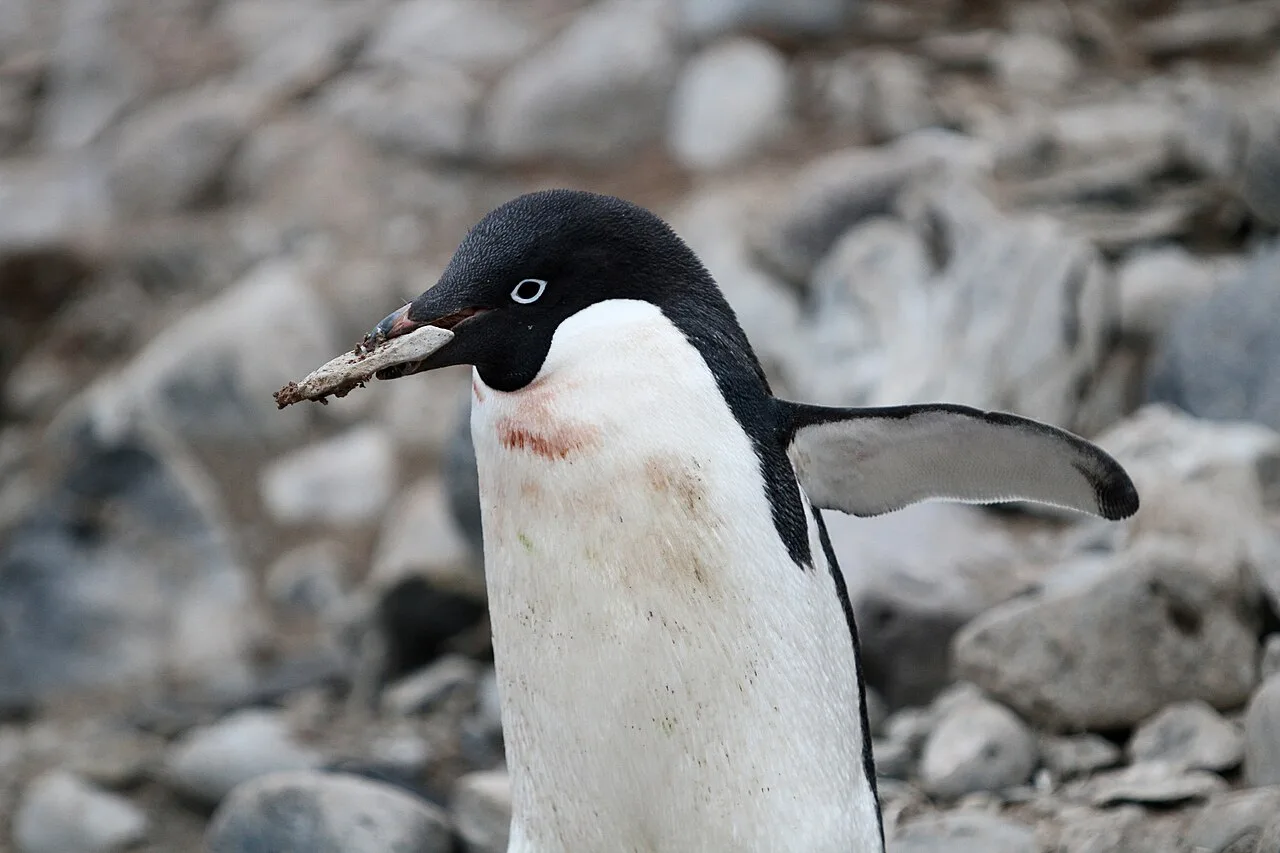
Adélie penguins build their nests from pebbles. They collect small stones from dry land and pile them up. They choose a sloping spot, so that when the snow melts, the water runs away from the nest instead of soaking the eggs.
Good pebbles are hard to come by, so Adélie penguins steal them. One Australian Antarctic Division scientist says stealing rocks from other penguins is “a major thing that they do”. Nobody asks permission. By the middle of November, there are usually two eggs in each nest.
Little penguins nest in burrows instead. Both parents dig and look after the burrow, and they line it with plants. The female lays two eggs about the size and shape of a chicken’s egg. The parents take turns to keep them warm for about 35 days until they hatch.
At Phillip Island, little penguins come home at dusk. First they gather offshore in groups called rafts. They wait until it is getting dark before crossing the beach, which helps them hide from birds of prey such as sea eagles. Then they waddle up the shore together and follow familiar tracks back to their burrows.
Most little penguin couples pair up again each breeding season, but not all of them. Research shows that between 18% and 50% of pairs split up if a season produces no chicks.
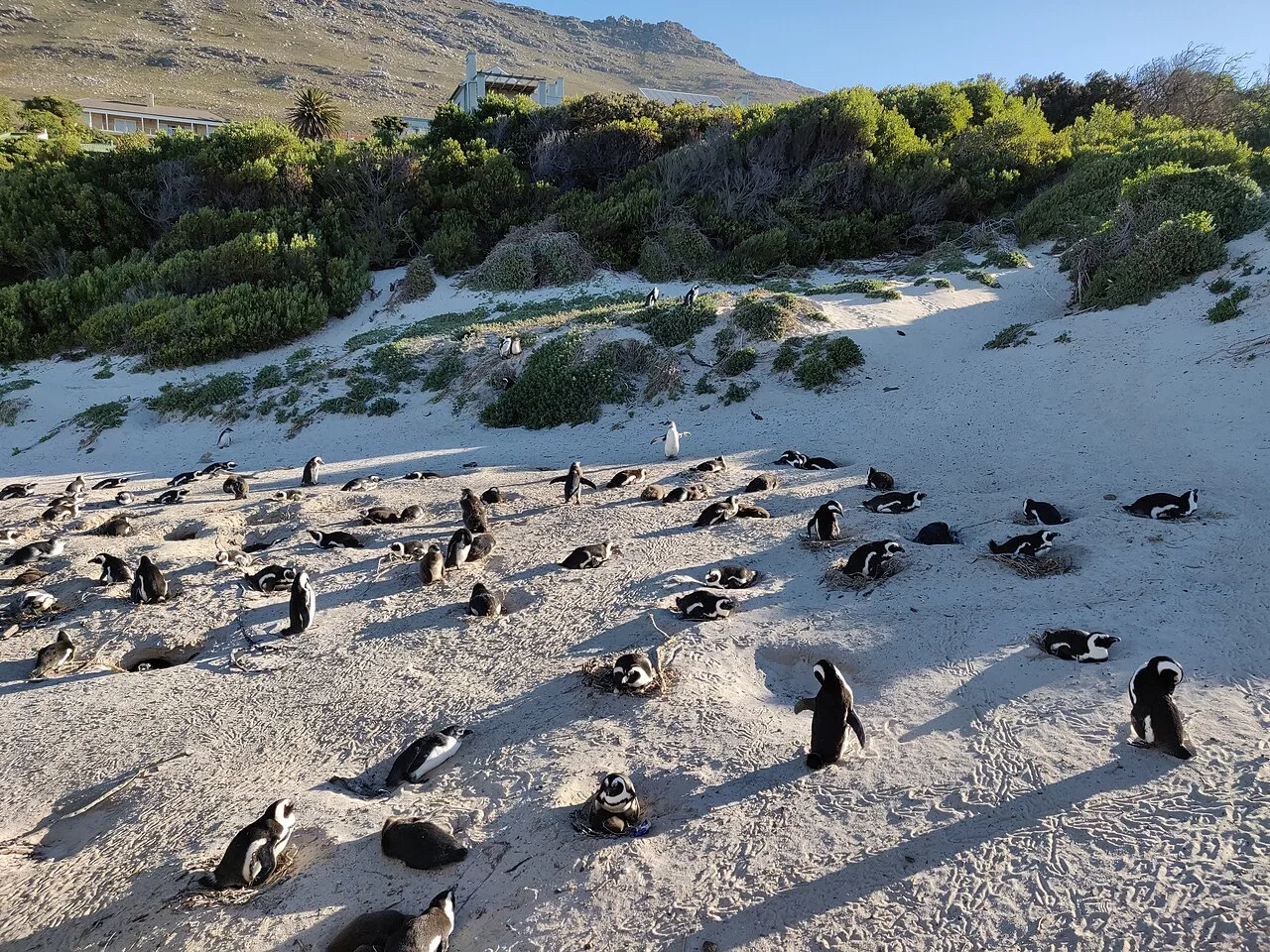
African penguins nest in sand, in piles of their own droppings, which are called guano, or under bushes and rocks. A male attracts a female with a loud call that sounds like a donkey braying.
Why some penguins are in danger
Some penguins are in serious trouble, and the African penguin is in the most danger of all.
On 28 October 2024, the IUCN moved the African penguin from Endangered to Critically Endangered on its Red List. The IUCN is the world conservation body that judges how close animals are to dying out. Critically Endangered means a species is one step away from being extinct in the wild. The African penguin is the first of the 18 penguin species to be listed this way.
SANCCOB says African penguins have lost 97% of their population. Out of every 100 African penguins that once lived, only about 3 are left. In 2024 there were fewer than 10,000 breeding pairs.
The main problem is food. Climate change is changing where the fish are, and big fishing boats catch the same sardines and anchovies the penguins need. SANCCOB and other groups want no-fishing zones around the last large colonies.
The emperor penguin joined the list of threatened penguins in 2026. On 9 April, the IUCN moved it from Near Threatened to Endangered. About one emperor in ten was lost between 2009 and 2018, around 20,000 adults, because the sea ice they breed on is breaking up earlier. The IUCN expects their numbers to halve by the 2080s.
Put together, about half of all penguin species are now threatened with extinction.
The Galápagos penguin is rare too. Only about 2,000 to 3,000 lived on the islands in 2025. Since 2009, scientists from the Charles Darwin Foundation and the Galápagos National Park have built artificial nests for them, and those nests have helped more pairs raise chicks.
People can help penguins recover. Phillip Island once had 10 colonies of little penguins. Roads, houses, land clearing and foxes brought by settlers wiped out nine of them. In 1985, the government of the state of Victoria started a plan to protect the last one.
Rangers put in wooden nest boxes, got rid of foxes and replanted native plants. It worked. In 2026, Phillip Island Nature Parks said the colony held about 40,000 breeding penguins. It is now the largest little penguin colony anywhere.
Three things people get wrong
1. “Penguins and polar bears live together.” They never meet in the wild. Penguins live almost entirely in the Southern Hemisphere. Polar bears live around the Arctic Ocean, at the top of the world. The whole planet lies between them.
2. “All penguins live in the snow.” Only 5 of the 18 species live in Antarctica. African penguins nest in the sand in South Africa and Namibia, and the Galápagos penguin swims in the sea on the equator.
3. “Penguins cannot fly, so they are not really birds.” Penguins are birds. They have feathers and beaks, and they lay eggs, like every other bird. Flying is not what makes an animal a bird, and plenty of birds, such as kiwis and ostriches, never fly.
Did you know? Little penguin couples do not always stay together. Between 18 and 50 in every 100 pairs split up after a breeding season that produces no chicks.
Try it
Build an Adélie penguin nest. Outside, find a patch of ground that slopes gently and pile up a small heap of pebbles. Put a marble or a small ball on top as the egg. Slowly pour a cup of water on the ground just uphill of the nest, and watch it trickle between the stones and away down the slope while the egg stays dry.
Knowledge check
Why do Adélie penguins build their pebble nests on sloping ground?
Show answer
So that when the snow melts, the water runs away from the nest and the eggs stay dry.
How does the Galápagos penguin survive so close to the equator?
Show answer
The cold Humboldt Current flows up from Antarctica and keeps the sea around the Galápagos Islands cool.
Frequently asked questions
How many penguin species are there?
Most scientists count 18 penguin species. The Charles Darwin Foundation in the Galápagos Islands counts 17, because experts do not always agree on where one species ends and the next begins.
Do all penguins live in Antarctica?
Only 5 of the 18 penguin species live in Antarctica. Another 4 live on sub-Antarctic islands, and the rest live further north, including on the coasts of southern Africa, southern Australia, New Zealand and the Galápagos Islands.
What is the biggest penguin?
The emperor penguin is the biggest of the 18 penguin species, and the king penguin is the second biggest. Emperor penguins live in Antarctica and can dive deeper than 500 metres (1,640 feet). The biggest penguin that ever lived was a fossil giant called Kumimanu, which weighed about 154 kg about 57 million years ago.
What is the smallest penguin?
The little penguin, also called the little blue penguin or fairy penguin, is the smallest penguin. Found in southern Australia and New Zealand, a little penguin weighs just under 1 kg (about 2 pounds).
What do penguins eat?
Penguins eat food from the sea, mainly small fish, krill and squid. Each species has its own menu: little penguins even eat sea jellies, and African penguins eat sardines and anchovies.
Can penguins fly?
Penguins cannot fly through the air. Their wings work as flippers instead, pushing them through the water so well that people often say penguins fly underwater. Penguins evolved from flying birds, but the oldest penguin fossil, about 61 million years old, had already lost the power of flight.
Why is the African penguin critically endangered?
The African penguin has lost 97% of its population, mainly because of food shortages. Climate change is moving the fish it eats, and fishing boats catch the same sardines and anchovies. The IUCN listed the species as Critically Endangered in October 2024.
Sources
- Australian Antarctic Division: penguins — the 18 species and how many live in Antarctica and on sub-Antarctic islands, the Southern Hemisphere range, flippers and agility underwater, feathers and fat, diet, predators, the largest species and the species named in the guide
- Australian Antarctic Division: Adélie penguin — the Adélie penguin’s size, swimming speed, diet, dive depth, pebble nests on sloping ground, stone stealing and eggs
- Phillip Island Nature Parks: a guide to Australia’s little penguins — the little penguin’s size, names, blue and white camouflage, range, diet, diving, time at sea, burrows, eggs, rafts, salt gland, three eyelids and the Phillip Island colony’s history and size
- San Diego Zoo Wildlife Alliance: African penguin — the African penguin’s size, range, bare skin that keeps it cool, bray, nests, diet, swimming speed and diving
- SANCCOB: African penguin newly classified as Critically Endangered (28 October 2024) — the IUCN uplisting, the first penguin to be listed Critically Endangered, the 97% loss, fewer than 10,000 breeding pairs, and the threats from climate change and fishing
- Charles Darwin Foundation: the endemic Galápagos penguin (2025) — the 17 species the foundation counts, the Galápagos penguin as the second smallest and the most northerly penguin, the Humboldt Current, its population, diving depth and artificial nests