Bat quick facts
- The oldest known bat lived at least 41 years. Since a 2012 species split, the record belongs to the Siberian bat, not the Brandt’s bat most books name.
- A hibernating bat can cut its energy use by 98%.
- Fishing bats can detect a fish’s fin sticking just 2 mm out of the water.
- Up to 20 million Mexican free-tailed bats spend the summer in one cave in Texas.
- Vampire bat spit helped scientists develop a medicine that helps prevent strokes.
What is a bat?
A bat is a mammal, just like a dog, a whale or you. It has fur, it is warm-blooded, and a mother bat feeds her baby on milk.
What makes bats special is flight. They are the only mammals capable of true flight. Colugos and flying squirrels can only glide from tree to tree. A bat can flap, climb, swerve and chase an insect through the air.
Scientists call the bat group Chiroptera. The name comes from two Greek words meaning “hand” and “wing”. There are more than 1,500 kinds, or species, of bat (2025). That makes bats the second-largest group of mammals on Earth.
That number keeps rising as scientists describe new bats. Some older pages still say about 1,400, including parts of Bat Conservation International’s own website.
Bats have been around for more than 50 million years. Today they live on every continent except Antarctica. Many roost in caves, but others live in trees, cracks in rocks, bridges and the roofs of houses.
Wings made of hands
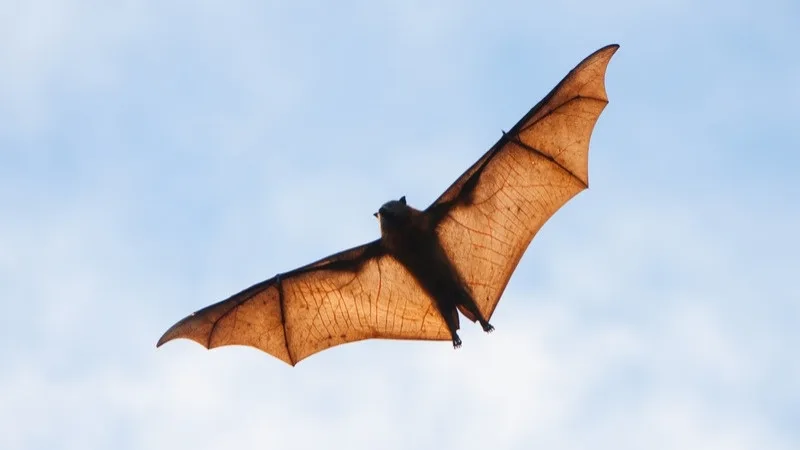
Look closely at a bat’s wing and you will find a hand. The long bones inside it are finger bones, with thin, stretchy skin spread between them.
Because the wing is a hand, a bat can bend and twist it in many ways. Each part can move on its own. That makes bats brilliant at sharp turns. Some scientists even argue that bats fly better than birds.
Bats have solid bones, like other mammals. Birds have hollow, lighter ones. This is one reason almost all bats hang upside down. To take off, a bat simply lets go and drops, gaining speed as it falls.
Hanging takes no effort at all. When a bat relaxes, its feet stay clenched on their own. It can sleep like that for hours. A bat is so small that its heart can still pump blood easily around its body while it hangs.
What do bats eat?
Most bats eat insects. A common pipistrelle can eat more than 3,000 tiny insects in a single night. Flying burns a lot of energy, so bats need huge meals.
Many insect-eating bats eat up to half their own body weight every night. A mother bat who is pregnant or feeding a pup can eat her whole body weight. For a child, that would mean eating your own weight in food before breakfast.

Not every bat eats insects. Some eat fruit. Others drink the sugary nectar inside flowers, like hummingbirds of the night. A few bats catch fish or frogs.
Fishing bats have especially sharp senses. They can detect a fish’s fin sticking just 2 mm out of a pond. That is about as high as a grain of rice lying flat.
How bats hunt with echoes
Small bats hunt at night, when their ears matter more than their eyes. As a bat flies, it shouts. The sound bounces off anything ahead of it and comes back as an echo.
The echoes tell the bat how big an insect is, what shape it is and which way it is flying. Finding things by their echoes like this is called echolocation.
Most bat calls are ultrasonic. That means they are too high for human ears to hear. Dolphins use echolocation too, but under water.
Some bats have strange flaps of skin around their noses, called noseleaves. Scientists think noseleaves help the bats aim and shape their calls in different ways.
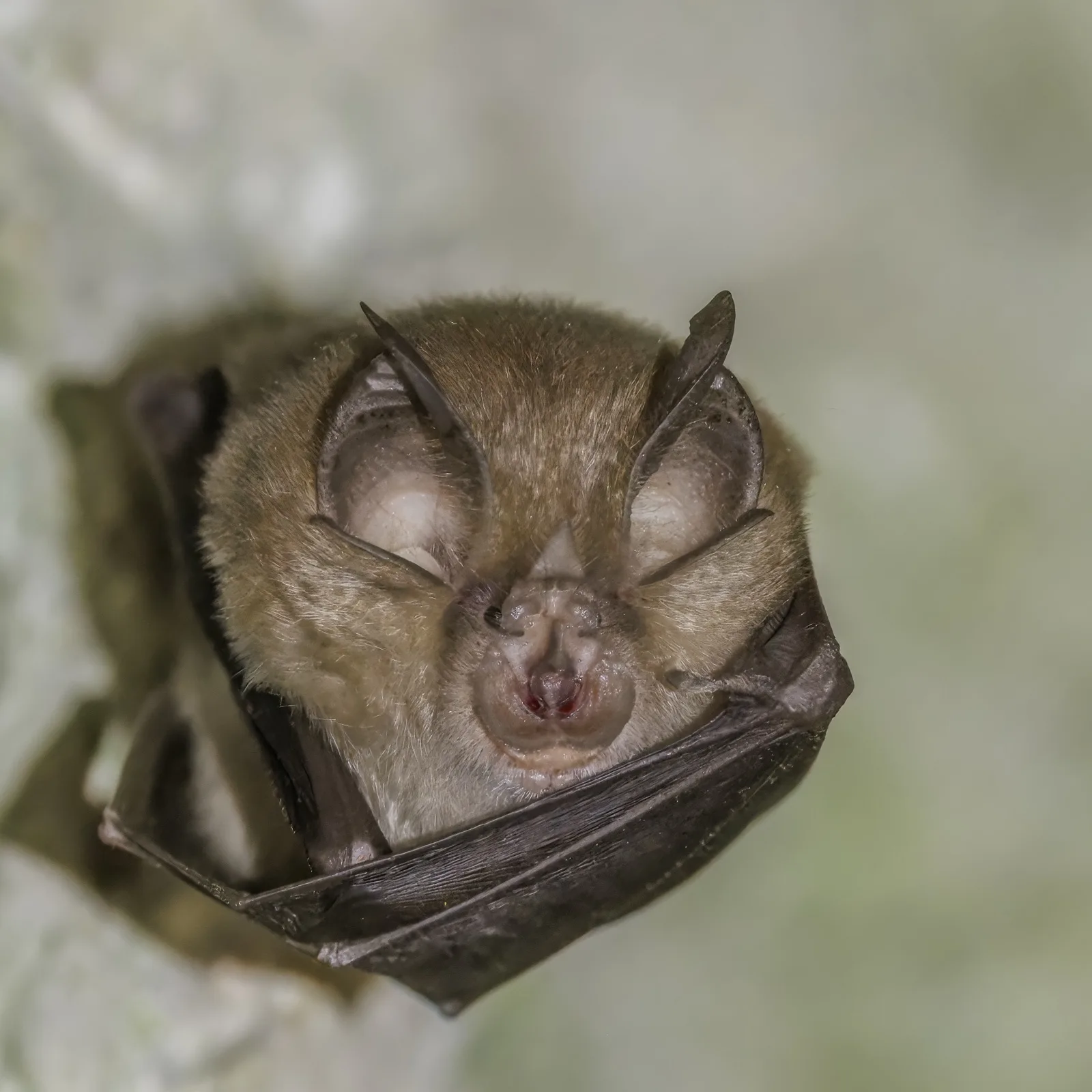
Bat hearing is extremely sharp. The African heart-nosed bat can hear a beetle walking on sand from more than 1.8 metres (6 feet) away.
Eyes still matter. Large flying foxes see well at night. Their eyes have a shiny layer at the back, the same layer that makes a cat’s eyes glow in torchlight. Bats that drink nectar can even see ultraviolet light, which human eyes cannot.
Wings, Echoes and Food
- Finger bones — The long bones inside a bat's wing
- Chiroptera — The scientific name for bats, meaning hand and wing
- Noseleaf — A flap of skin that helps a bat aim its calls
- Ultrasonic — Too high for human ears to hear
- Fishing bats — Can spot a fish fin just 2 mm out of a pond
- Nectar bats — Drink the sugary juice inside flowers
The truth about vampire bats
Only three bat species feed on blood. They are the vampire bats. All three live in the warm parts of the Americas, in Mexico, Central America and South America. No vampire bat lives in Europe, Africa, Asia or Australia.
Only one of the three mainly targets mammals. The other two are rarely seen by people.
Vampire bat spit turned out to be useful. It contains a substance that stops blood from clotting, or turning thick. Scientists used it to develop a medicine that helps prevent strokes in people. A stroke happens when blood cannot reach part of the brain.
Sadly, the fear of vampires hurts other bats. In parts of Latin America, whole colonies of harmless bats have been killed by people who wrongly believed all bats drink blood.
How bats help plants and farmers
Bats are pollinators. When a bat drinks nectar, pollen dusts its fur. The bat carries that pollen to the next flower, which helps the plant make seeds and fruit.
Wild agave plants rely mainly on bats to pollinate them. Agave is the spiky desert plant used to make agave syrup. Giant cacti need bats too. Bat Conservation International is planting agave across Mexico and the southern United States, so that migrating bats find food along the way.
Bats help many foods you might eat. Bat Conservation International lists bananas, dates, figs, cashews and cacao, the bean used to make chocolate, among the crops bats help.
Fruit bats plant forests, too. They fly long distances at night and drop seeds as they go, even over bare, cleared land. Many of those seeds come from tough plants that grow fast and shelter slower ones. This helps cleared rainforests grow back.
Insect-eating bats protect crops by eating pests such as the corn earworm moth. Scientists estimate that this may save farmers in the United States about $23 billion a year. Nobody can count every insect a bat eats, so figures like this are rough guesses.
Pollinating, planting seeds and eating pests all add up. That is why scientists say bats are essential to healthy ecosystems around the world.
How Bats Help Plants
- When a bat drinks nectar, how does it help the flower?
- Which spiky desert plant relies mainly on bats to pollinate it?
- Which of these is NOT on Bat Conservation International's list of crops that bats help?
- How do fruit bats help cleared rainforests grow back?
Record-breaking bats
Bats come in a huge range of sizes. The table compares five species that hold records or are famous for something unusual.
| Bat | Claim to fame | Food | Where it lives |
|---|---|---|---|
| Bumblebee bat (Kitti’s hog-nosed bat) | Smallest bat: 29–33 mm long and about 2 g | Small insects and spiders | Limestone caves on the Thailand–Myanmar border |
| Giant golden-crowned flying fox | Longest wings: up to 1.8 m (6 ft) from tip to tip | Mainly figs | The Philippines only |
| Mexican free-tailed bat | Fastest bat, and the biggest colony | Moths and other flying insects | North, Central and South America |
| Siberian bat | Oldest known bat: at least 41 years | Insects | Forests in Asia |
| Common vampire bat | One of only three bats that feed on blood | Blood | Mexico, Central and South America |
The bumblebee bat is shorter than an adult’s thumb. It weighs less than two small sweets, and it is one of the smallest mammals on Earth.
The Mexican free-tailed bat can fly in short bursts at up to 160 km/h (100 mph). That is faster than cars are allowed to drive on a UK motorway.
The age record changed recently, and most books have not caught up. For years, the oldest bat was said to be a Brandt’s bat. It was caught and ringed in 1962, then caught again in 2005, which made it at least 41 years old.
Then, in 2012, genetic tests showed that the eastern Brandt’s bats were really a separate species. It is now called the Siberian bat. The record bat lived in Siberia, so the record now belongs to the Siberian bat.
Bats live very long lives for their size. At least 22 bat species have been recorded living more than 20 years, and six have passed 30. Scientists are still working out how bats age so slowly.
Bat Record Breakers
- Bumblebee bat — Lives in limestone caves on the Thailand–Myanmar border
- Giant golden-crowned flying fox — Has wings up to 1.8 metres (6 feet) from tip to tip
- Mexican free-tailed bat — Can fly in short bursts at up to 160 km/h (100 mph)
- Siberian bat — Took the age record from Brandt's bat after genetic tests
- African heart-nosed bat — Can hear a beetle walking on sand
Pups, roosts and hibernation
A baby bat is called a pup. Most bat mothers have just one pup a year. That is very slow for such a small mammal, and it means bat numbers take a long time to recover when they fall.
In the UK, bats mate in autumn. The female does not become pregnant straight away. She waits until spring, when the weather warms up and insects return.
Pregnant females then gather in a maternity roost, a warm, safe place where they give birth. Some groups use the same roost every year. Pregnancy lasts 6 to 9 weeks, depending on the species, the weather and how much food there is. Mothers feed their pups milk for 4 to 5 weeks, until the young can fly.
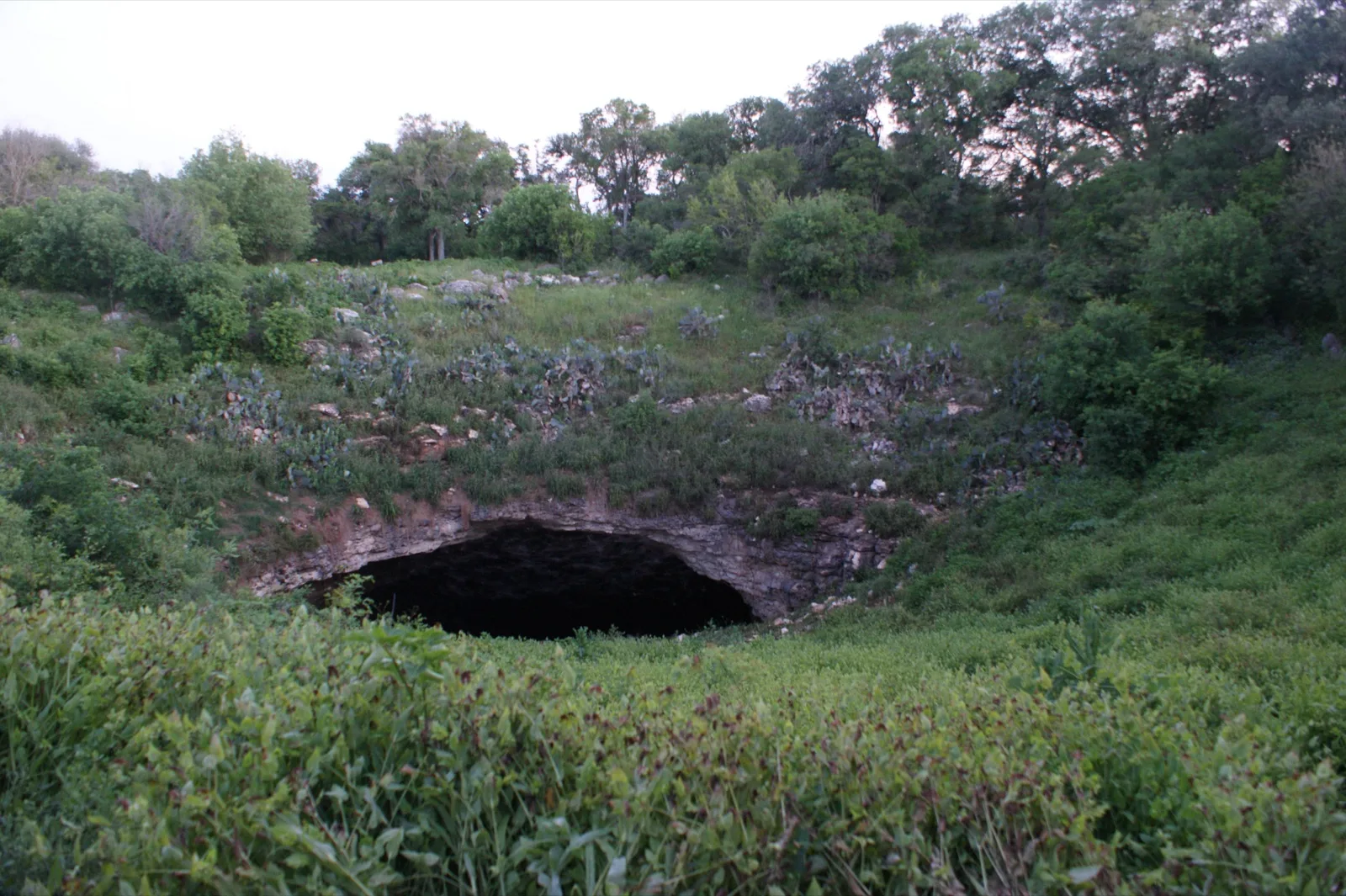
Bracken Cave, near San Antonio in Texas, USA, holds the world’s largest bat colony. Up to 20 million Mexican free-tailed bats spend the summer there. At dusk they pour out of the cave to hunt.
Winter is hard for bats in cold places, because there are few insects to eat. Bats have two ways to survive it. Some, like the hoary bat, migrate to warmer places. Others, like the little brown bat, hibernate.
A hibernating bat slows its heart and breathing so much that it uses 98% less energy. It lives off the fat it stored before winter.
Waking up is dangerous. Every time a hibernating bat is disturbed, it burns fat it needs to last until spring. That is why people should never disturb bats in a cave or a loft in winter.
A UK Bat’s Year
- Mating In autumn, bats mate.
- Hibernation Through the winter, the bats hibernate and live off stored fat.
- Pregnancy In spring, as insects return, the female becomes pregnant.
- Maternity roost Pregnant females gather in a warm, safe roost.
- Birth After 6 to 9 weeks, the mother gives birth, usually to one pup.
- Milk The mother feeds her pup milk for 4 to 5 weeks.
- First flight The young bat can fly and hunt for itself.
Bats in the UK
The UK has 18 species of bat, and 17 of them are known to breed there. That is almost a quarter of all the UK’s mammal species.
Every UK bat eats insects. The species include the common pipistrelle, the brown long-eared bat, the noctule, Daubenton’s bat and the greater horseshoe bat.
UK bat numbers fell badly over the last century. Today the Bat Conservation Trust and more than 80 local bat groups work to protect them.
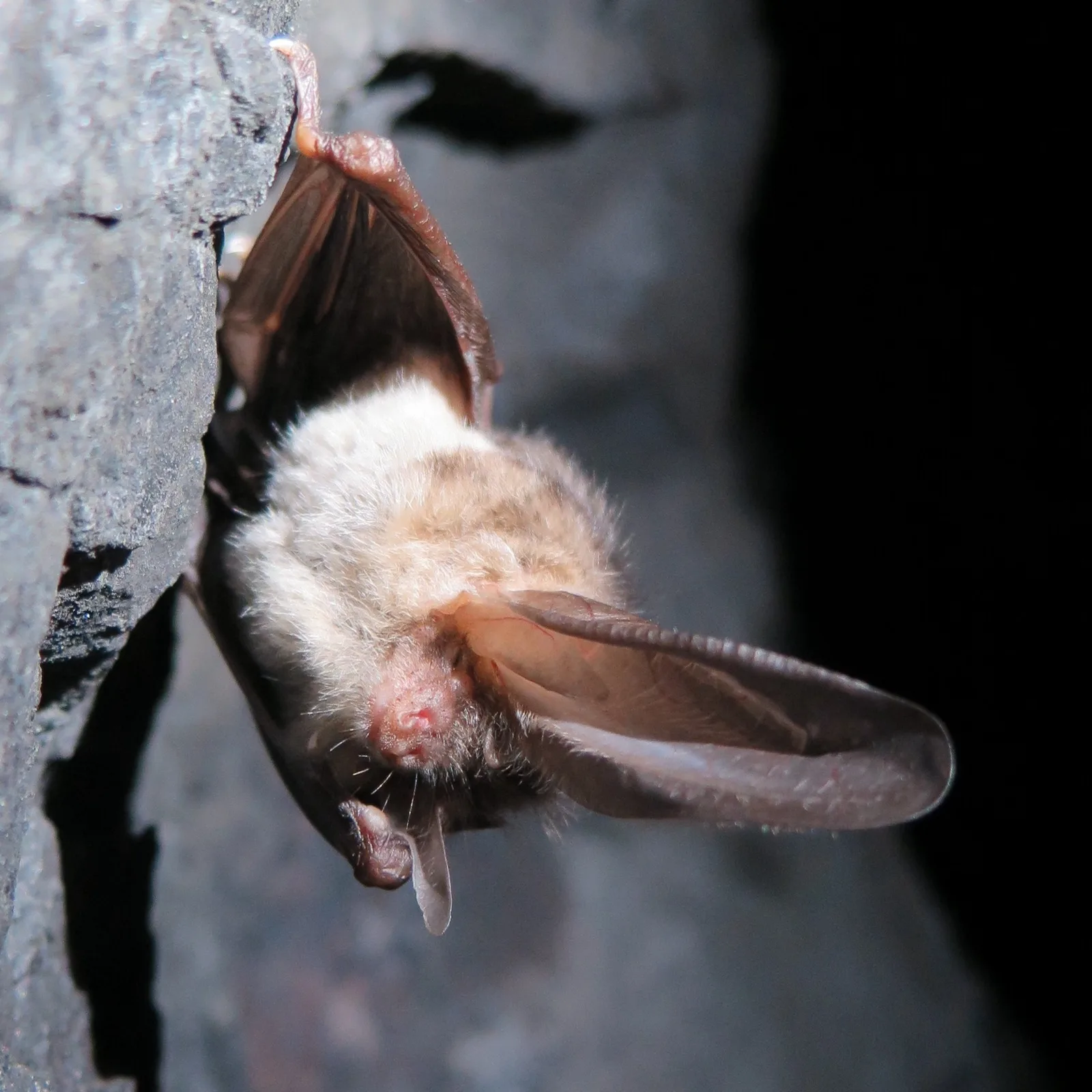
The law protects every bat species in England, and the places where bats breed and rest. Bats count as “European protected species”. The UK government’s guidance says it is against the law to:
- deliberately catch, injure or kill a bat
- damage or destroy a place where bats breed or rest
- block the way into a place where bats shelter
- disturb a bat on purpose, or carelessly, while it is sheltering
Anyone found guilty can be sent to prison for up to six months, given an unlimited fine, or both. If you think bats live in your roof, the National Bat Helpline gives free advice.
Why many bats are in danger
Bats face many threats, and most of them come from people. Forests are cut down for timber, farms, mines and cities. Tropical forests, which have the most kinds of bat, are especially at risk.
Bat Conservation International lists 23 bat species as critically endangered, 85 as endangered and 113 as vulnerable. Another 236 species are “data deficient”. That means scientists do not yet know enough about them to judge.
White-nose syndrome is a disease caused by a fungus. It was first found in a single cave in New York State in 2006. It grows on the nose, ears and wings of hibernating bats and keeps waking them up, so they use up their winter fat too fast.
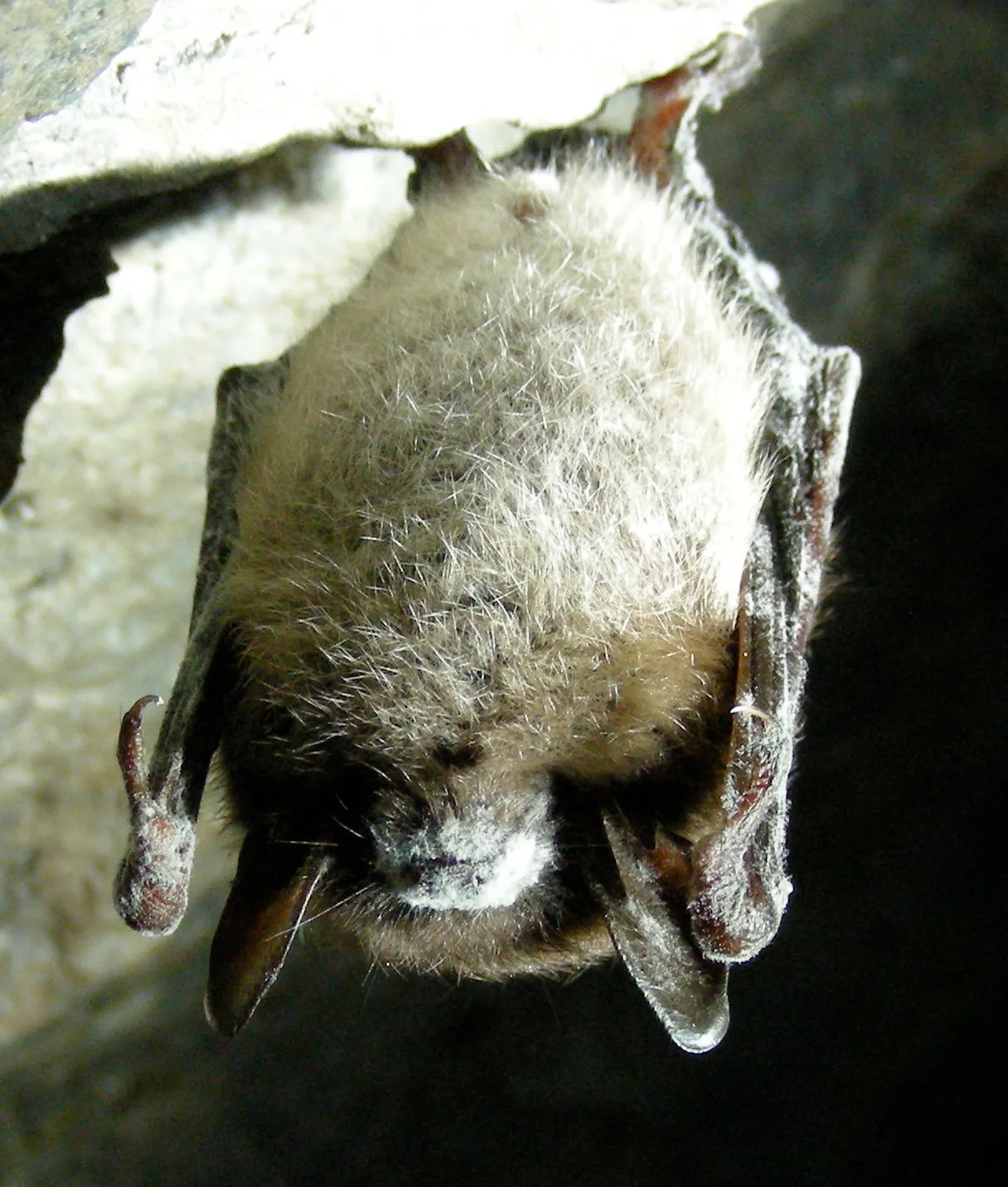
Millions of bats in North America have died from it. It has spread across most of the United States and into Canada, and it has affected 12 bat species. Some species seem to resist it better than others. Scientists are still searching for ways to help.
Wind turbines kill hundreds of thousands of bats a year in the United States alone. One simple change helps. If the blades only start spinning at a higher wind speed, bat deaths can fall by nearly half.
Climate change is a threat too. In Australia, large numbers of flying foxes have died during extreme heatwaves.
Bats and Halloween: real bat facts and myths
Every October, bats appear on Halloween decorations beside witches and pumpkins. Real bats are far less scary than the paper ones.
In the UK, autumn is when bats mate. Soon afterwards they settle down to hibernate, so fewer bats fly as the nights turn cold.
Myth: bats attack people. They do not. When a bat swoops close, it is usually catching insects flying around you, or coming down to drink from a pool.
Myth: bats get tangled in your hair. A bat can find a fish’s fin sticking 2 mm out of the water. It can find your head easily, and fly around it.
Myth: bats want your blood. Only three species drink blood, and all of them live in Latin America. No bat in Europe, Africa, Asia or Australia feeds on blood.
There is one real rule. Never touch a bat with your bare hands. Most bats do not have rabies, a serious disease, but any mammal can catch it, and you cannot tell by looking. If you find a bat on the ground, tell an adult.
Bats: Fact or Myth?
- Bats attack people.
- A mother bat feeds her baby on milk.
- Bats often get tangled in people's hair.
- Colugos can fly just as well as bats.
- Every bat that lives in the UK eats insects.
- White-nose syndrome is caused by a fungus.
- Most bats do not have rabies, so it is safe to pick one up with bare hands.
- Changing when wind turbine blades start spinning can save many bats.
Three things people get wrong
1. Bats are not blind. Every bat can see. Large flying foxes see well at night, and nectar bats can see ultraviolet light. Small insect-eating bats see about as well as we do in the dark, so they use echolocation as well.
2. Bats are not flying mice. They are not rodents at all. Bats have their own group of mammals, Chiroptera, and it is the second-largest group there is. Most bats have just one pup a year, while mice breed far faster.
3. Most bats do not need caves. Many bats use caves, but others roost in trees, rock cracks, bridges and houses. Some of the most successful species live in buildings that people made.
Did you know? A newborn bat pup can weigh up to a third as much as its mother. For a human mother, that would be like giving birth to a baby the size of a six-year-old.
Try it
Play bats and moths with a group of friends in a big, clear space, with an adult watching. One player is the bat and wears a scarf as a blindfold. Everyone else is a moth. Each time the bat calls “bat”, every moth must answer “moth”. The bat tries to tag a moth by listening to where the answers come from. Real bats listen for echoes of their own calls instead, but the idea is the same: sound tells them where their food is.
Knowledge check
What is echolocation?
Show answer
Finding things by listening to echoes. A bat calls out, and the echoes that bounce back tell it the size, shape and direction of an insect.
Why do most bats hang upside down?
Show answer
Hanging lets a bat drop straight into flight. Its bones are solid, not hollow like a bird’s, so it needs the speed it gains from falling.
Frequently asked questions
How many kinds of bats are there?
There are more than 1,500 known bat species in the world (2025), and scientists are still describing new ones. Bats are the second-largest group of mammals, and the UK has 18 species.
Are bats blind?
No bat is blind. Every species can see, and large flying foxes see well at night. Many small bats also use echolocation, finding insects by listening to the echoes of their calls.
What do bats eat?
Most bats eat insects, and a common pipistrelle can eat more than 3,000 in one night. Other bats eat fruit, nectar, fish or frogs, and three species of vampire bat feed on blood.
Do vampire bats really drink blood?
Vampire bats do feed on blood, but they are rare. Only three of more than 1,500 bat species feed on blood, and all three live in Mexico, Central America and South America.
How long do bats live?
Bats live a long time for their size. At least 22 species have lived more than 20 years, and the oldest known bat, a Siberian bat, lived at least 41 years.
What is the smallest bat in the world?
The smallest bat is the bumblebee bat, also called Kitti’s hog-nosed bat. An adult is 29 to 33 mm long and weighs about 2 grams, so it is shorter than an adult’s thumb.
Are bats protected in the UK?
All UK bat species and their roosts are protected by law. In England it is an offence to deliberately catch, injure or kill a bat, or to damage or block a roost, and offenders can be fined or sent to prison.
Sources
- Bat Conservation International: Bats 101 — the species count, true flight, the name Chiroptera, pollination, agave, seed dispersal, pest control, the smallest, largest and fastest bats, vampire bats and stroke medicine, Bracken Cave, threatened species, white-nose syndrome and wind turbines
- Bat Conservation International: frequently asked questions — eyesight, hibernation, hanging upside down, pups, lifespans, where bats roost, rabies and why bats do not attack people
- Bat Conservation International: Siberian bat — the 41-year age record and why it moved from Brandt’s bat to the Siberian bat after the 2012 species split
- Bat Conservation Trust: flight, food and echolocation — wings as hands, how echolocation works, the 3,000 insects a pipistrelle can eat, and the UK breeding year
- Bat Conservation Trust: UK bats — the 18 UK species, 17 breeding, their share of UK mammals and the decline over the last century
- GOV.UK: bats, protection and licences — the legal protection of bats and roosts in England, the offences and penalties, and the National Bat Helpline
Bat Final Challenge
- Why can bats make such sharp turns in the air?
- Why do bats need such huge meals?
- About how much can a pregnant or nursing mother bat eat in one night?
- What makes a flying fox's eyes glow in torchlight?
- What have scientists made using a substance in vampire bat spit?
- Why have whole colonies of harmless bats been killed in parts of Latin America?
- Why do bat numbers take a long time to recover after they fall?
- How much less energy does a hibernating bat use?
- Where was white-nose syndrome first found, in 2006?
- How does the hoary bat survive the winter?
- Which of these bats does NOT live in the UK?
- Where do some of the most successful bat species live?