
The Old Stone Age is the first and longest part of the human story. It began more than three million years ago, when early humans first chipped stones into tools. It ended about 11,700 years ago, when the last Ice Age finished. Scientists call it the Palaeolithic. Everything else in human history came afterwards.
Old Stone Age for Kids quick facts
- The oldest known stone tools are about 3.3 million years old. They are older than our own species by roughly three million years.
- One tool design, the handaxe, stayed almost unchanged for over a million years.
- Most Stone Age people did not live in caves. Caves just keep evidence safe, so that is where we find it.
- The oldest dated cave painting is in Indonesia, not Europe. It is at least 51,200 years old.
- If your family comes from outside Africa, about 1 to 2 per cent of your DNA is Neanderthal.
Longer than everything that came after
The Old Stone Age began more than three million years ago. Early humans had worked out how to chip stones into useful shapes. It ended about 11,700 years ago, when the last Ice Age ended. Farming, cities, writing and spaceflight all fit into the thin sliver after that. All of it. Every bit of history you have ever been taught sits in that last sliver of time.
The scientific name is the Palaeolithic. It comes from two Greek words. Palaios means old, and lithos means stone.
Scientists split the period into three parts. Each one has its own toolkit, and each is longer than you expect. The table below shows how they fit together. Our Stone Age facts for kids guide covers the whole period in one place.
Put the Old Stone Age in order
- The oldest tools Simple stone tools are left at Lomekwi 3 in Kenya
- The Oldowan kit Hammerstone, core and flake are in use
- The handaxe Early humans start shaping teardrop handaxes
- Our species The oldest fossils of people like us
- The painted cave Lions are painted on the walls at Chauvet in France
- The ice goes The last Ice Age ends and the Old Stone Age closes
| Part | Roughly when | What was new |
|---|---|---|
| Lower Palaeolithic | 3.3 million – 300,000 years ago | The first tools, then the handaxe |
| Middle Palaeolithic | 300,000 – 50,000 years ago | Smaller tools, and the first spear points |
| Upper Palaeolithic | 50,000 – 11,700 years ago | Fine blades, bone needles and cave art |
Found after a wrong turn
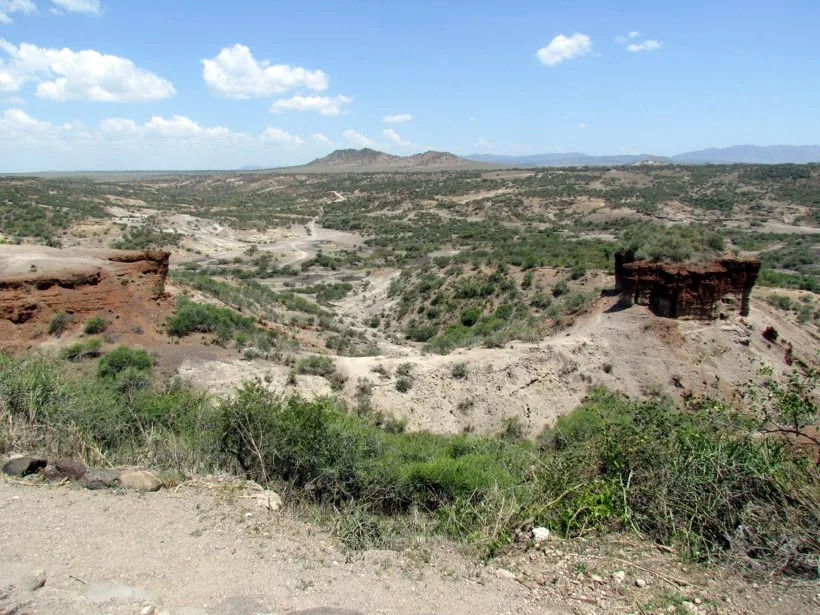
In July 2011, a team was searching a dried-up riverbed in Kenya. It lay near Lake Turkana. Sonia Harmand and Jason Lewis led the group. They took a wrong turn, and found stone tools at a site now called Lomekwi 3.
The team published its results in the journal Nature in 2015. The tools turned out to be about 3.3 million years old. That made them roughly 700,000 years older than any stone tools known before, which pushed the whole story of toolmaking back by a long way. Nobody expected that. The dig produced 149 artefacts.
These tools are rough and simple. Nobody can say for certain who made them, because no fossil of the maker has ever been found beside them. One suspect is Kenyanthropus platyops, an early human relative found in the same region.
Toolmaking is older than our species. The oldest tools beat the oldest fossils of people like us by about three million years.
You can see how much later toolmaking got in our guide to Stone Age tools and weapons.
A hammerstone, a core, and what breaks off
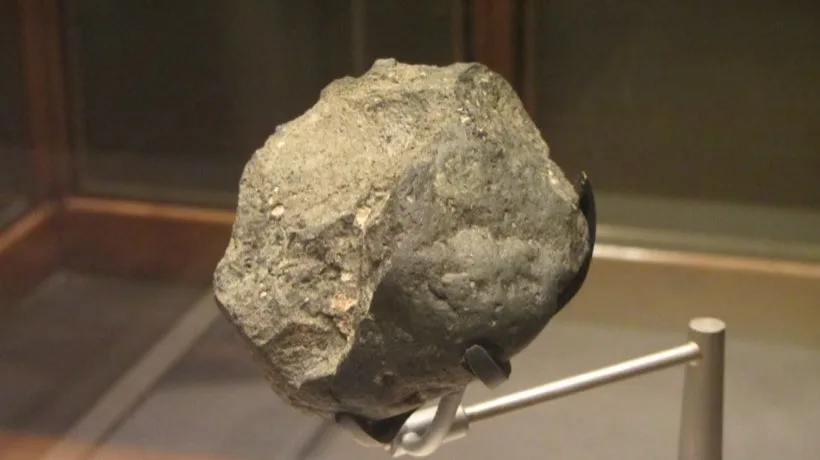
The next tools came from at least 2.6 million years ago. They are called Oldowan tools, after Olduvai Gorge in Tanzania. Many were found there.
The whole kit had three parts. A hammerstone was a rounded stone used for hitting. A core was the stone being hit. The pieces that broke off were flakes, and their edges were sharp enough to cut.
Hitting the core with the hammerstone is called percussion flaking. The flakes look unimpressive. They were not. A sharp flake could strip meat from a bone far faster than teeth or fingernails, and that changed what early humans could eat.
The kit did something else too. A heavy stone can crack a leg bone open, and the marrow inside is rich food that most animals cannot reach. Cut marks on animal bones from this period show both jobs being done. Early humans were getting at food that was closed to them before.
The first toolkit
- Hammerstone — the rounded stone you hit with
- Core — the stone being hit
- Flake — the sharp piece that breaks off
- Percussion flaking — striking the core to knock flakes off it
- Olduvai Gorge — the place in Tanzania the Oldowan kit is named after
Serious work for the human brain
By about 1.76 million years ago, early humans had a new skill. They struck off large flakes. Then they shaped those flakes by knocking smaller pieces from the edges.
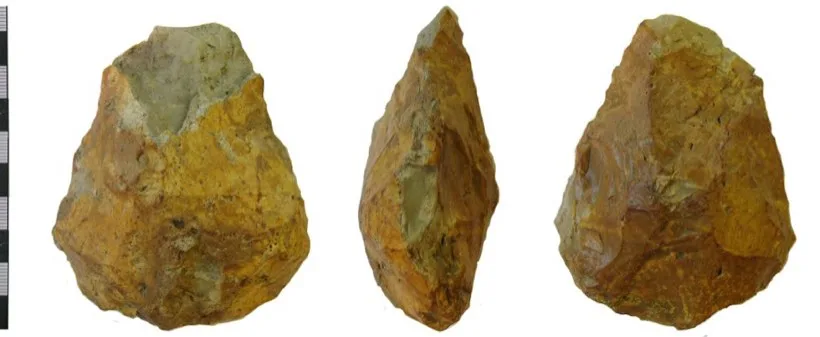
The result was the handaxe. It is shaped like a teardrop, flat and sharp all the way round, and it sits neatly in the hand. It could cut, chop, scrape and dig. There is no handle on it at all, which is why the name confuses people.
Handaxes belong to a toolkit called the Acheulean. People made them for well over a million years. In different places they stopped between about 400,000 and 250,000 years ago.
The same design turns up across Africa, Europe and much of Asia. That is a very wide area for one idea. No other human technology has lasted anything like as long. A mobile phone is redesigned roughly every year, so the comparison is hard to picture.
Making a good one is hard. You have to picture the finished tool inside a lump of rock. Then you plan every blow to reach it. Get one strike wrong and hours of work shatter. If you want the full method, step by step, read how to make a Stone Age weapon. Our guide to the Old Stone Age toolkit covers the other shapes.
Why “caveman” is wrong
This is the most common mistake about Stone Age people. It comes from a bias in the evidence, not from the evidence itself.
A cave keeps rain and wind off bones, ash, paint and tools. Things survive there for tens of thousands of years. A shelter made of wood, hide and turf rots away in a few decades. It leaves nothing but post holes in the ground.
So archaeologists find caves full of evidence and open ground nearly empty. That makes it look as though everyone lived in caves. They did not.
Where the ground did preserve things, we can see what people really built. At Mezhyrich in Ukraine, people built huts out of mammoth bones. Dating work published in 2025 put one of them at about 18,000 years old. It used the bones of at least 37 mammoths.
“Stone Age people” also does not mean one kind of human. For most of this time our species shared the planet with others. Neanderthals lived across Europe and western Asia. Denisovans lived in Asia. On one Indonesian island lived Homo floresiensis, barely over a metre tall. They met, and they had children together. Read more in our guide to Stone Age people, and about what they ate in Stone Age food.
Old Stone Age: fact or myth?
- Stone Age tools were crude and easy to make.
- Caves are full of Stone Age evidence because caves protect it from rain and wind.
- Stone tools slowly improved in every century of the Old Stone Age.
- Our species shared the planet with other kinds of human.
- People built houses out of mammoth bones.
- Toolmaking began with our own species, Homo sapiens.
A story told 51,200 years ago
People once thought cave art began in Europe. Finds on the Indonesian island of Sulawesi changed that.
In 2024, a team led by the rock art expert Adhi Agus Oktaviana reported a painting in a cave called Leang Karampuang. It shows three human-like figures with a wild pig. The team dated it to at least 51,200 years ago, and published the work in Nature.
That makes it the oldest reliably dated cave art in the world. It also shows a scene, with figures doing something together. So it may be one of the oldest stories ever told in pictures.
Most cave paintings use only two colours. Reds came from iron oxides such as haematite. Blacks came from manganese dioxide and charcoal. Hand stencils were made by holding a palm flat on the rock and blowing paint over it. Many paintings sit deep inside caves, in complete darkness, so the artists carried light with them.
Why they painted is the biggest question of all. Experts think cave art had a symbolic or religious purpose, or both. The exact meaning is unknown, and honest researchers say so. Our guide to Stone Age cave paintings goes through the famous caves one by one.
How cave painters worked
- Haematite — the mineral that gave the reds
- Charcoal — one of the two things that gave the blacks
- A hand stencil — made by blowing paint over a palm held flat
- Chauvet — the French cave full of painted lions
- Grotte Chauvet 2 — the careful copy people can actually visit
A cave full of lions
On 18 December 1994, three cave explorers squeezed into a gap in a cliff in southern France. Jean-Marie Chauvet, Éliette Brunel and Christian Hillaire were in the Ardèche region. Inside was a decorated cave that nobody had entered for tens of thousands of years.
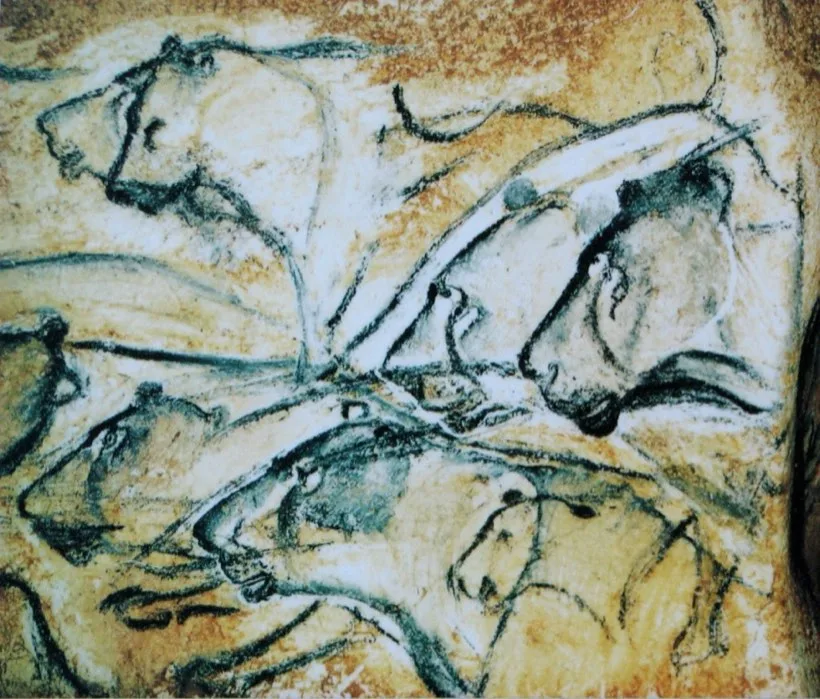
The paintings in the Chauvet-Pont d’Arc Cave are about 36,000 years old, according to the French Ministry of Culture. They include horses, bears and megaloceros, a giant deer that is now extinct. They also include lions.
The earliest artists kept choosing the most dangerous animals around them. Cave lions, mammoths, woolly rhinoceroses and cave bears appear again and again. Deer and horses were far easier to hunt, yet they are not the ones covering the walls.
The cave is so fragile that nobody may visit it. Not one visitor. A careful copy was built nearby instead, called Grotte Chauvet 2. People can stand in front of the lions there without breathing on the originals.
Knowledge check
Where is the oldest reliably dated cave art in the world?
Show answer
Everyone assumed Europe for a long time.
Three things people get wrong
“Stone Age tools were crude.” A well-made handaxe is symmetrical in three dimensions. Modern knappers train for years and still struggle to match the best originals. Rough is not the same as simple, and a tool that looks plain can still be the hardest thing in the room to make.
“Everyone lived in caves.” Caves preserve evidence, and open-air shelters do not. Archaeologists find what survives, so the picture tilts towards caves. Mammoth-bone huts and post holes show what people actually built.
“Tools slowly got better every century.” The handaxe stayed almost unchanged for over a million years. Progress in the Old Stone Age came in long flat stretches, with rare jumps between them.
Frequently asked questions
When did the Old Stone Age start and end?
The Old Stone Age started more than three million years ago, with the first chipped stone tools. The period ended about 11,700 years ago, when the last Ice Age finished.
What does the word Palaeolithic mean?
Palaeolithic comes from two Greek words. Palaios means old and lithos means stone, so the word means old stone. Scientists use it as the proper name for the Old Stone Age.
Who made the oldest stone tools?
Nobody knows for certain. The tools at Lomekwi 3 in Kenya are about 3.3 million years old, and no fossil has been found with them. One suspect is an early human relative called Kenyanthropus platyops .
What is a handaxe used for?
A handaxe is a general-purpose tool held in the bare hand. Early humans used one to cut meat, chop wood, scrape hides and dig. The teardrop shape is sharp all the way round.
Did Stone Age people really live in caves?
Most did not. Caves preserve bones, ash and paint for tens of thousands of years, while shelters of wood and hide rot away. The evidence that survives makes cave life look far more common than it was.
What is the oldest cave painting in the world?
The oldest reliably dated cave painting is at Leang Karampuang on Sulawesi, in Indonesia. Researchers reported in 2024 that it is at least 51,200 years old, and it shows a scene rather than a single animal.
Sources
- Nature: narrative cave art in Indonesia by 51,200 years ago — the date and description of the Leang Karampuang painting.
- Nature: 3.3-million-year-old stone tools from Lomekwi 3, West Turkana, Kenya — the age of the oldest known tools and the number of artefacts found.
- Smithsonian Human Origins Program: Early Stone Age tools — the Oldowan toolkit, percussion flaking and the Acheulean handaxe.
- Smithsonian Human Origins Program: Homo neanderthalensis — which humans lived alongside our species, and when.
- French Ministry of Culture: the Chauvet-Pont d’Arc Cave — the age of the Chauvet paintings and the animals shown.
- Natural History Museum: human evolution — the wider human family tree behind stage one.
Old Stone Age Final Challenge
- The tools at Lomekwi 3 were found in 2011 because the team did what?
- How many artefacts did the Lomekwi 3 dig produce?
- Why was a sharp flake such a useful thing to own?
- A handaxe is shaped like which of these?
- Which toolkit does the handaxe belong to?
- Why is a shelter of wood, hide and turf so rarely found?
- If your family comes from outside Africa, roughly how much of your DNA is Neanderthal?
- Which animals did the earliest cave artists keep choosing to paint?