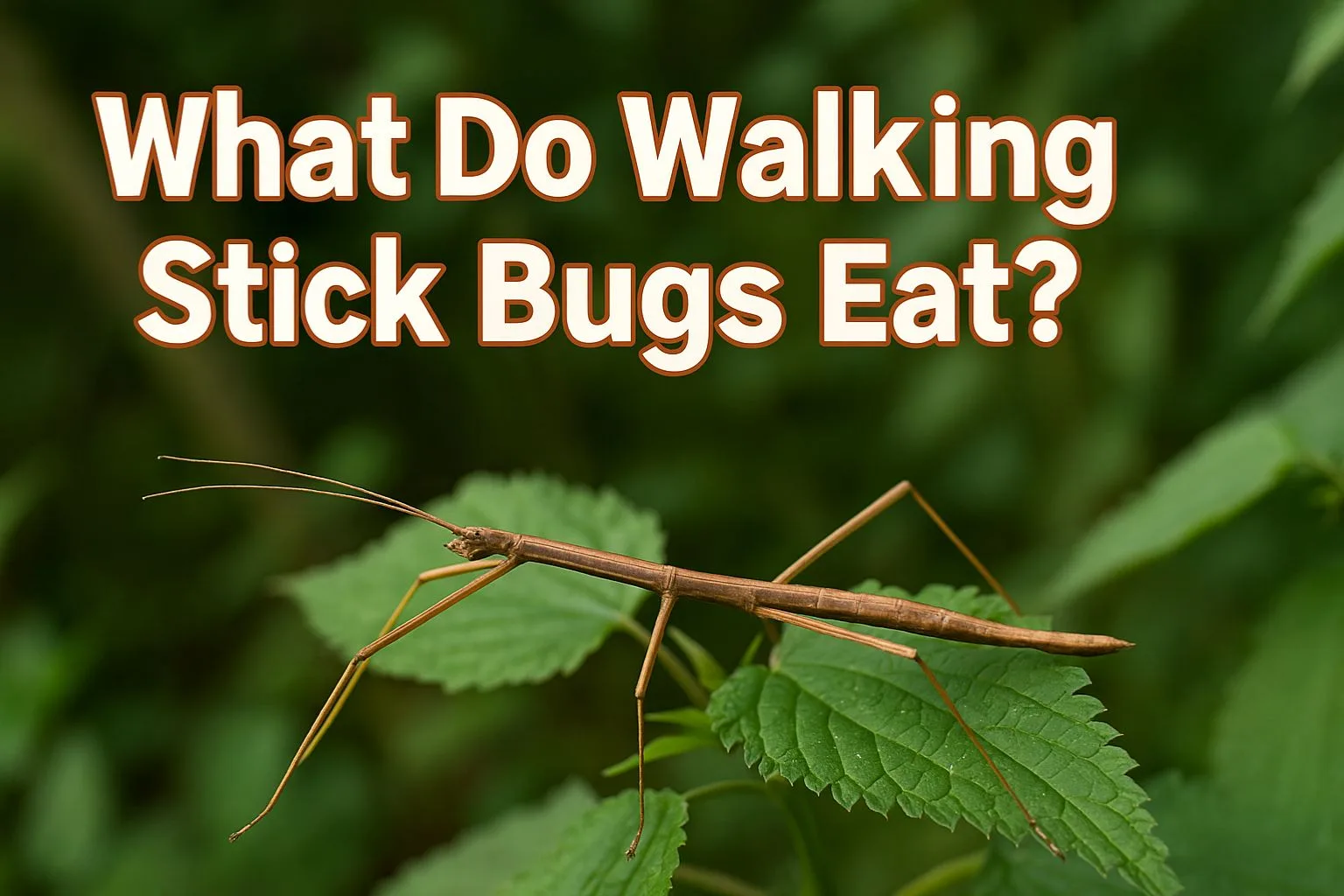
Walking stick bugs eat leaves. All stick insects are herbivores, and they chew the leaves of the trees and shrubs they live on. Pet stick insects in Australia eat eucalyptus (gum) leaves, spiny leaf insects can also eat rose and raspberry leaves, and some fussy species, such as the peppermint stick insect, eat only one kind of plant.
what walking stick bugs eat quick facts
- All walking sticks are herbivores that eat leaves.
- There are about 3,000 kinds of stick insect.
- Stick insects drink droplets of water from leaves.
- The peppermint stick insect eats only screw pine leaves.
- Some stick insects can drop a leg and grow it back.
What are walking stick bugs?
Walking stick bugs are insects that look almost exactly like twigs. They are also called stick insects, walking sticks or phasmids. Britannica says there are about 3,000 species, and the National Wildlife Federation says more than 3,000.
They live on every continent except Antarctica, mostly in warm tropical places and in temperate regions. The biggest and most common ones are found in the tropics. There are about 27 kinds in the southern United States, but about 600 kinds in Central and South America.
Walking sticks are usually green or brown, and they move very slowly. Their close relatives, the leaf insects, look like leaves instead of sticks.
What do walking stick bugs eat?
Walking stick bugs eat leaves. The National Wildlife Federation says all walking sticks are herbivores, which means they eat only plants, and leaves are the main food in their diet.
They use strong jaws, called mandibles, to bite and chew the leaves. A hungry stick insect usually starts at the edge of a leaf and nibbles its way inwards.
Different kinds of stick insect like different plants. Many will eat the leaves of several kinds of tree or shrub, whatever grows nearby, but some are very fussy and eat only one kind of plant.
| Stick insect | What it eats |
|---|---|
| Spiny leaf insect | eucalyptus (gum) leaves; also raised on rose and raspberry leaves |
| Children’s stick insect | eucalyptus (gum) leaves |
| Goliath stick insect | eucalyptus (gum) leaves |
| Peppermint stick insect | only the leaves of the screw pine |
| Wild walking sticks | the leaves of the trees and shrubs they live on |
What do they eat in the wild?
In the wild, walking sticks live in woodlands and tropical forests. They hide on trees in plain sight, and they eat the leaves of the plants they live on.
This is very handy for a stick insect. Its food is right there beside it, so it does not have to travel far or risk being seen by a hungry bird.
Because they are so well hidden, you may have walked past a walking stick without ever noticing it munching on a leaf.
How do stick insects eat?
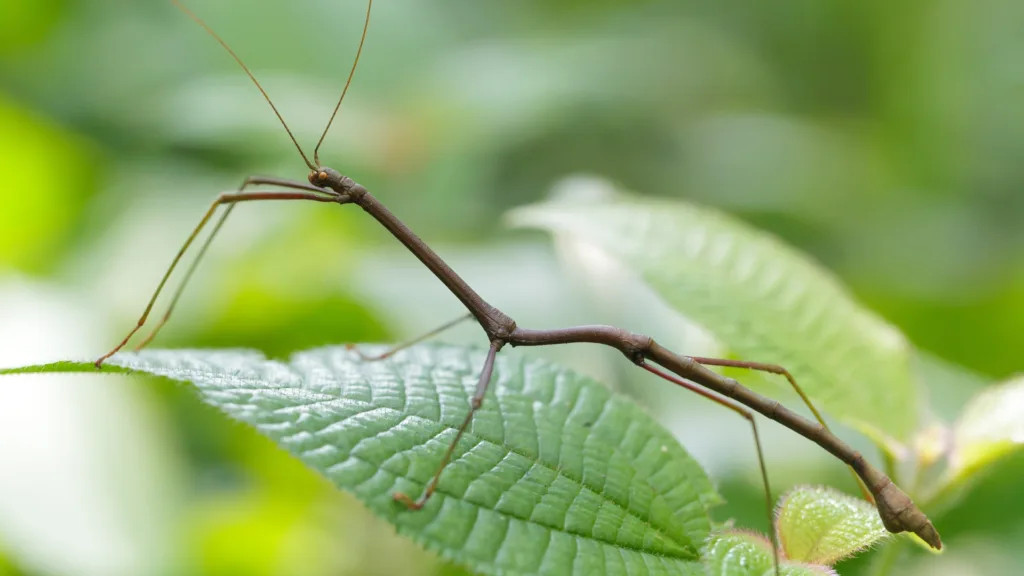
A stick insect holds on to a leaf with its long legs and uses its jaws to cut off small pieces. It chews each piece before swallowing it.
Stick insects eat slowly and carefully, and they often keep very still between bites. Keeping still helps them stay hidden while they feed.
Young stick insects, called nymphs, eat the same kind of leaves as the adults. They just eat smaller amounts.
Do walking stick bugs drink water?
Yes. The Australian Museum says stick insects drink droplets of water from leaves, such as dew or rain.
If you keep stick insects as pets, you can give them water by gently misting their leaves with a spray bottle once a day. But be careful not to overdo it. Too much moisture can lead to mould, which can harm them.
Feeding pet stick insects
Stick insects are popular pets in homes and classrooms, especially in Australia and Europe. Feeding them properly is the most important part of looking after them.
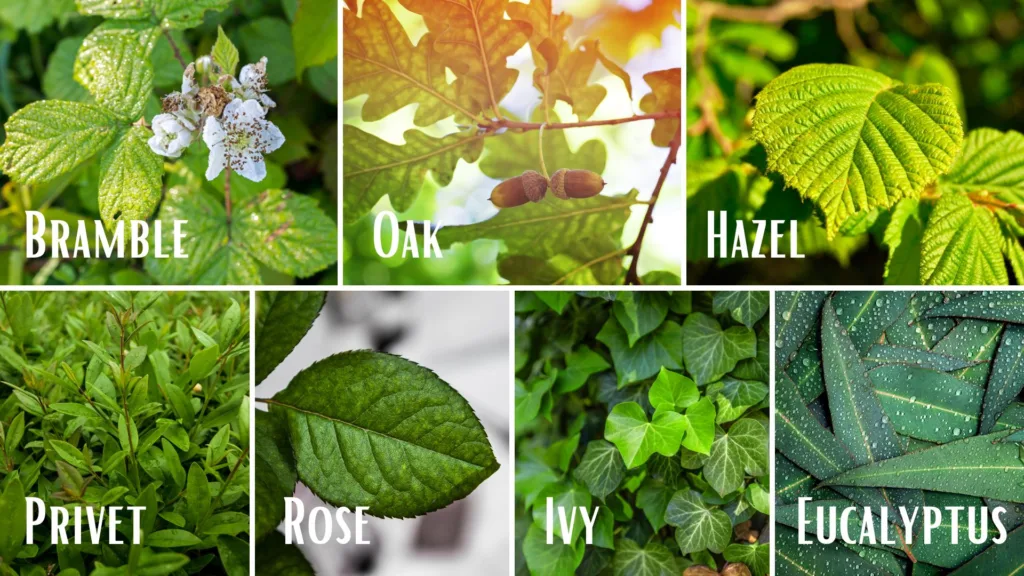
The Australian Museum says eucalyptus (gum) leaves are eaten by all the stick insects that are commonly kept as pets in Australia. In other countries, keepers have raised spiny leaf insects on rose and raspberry leaves. Find out more about these flowers in our rose facts.
Fresh leaves are best: fresh, healthy leaves last longer and have more goodness in them than old, dry ones.
Keep branches fresh: cut branches can be kept standing in a bucket of water in the fridge for up to a week before you use them.
Change the food often: leaves in the enclosure should last about a week, and longer if they are freshly cut.
Give them space: the Australian Museum suggests an enclosure about 90 cm high for up to twelve stick insects, so the young have room to hang and moult.
Looking After Pet Stick Insects
- Fresh leaves — Last longer and have more goodness than old, dry ones
- A bucket of water in the fridge — Keeps cut branches fresh for up to a week
- 90 cm — How tall an enclosure for up to twelve stick insects should be
- Rose and raspberry leaves — What keepers overseas have fed spiny leaf insects
- Screw pine — The only plant the peppermint stick insect eats
Different stick insects, different diets
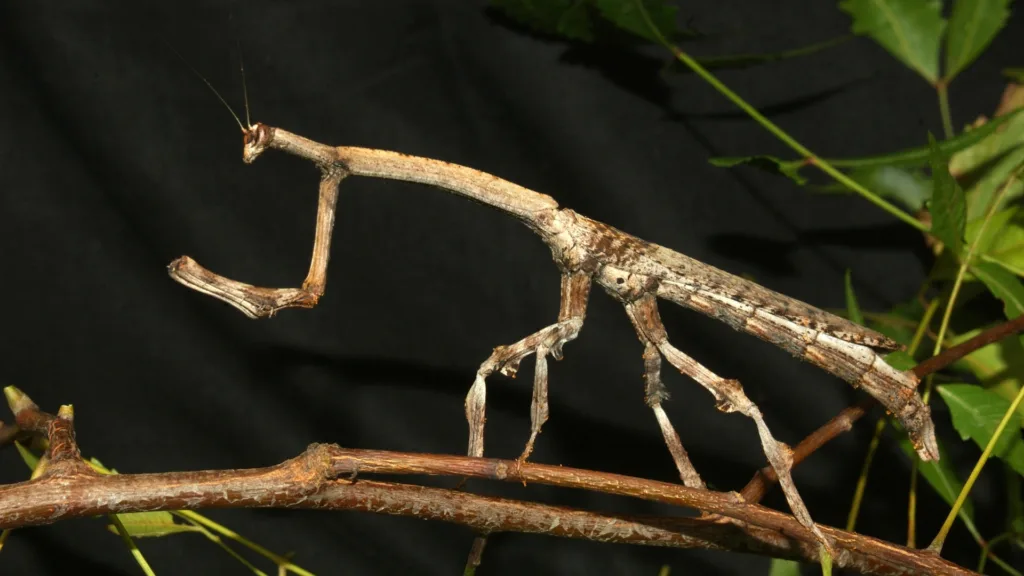
The Indian stick insect is one of the best-known pet stick insects in Europe. Like other pet stick insects, it needs fresh leaves from the right food plants, so it is always worth checking what your own species eats.
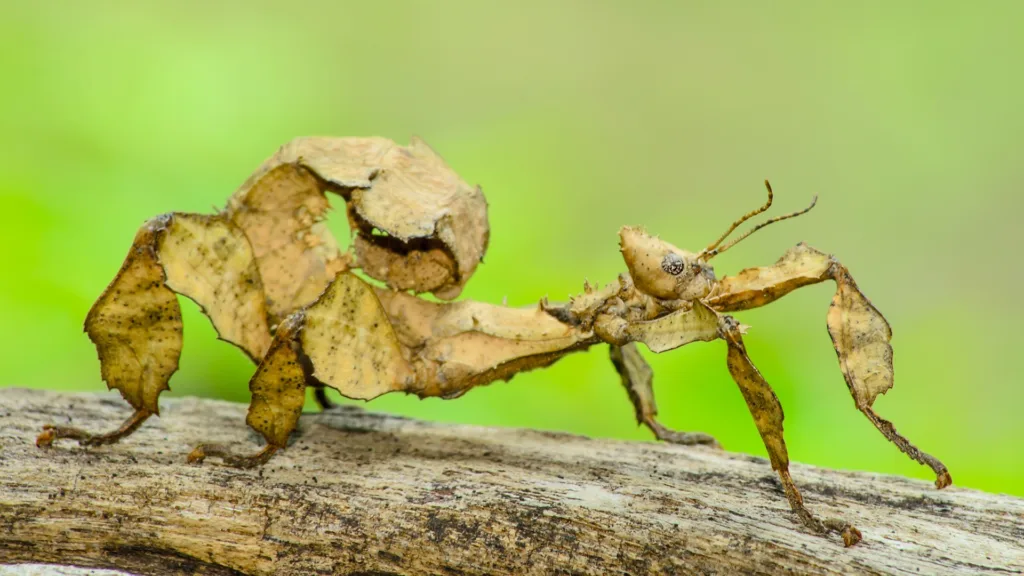
The spiny leaf insect comes from Australia. It has a spiky body and a curled-up tail, and it looks more like a bunch of dead leaves than a stick. It eats eucalyptus leaves, and it can also be raised on rose and raspberry leaves.
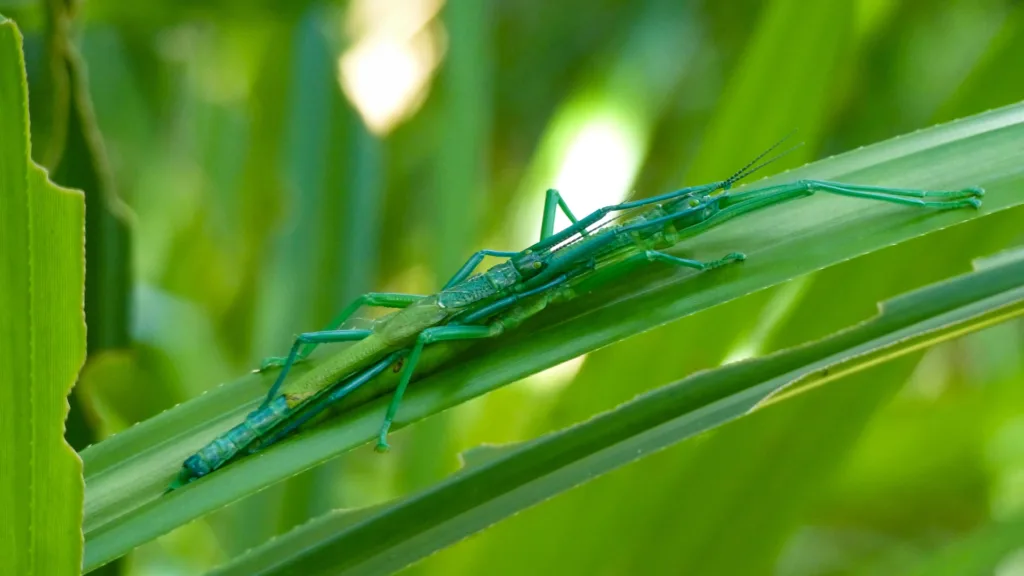
The peppermint stick insect is a very picky eater. The Australian Museum says it eats only the leaves of the screw pine, a plant called Pandanus tectorius. If it cannot get screw pine, it will not survive.
What not to feed stick insects
Stick insects are plant-eaters, so they should never be given meat, bread or other people food.
Never feed them leaves that may have been sprayed with insect killer or other chemicals. Even a small amount could poison them.
Avoid old, dry or mouldy leaves too. They have less goodness in them, and mould can make stick insects ill.
Staying safe while they eat
While a stick insect is eating, it has to watch out for hungry animals. Its best trick is its disguise. Walking sticks look just like sticks, and some even sway gently from side to side, like a twig moving in the wind.
Disguise does not always work. The National Wildlife Federation says that bats may be their most effective predators, because bats hunt by echolocation, using sound rather than sight.
Stick insects have other defences too. Some give off bad-smelling chemicals, and some can squirt a liquid that blinds an attacker for a while. Others can drop a leg if it is grabbed, and grow it back later.
Wings and other surprises
Many walking sticks have no wings at all. Among those that do, Britannica says some have short, leathery front wings, while others have large, colourful back wings that stay folded over the body.
Walking sticks are unusual among insects because they can regrow lost antennae as well as lost legs. That helps them survive an attack while they are out feeding.
Some walking sticks have another trick. They can squeeze out a body fluid containing nasty-tasting chemicals through special joints in their hard outer skin. A predator that gets a mouthful of that soon learns to leave them alone.
Big and small
Walking sticks come in many sizes. The National Wildlife Federation says most are 2.5 to 30 cm (1 to 12 inches) long, and females are usually bigger than males.
Britannica says some tropical walking sticks that look like twigs are more than 30 cm (11.8 inches) long. One kind can stretch to over 51 cm (20 inches) with its legs held out. That is longer than a school ruler and a half.
Walking Sticks by Numbers
- About 3,000 — How many species of stick insect there are
- 2.5 to 30 cm — How long most walking sticks are
- Over 51 cm — The length of one species with its legs held out
- 27 — Walking stick species in the southern United States
- 600 — Walking stick species found in Central and South America
Eggs, nymphs and growing up
Every stick insect starts life as an egg, which the female drops from the end of her body. The eggs look very like seeds.
Some female stick insects can lay eggs without a male. These unfertilised eggs hatch into new females.
Some eggs hatch within a year, but others wait on the ground among the dead leaves for one or two winters before hatching.
The young stick insects, called nymphs, grow by moulting. A new skin forms under the old one, and the old skin splits along the back. The insect carefully pulls its body and legs out, and the soft new skin slowly hardens.
The Australian Museum says most pet females live for about 18 months, while males live for only about 6 to 8 months. The National Wildlife Federation says walking sticks usually live up to two years.
A Stick Insect’s Life in Order
- The egg A female drops an egg that looks like a seed.
- The wait Some eggs lie among dead leaves for one or two winters.
- Hatching A tiny nymph hatches and climbs up to a food plant.
- Moulting Its old skin splits, and it pulls itself out in a new, soft skin.
- Grown up It becomes an adult, somewhere between three months and a year old.
Three things people get wrong
Stick insects do not eat other insects. All walking sticks are herbivores and eat leaves.
Not all stick insects eat the same leaves. Some eat many plants, but others, like the peppermint stick insect, eat only one.
Stick insects are not always green. Many are brown, so they blend in with bark and dead twigs.
Did you know? Some female stick insects can lay eggs without a male, and those eggs hatch into new females.
Walking Sticks: Fact or Myth?
- Walking sticks live on every continent.
- Some walking sticks sway like a twig in the wind.
- Male walking sticks are usually bigger than females.
- Some stick insects can squirt a liquid that blinds an attacker for a while.
- All stick insects have wings.
- Walking sticks can regrow lost legs and antennae.
- Stick insects are always green.
- Some female stick insects can lay eggs that hatch without a male.
Try it
Go on a stick insect hunt in a park or garden. Look closely at twigs and leaves for five minutes. Could a stick insect be hiding in plain sight?
Knowledge check
What do walking stick bugs eat?
Show answer
Leaves; they are herbivores.
How do stick insects drink?
Show answer
They drink droplets of water from leaves.
Frequently asked questions
What do walking stick bugs eat in the wild?
In the wild, walking stick bugs eat the leaves of the trees and shrubs they live on in woodlands and tropical forests. All walking sticks are herbivores.
What do pet stick insects eat?
Most pet stick insects in Australia eat eucalyptus (gum) leaves. Spiny leaf insects can also be raised on rose and raspberry leaves. Always check what your species needs.
Do walking stick bugs drink water?
Yes. Stick insects drink droplets of water from leaves. Pet stick insects can be given water by lightly misting their leaves once a day.
Do stick insects eat other insects?
No. All walking sticks are herbivores, which means they eat only plants. Leaves are the main food in their diet.
What should you not feed a stick insect?
Never feed stick insects leaves sprayed with chemicals, or old, dry or mouldy leaves. They should never be given meat, bread or other human food.
How long do stick insects live?
The Australian Museum says most pet females live about 18 months and males 6 to 8 months. Wild walking sticks usually live up to two years in all.
Sources
- Encyclopaedia Britannica: walking stick — number of species, where they live, size, colour, jaws, regrowing legs, defences, seed-like eggs and life cycle
- National Wildlife Federation: walking sticks — range, habitat, diet, size, camouflage, bats as predators, defences, eggs and lifespan
- Australian Museum: care of stick insects — food plants, fresh leaves, drinking and misting, enclosures, moulting, eggs and lifespan
Walking Stick Final Challenge
- Why are bats such good hunters of stick insects?
- What does a stick insect use to bite and chew?
- Where are the biggest and most common walking sticks found?
- What is another name for stick insects?
- About how long do pet female stick insects live?
- What can some walking sticks force out through special joints in their skin?
- What are the stick insect's close relatives that look like leaves called?