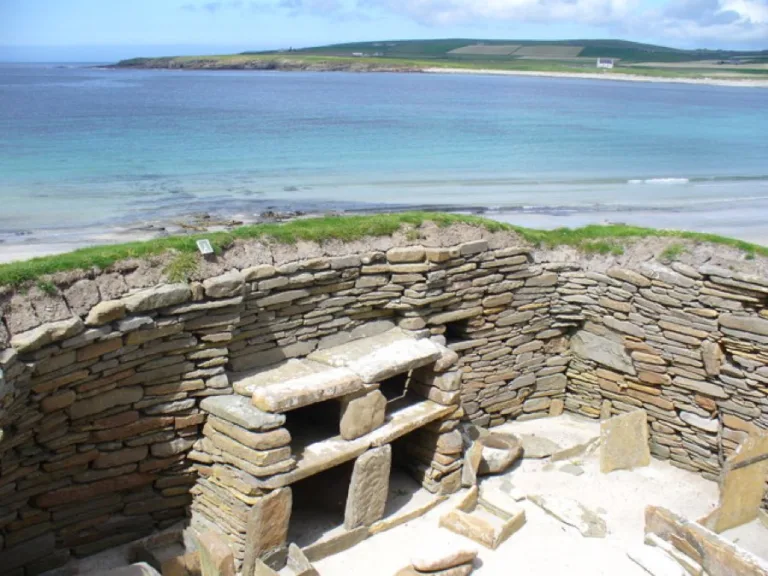
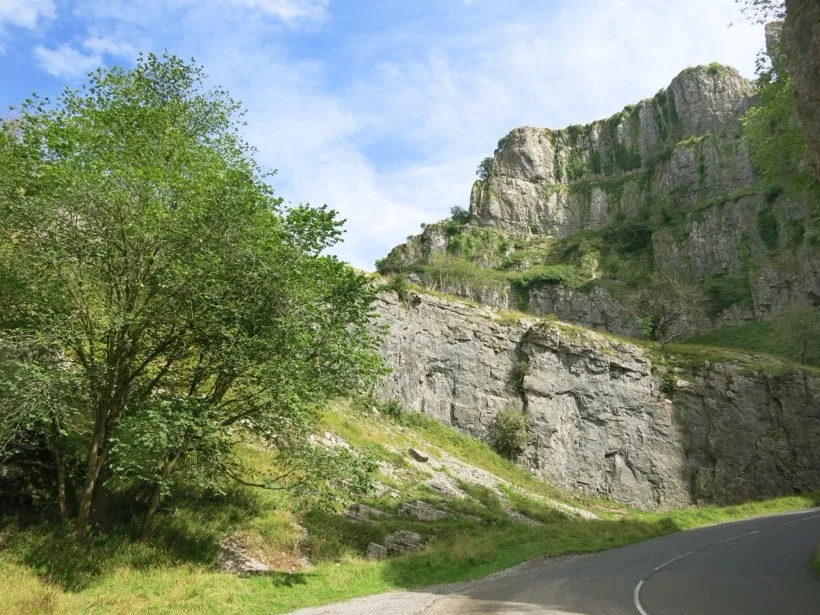
The Middle Stone Age is the short middle part of the Stone Age. In Britain it ran from about 9600 BC to about 4000 BC. The ice had gone, thick forest had grown, and the big Ice Age animals were dead. People hunted forest animals with tiny stone blades, and Britain was still joined to Europe.
Middle Stone Age for Kids quick facts
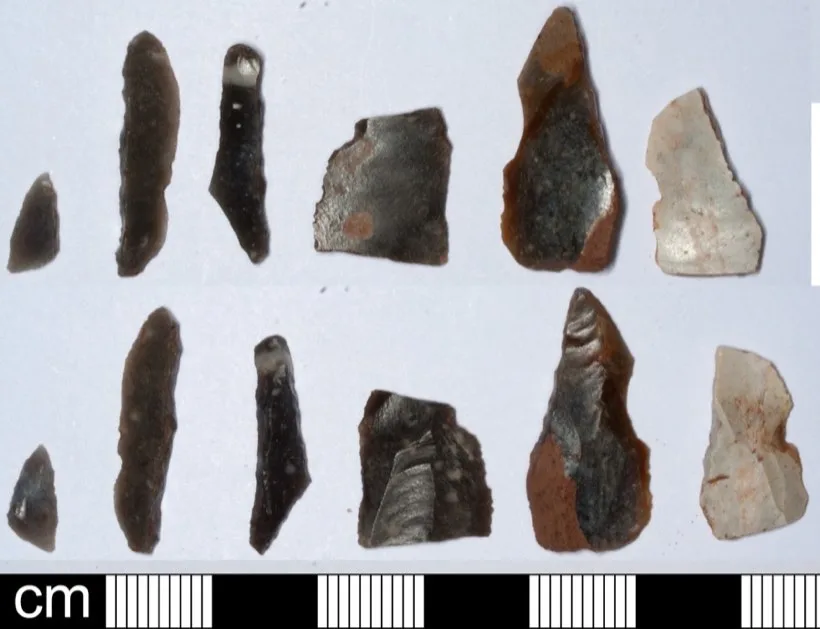
- The stone blades of this period are tiny. Many are shorter than your little finger.
- Cheddar Man is the oldest almost complete skeleton of our species found in Britain. He lived about 10,000 years ago.
- DNA work published in 2018 suggests Cheddar Man had dark skin and blue eyes.
- He was lactose intolerant. Adults in Britain could not digest milk for thousands of years yet.
- Britain was not an island. You could walk to what is now France, across land that is now under the North Sea.
A world that filled up with trees
The last Ice Age ended about 11,700 years ago. Britain had been cold, open tundra. Now it warmed, and the landscape changed within a few human lifetimes.
The Natural History Museum describes Mesolithic Britain as densely forested. Birch came first, then hazel, oak and elm. A hunter who knew the old open country would not have recognised it.
The big Ice Age animals went with the cold. Mammoths, woolly rhinos and cave lions were gone. In their place came red deer, wild boar, aurochs and smaller forest animals.
That changed hunting completely. You cannot chase a herd across open ground in a wood. You have to move quietly, know the trails, and strike from close range. The tools changed to match, which is question two.
Scientists call this period the Mesolithic. The name means middle stone. It is the shortest of the three Stone Ages by a long way, and the easiest one to forget.
You can read the whole sweep in our Stone Age facts for kids guide. The people themselves, and how they lived from day to day, are covered in Stone Age people.
Put these in order
- The ice goes The last Ice Age ends and Britain begins to warm
- The trees arrive Birch, then hazel, oak and elm cover the land
- Cheddar Man A young man dies and is left in a cave in Somerset
- The sea rises Water covers the low land between Britain and Europe
- The first farms Farming reaches Britain from the continent
| Period | Roughly when | How people lived |
|---|---|---|
| Old Stone Age | Before 9600 BC | Hunting big Ice Age animals with large stone tools |
| Middle Stone Age | 9600 – 4000 BC | Hunting forest animals and fishing, with tiny blades |
| New Stone Age | 4000 – 2500 BC | Farming, villages, pottery and monuments |
The smallest tools of the Stone Age
The typical Middle Stone Age tool is a microlith. The word means small stone. Many are shorter than your little finger, and some are only a centimetre or two long.
One microlith on its own does almost nothing. That is the point. Hunters set rows of them into a groove cut along a wooden shaft. Resin or pine tar held them in place. The result was a barbed spear or an arrow.
A handaxe was one tool cut from one stone. A microlith spear was a machine built from many small parts.
This was a better design in several ways. A small blade takes far less good flint than a handaxe. If one snapped, you replaced that piece instead of the whole tool. And a row of small barbs holds in an animal better than a single point.
Bows and arrows came into wide use in this period too. Both suited a forest, where you shoot at what you can see and get one chance.
There is another reason the design mattered. Good flint is not everywhere, and carrying heavy stone is hard work. A pouch of microliths weighs very little and repairs a dozen weapons. A hunter could travel light and still be well armed.
Our guide to Stone Age tools and weapons sets these beside the older shapes. The much bigger tools that came before them are in Old Stone Age tools and weapons.
Middle Stone Age words
- Microlith — a very small stone blade, often shorter than a finger
- Mesolithic — the scientific name for the Middle Stone Age
- Resin or pine tar — what held the blades into the shaft
- Aurochs — the huge wild cattle people hunted
- Doggerland — the low land that joined Britain to Europe
Hunted, fished and gathered
Nobody farmed in Britain yet. Every meal was hunted, caught or picked.
The Natural History Museum says Cheddar Man and people like him ate red deer, aurochs and some freshwater fish, along with seeds and nuts. Aurochs were huge wild cattle, far bigger than a farm cow.
Water mattered enormously. Rivers, lakes and the coast gave fish, birds, eels and shellfish all year. Many of the sites we know sit beside water, and people came back to good spots again and again.
Shellfish leave a clear trace. Piles of discarded shells build up over years, and archaeologists still find them. A rubbish heap turns out to be one of the most useful things a person can leave behind.
These groups moved with the seasons rather than wandering at random. They knew when the nuts ripened and when the fish ran. That is a kind of planning, and it needs a very good memory of the land.
Our guide to Stone Age food follows the whole story of eating, from hunting to the first farms.
What was on the menu
- Red deer — hunted in the new forests
- Freshwater fish — caught in rivers and lakes
- Seeds and nuts — gathered when they ripened
- Shellfish — collected at the coast, leaving heaps behind
- Milk — the one thing adults could not digest
The oldest Briton we can look at
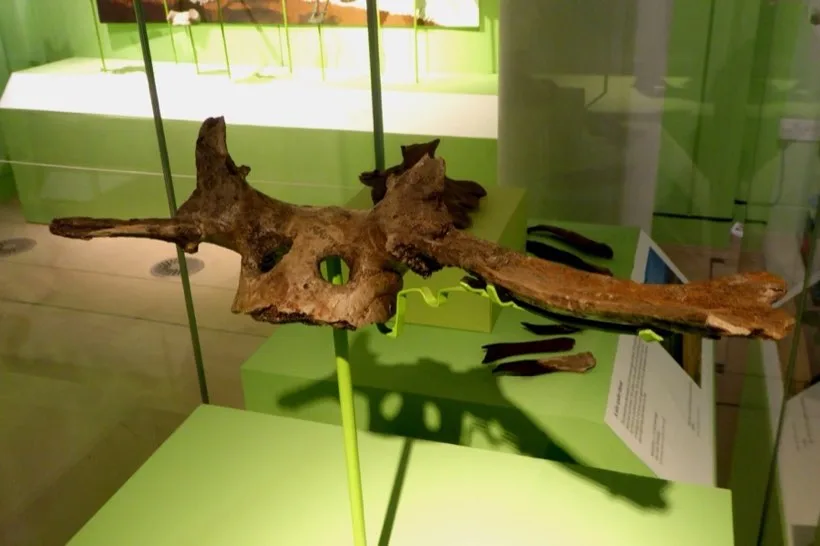
In 1903, workers found a skeleton in Gough’s Cave, in Cheddar Gorge in Somerset. He is called Cheddar Man. The Natural History Museum calls him the oldest almost complete skeleton of our species ever found in Britain.
He lived about 10,000 years ago. He stood about 166 centimetres tall, and he died in his twenties.
In 2018, researchers took DNA from his skull and read it. The result suggested dark skin, dark brown hair and blue eyes. Dr Tom Booth of the Museum put it simply. Pale eyes entered Europe long before pale skin or blond hair. Those did not arrive until after farming began.
His DNA also showed he was lactose intolerant. He could not digest milk as an adult. That ability spread in Britain thousands of years later, once people kept cattle.
The country under the North Sea
The Natural History Museum notes that in Cheddar Man’s time Britain was attached to continental Europe. There was no Channel crossing to make. You walked.
That low land is now under the southern North Sea. Archaeologists call it Doggerland. It was not a bare bridge either. It had rivers, marshes, woods and animals, and people lived on it.
We know because fishing boats keep dragging it up. Trawler nets have brought up animal bones and worked flint tools from the sea floor. Some come from places far out of sight of any modern coast.
Think about what that means. People stood there. They hunted there, and they knew those rivers by name in a language nobody will ever hear.
As the ice sheets melted, the sea rose and took it. Britain became an island around 6000 BC. It is worth sitting with that for a moment. A whole lived-in landscape, with its own paths and camps, went under the water.
Middle Stone Age: fact or myth?
- Smaller tools mean simpler tools.
- Britain has always been an island.
- Fishing boats still drag up bones and flint tools from the floor of the North Sea.
- People in Middle Stone Age Britain kept sheep and grew wheat.
- A pile of old shells can be one of the most useful things to an archaeologist.
- The Stone Age is one long period with one way of life.
The last hunters
Farming reached Britain from about 4000 BC. It had spread slowly across Europe for thousands of years before that.
The change was not a single day, and it was not everywhere at once. For a long time some people farmed while their neighbours still hunted. The two ways of living sat side by side.
Farming won in the end, because it fed more people from the same patch of ground. What it cost was freedom to move. Crops must be watched, and animals must be fed, so you stay.
That is stage three, the New Stone Age. It is the biggest change in this whole course.
It is worth noticing what did not happen. The last hunters were not wiped out or pushed aside in a rush. DNA work shows farmers arriving and the two groups living alongside each other for centuries. Ways of life overlap far more than school timelines suggest.
The tools of those first farmers are covered in New Stone Age tools and weapons.
A face from Gough’s Cave
Cheddar Man is not a famous king or a warrior. He is a young man who died in his twenties, about 10,000 years ago, and was left in a cave in Somerset.
What makes him matter is that he is almost complete. From one skeleton we get height, age, diet, and now DNA. He is the closest thing Britain has to a photograph of the Middle Stone Age.
The 2018 result also did something useful outside archaeology. It showed that the faces people had imagined for ancient Britons were guesses, and that the evidence had its own answer.
Knowledge check
What brought the Middle Stone Age in Britain to an end?
Show answer
, and it changed almost everything about daily life.
Three things people get wrong
“The Stone Age is one long period.” It has three parts, and they are wildly different. Old, Middle and New Stone Age people hunted, ate and lived in ways that would have puzzled each other.
“Smaller tools mean simpler tools.” A microlith spear has many parts, a handle, a glue and a design. It is more complicated than a handaxe, not less.
“Britain has always been an island.” For most of human history it was part of Europe. The sea cut it off only around 6000 BC, which is recent by Stone Age standards.
Frequently asked questions
When was the Middle Stone Age?
The Middle Stone Age in Britain ran from about 9600 BC to about 4000 BC. It began when the last Ice Age ended, and it finished when farming arrived from mainland Europe.
What is a microlith?
A microlith is a very small stone blade, often shorter than a little finger. Hunters set rows of them into wooden shafts with resin to make spears and arrows with sharp barbs.
Who was Cheddar Man?
Cheddar Man is a young man whose skeleton was found in Gough’s Cave in Somerset in 1903. He lived about 10,000 years ago and is the oldest almost complete skeleton of our species found in Britain.
Did Cheddar Man really have dark skin?
DNA research published in 2018 suggests dark skin, dark brown hair and blue eyes. Scientists describe this as the most likely result from the genes read, rather than a certainty.
What was Doggerland?
Doggerland is the name for the low land that once joined Britain to mainland Europe. Rising seas covered it as the ice melted, and it now lies beneath the southern North Sea.
Why did people stop hunting and start farming?
Farming fed more people from the same area of land, which mattered as groups grew. The trade was freedom of movement, because crops and animals have to be watched all year round.
Sources
- Natural History Museum: Cheddar Man, Mesolithic Britain’s blue-eyed boy — his age, height, diet, the 2018 DNA result, and Britain being attached to Europe.
- Natural History Museum: human evolution — where our species sits in the wider human family.
- Smithsonian Human Origins Program: Early Stone Age tools — the older toolkits that microliths replaced.
Middle Stone Age Final Challenge
- What replaced the cold open tundra of Britain after the ice went?
- Which animals disappeared from Britain along with the cold?
- Why does hunting in a wood need a different weapon from hunting on open ground?
- What is the advantage of a weapon built from many small blades?
- Where was Cheddar Man found?
- About how tall was Cheddar Man?
- What does the land under the southern North Sea tell us?
- For a long time after farming arrived in Britain, what happened?