The New Stone Age is when people stopped hunting and started farming. Instead of following animals and picking wild plants, they grew crops, kept animals and lived in one place all year. It began about 10,000 BC in the Middle East and reached Britain from about 4000 BC. Its proper name is the Neolithic.
New Stone Age for Kids quick facts
- Farming took about 6,000 years to travel from the Middle East to Britain.
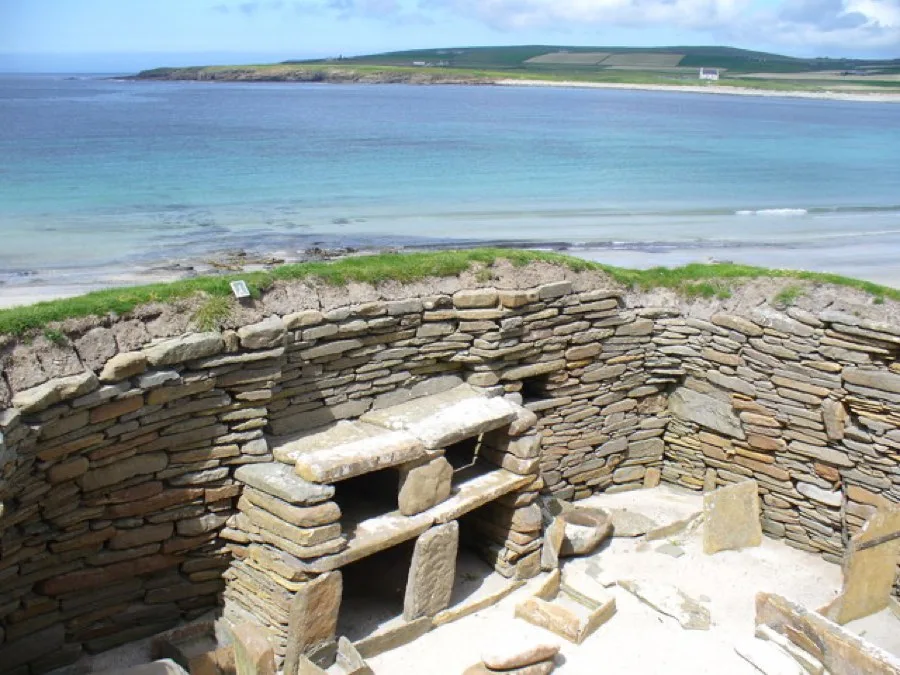
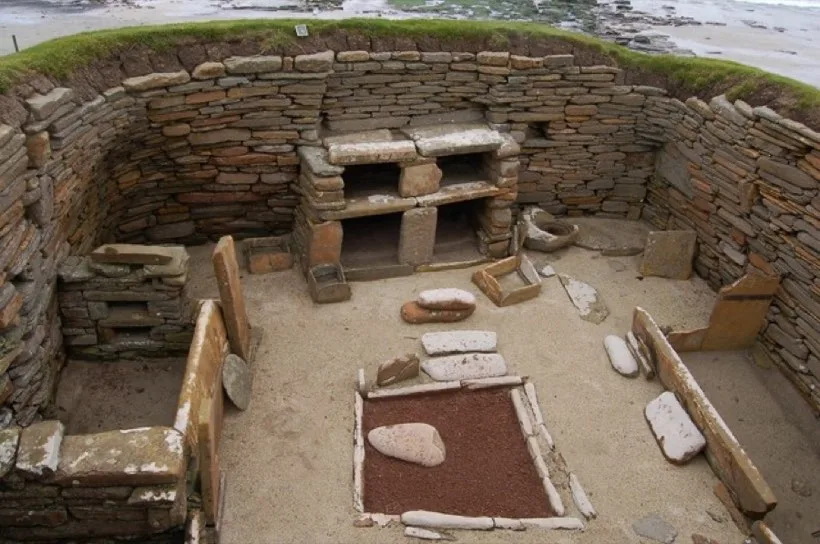
- Skara Brae in Orkney still has its stone furniture: beds, dressers and drains.
- At Çatalhüyük in Turkey the houses had no street doors. People climbed in through the roof.
- Miners at Grime’s Graves dug over 400 pits, some 13 metres deep, using red deer antler picks.
- The stone circle at Stonehenge went up about 2500 BC, right at the end of the Stone Age.
The change that made everything else
For millions of years people moved to find food. In the New Stone Age they started growing it instead.
The earliest farmers in the Middle East grew barley and wheat. They kept sheep and goats, then cattle and pigs. Taming animals like this is called domestication.
Farming means you can feed more people from one patch of ground. So you stay. You build a house that will last, and your neighbours build theirs next to it. That is a village.
Staying still is the invention. The crops are just how it was done.
It also freed some people from finding food at all. If the harvest feeds the village, a few villagers can spend their days making pots, weaving cloth or shaping tools instead. Specialists appear for the first time.
The change was slow. Farming reached Greece by about 7000 BC and crept north. It arrived in Britain from about 4000 BC, and in some places farmers and hunters lived side by side for centuries. Our guide to New Stone Age tools and weapons follows the spread.
Put these in order
- The first farms Farming begins in the Middle East
- Çatalhüyük People live in mud brick houses entered through the roof
- Farming reaches Britain Crops and animals arrive from the continent
- Skara Brae A village of stone houses is built on Orkney
- The stone circle The sarsens are raised at Stonehenge
The polished axe
People still chipped flint. They had done it for three million years, and it worked. Now they added something new.
They rubbed hard stone against another rock, for hours, until it was smooth. A polished edge does not chip the way a flaked edge does. A good polished axe lasted for years.
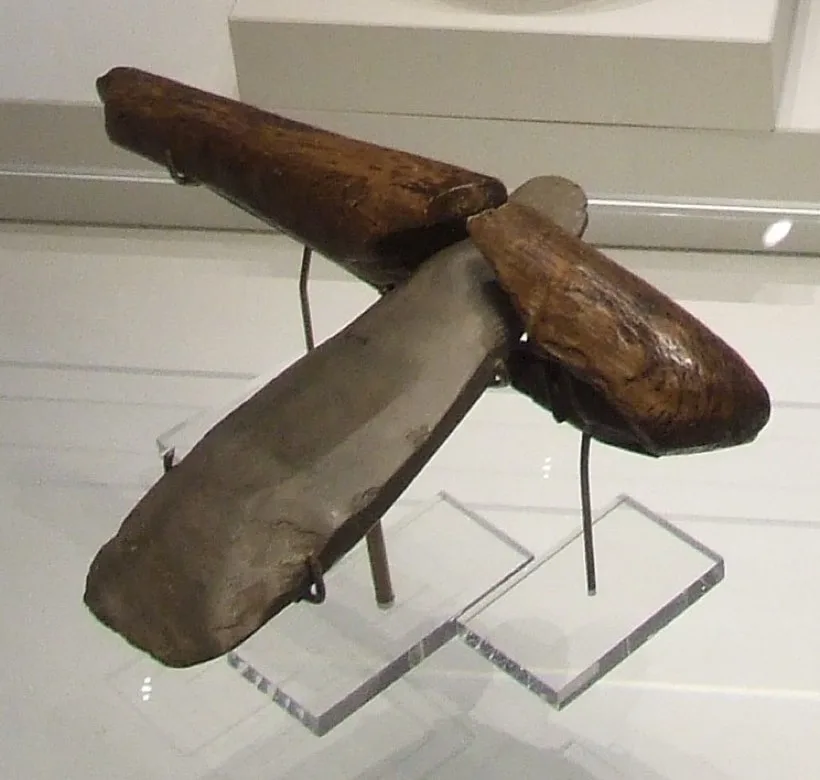
Fitted to a wooden handle, it became the tool that changed the landscape. Farmers used it to fell trees and clear land for fields and villages. Experiments show a polished axe can bring down a small tree in well under an hour.
Other new tools followed the same logic. Sickles had sharp stone blades set into a curved wood or bone handle, for cutting crops. Grinding stones turned grain into flour, by crushing it between a flat stone and a smaller one.
Chipped tools did not disappear. Arrowheads were still made from flakes of flint, because a flake is sharper. The two methods sat side by side, each doing what it was best at. Our guide to Stone Age tools and weapons compares them. For the chipping method step by step, read how to make a Stone Age weapon.
Which tool did the job?
- Polished axe — felling trees to clear land for fields
- Sickle — cutting crops at harvest
- Grinding stone — crushing grain into flour
- Pottery — storing grain and carrying water
- Woven cloth — clothing made from plant fibre or wool
Houses built from whatever was nearby
Farmers needed homes that lasted, and they built them from what was to hand. That changed from place to place.
Çatalhüyük, near Konya in Turkey, is one of the most famous villages of the period. People lived there from about 6700 BC to about 5650 BC.
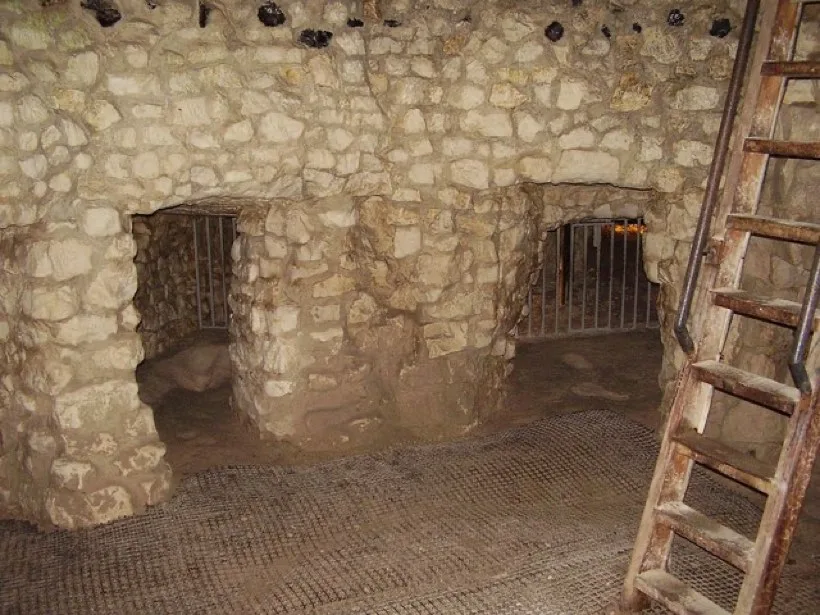
Its mud brick houses were packed so tightly that there were no streets at all. People walked over the roofs, and climbed down a wooden ladder through a hole to get inside. Each house had a hearth, an oven and raised platforms for sleeping and working. Some rooms had brightly painted walls.
Building a Neolithic house
- Mud brick — shaped and dried in the sun, used in Turkey
- Wattle — thin hazel rods woven between wooden stakes
- Daub — the sticky mix spread over the woven wall
- Stone slabs — used for walls and furniture where there were no trees
- Thatch — straw or reeds tied onto the roof frame
| Material | Where | How it worked |
|---|---|---|
| Mud brick | Turkey, the Middle East | Mud shaped into bricks and dried in the sun |
| Wattle and daub | Southern England | Woven hazel rods, sealed with chalk, hay and water |
| Stone | Orkney, Scotland | Flat slabs, used for walls and furniture alike |
| Thatch | Most places | Straw or reeds tied onto a wooden roof frame |
Four hundred holes in a Norfolk field
The best flint was not lying on the surface. It sat in a buried layer of chalk, and people wanted it enough to dig.
English Heritage records that from about 4,500 years ago, miners at Grime’s Graves dug over 400 pits. The site holds 433 mines and pits, and some shafts went 13 metres down. That is about the height of a four-storey building.
They dug with picks made from red deer antlers. Antler is tough and slightly springy, so it bites into chalk without shattering.
What they were after was a jet black layer called floorstone. English Heritage describes it as excellent quality and glossy black. It could be worked without hidden flaws, which surface flint often has.
Good flint and fine polished axes were worth carrying a long way. Some travelled hundreds of kilometres from where they were quarried, which means people were trading.
Things worth owning once you stay
Pottery and weaving both appear in the New Stone Age, and both follow from staying in one place.
A clay pot is heavy and it breaks. If you move camp every few weeks, it is a burden. If you live in a village, it is a store for grain, a cooking vessel and a water carrier.
Broken pottery is now one of the most common finds from this period. Fired clay does not rot, so the rubbish outlasts the houses.
Cloth appears alongside it. People spun thread from plant fibres or animal wool and wove it into fabric. Cloth is lighter and more comfortable than animal skin, and a farmer could grow or rear the raw material.
Both crafts point the same way. Farming did not just change what people ate. It changed what was worth making.
There is a quiet knock-on effect here. Pots let people store grain through the winter and cook in new ways. Boiling becomes easy once you own a vessel that sits in a fire. Soft food matters for small children and for the very old, so more of both survive.
What people ate in this period is set out in Stone Age food, and the people themselves in Stone Age people.
Moving stone for no practical reason
New Stone Age people built things far larger than any house. In Britain they raised stone circles, henges, and long barrows for burying the dead. In Ireland they built Newgrange, a great mound with a passage tomb inside.
Stonehenge is the famous one. English Heritage dates the first henge there to about 5,000 years ago, and the stone circle to about 2500 BC, in the late Neolithic. The earliest earthwork enclosed an area about 100 metres across.
The stones came in two kinds. The big sarsens were set in an outer circle and an inner horseshoe. The smaller bluestones went between them, and were brought from Wales, a very long way for stones that size.
Work went on for centuries. English Heritage notes that the bluestones were rearranged 200 or 300 years later, and radiocarbon dates from antlers put the last prehistoric work between 1800 and 1500 BC.
Nobody knows exactly what it was for. It took enormous effort from people with no metal and no wheel at the site. It grew nothing and it sheltered nobody.
That is the point worth sitting with. A farming people, working with antler picks and rope, chose to spend generations on something with no practical use at all. Whatever they believed, they believed it strongly. Our guide to Neolithic houses shows what they built for themselves.
New Stone Age: fact or myth?
- Stonehenge was built by Bronze Age people.
- Farming spread across the world quickly once it was invented.
- Miners dug shafts 13 metres deep using picks made from red deer antler.
- New Stone Age people were simple and unskilled.
- Broken pottery is one of the most common finds from this period.
- Chipped flint tools disappeared once people learned to polish stone.
A village under the sand
On Orkney, off the north coast of Scotland, a storm struck in 1850. It tore the sand off a hillside and uncovered stone houses. The village is called Skara Brae.
People lived there about 5,000 years ago, before the sarsens went up at Stonehenge and before the pyramids were finished. Nine houses survive.
What makes it special is the furniture. Orkney has few trees, so the villagers built with flat stone slabs, and used stone for their beds, their dressers and their drains. Wooden furniture would have rotted centuries ago. Stone did not.
The result is the best-preserved group of New Stone Age houses in western Europe. You can stand at the doorway of a house and see where somebody kept their things.
Knowledge check
When did the famous stone circle at Stonehenge go up?
Show answer
It is a Stone Age monument, not a Bronze Age one.
Three things people get wrong
“Stonehenge was built by the Bronze Age.” The stone circle went up about 2500 BC, at the end of the Stone Age. Bronze Age people did keep using the site, and buried their dead around it.
“Farming spread quickly once it was invented.” It took about 6,000 years to travel from the Middle East to Britain. For long stretches, farmers and hunters were neighbours.
“New Stone Age people were simple.” They sank 13-metre mine shafts with antler picks, moved stones across the country, and built a village on Orkney that still stands after 5,000 years.
Frequently asked questions
What does Neolithic mean?
Neolithic comes from Greek words meaning new stone. Archaeologists use it for the last part of the Stone Age, when people farmed, lived in villages and ground their stone tools smooth.
When did farming reach Britain?
Farming arrived in Britain from about 4000 BC, thousands of years after it began in the Middle East. The change happened gradually, and hunting continued alongside farming for a long time.
What is a polished stone axe?
A polished stone axe is a head ground smooth against another rock, then fitted to a wooden handle. The smooth edge chipped less easily than a flaked one, so the tool lasted far longer.
Why did people dig flint mines?
The best flint lay buried in chalk rather than on the surface. Miners at Grime’s Graves sank shafts up to 13 metres deep with antler picks to reach a black layer called floorstone.
How old is Skara Brae?
Skara Brae in Orkney is about 5,000 years old. Sand buried and preserved it until a storm in 1850, and its stone beds, dressers and drains still survive inside nine houses.
What was Stonehenge for?
Nobody knows for certain. English Heritage dates the stone circle to about 2500 BC, and archaeologists generally think the site had a religious or ceremonial purpose rather than a practical one.
Sources
- English Heritage: the history of Grime’s Graves — the number of pits, shaft depth, antler picks and the floorstone layer.
- English Heritage: the history of Stonehenge — the building stages, the 2500 BC stone circle and the later rearrangement.
- Smithsonian Human Origins Program: Early Stone Age tools — the chipped-stone methods that polishing was added to.
New Stone Age Final Challenge
- What is the change that made all the others possible?
- What did the earliest farmers in the Middle East grow?
- What is domestication?
- How did people get into their houses at Çatalhüyük?
- What did farming free some people to do for the first time?
- Which layer of flint were the miners at Grime’s Graves after?
- Why does pottery only become common once people settle down?
- What does the effort put into Stonehenge tell us?